How to Organize a Kitchen Cabinet With Pull-Out Shelves: The Best Way to Maximize Your Space
That moment when you have to empty half your cabinet just to find the baking sheet you know is back there? Pull-out shelves are the simple solution that can fix that for good.
Do you find yourself doing the “cabinet dig” on a regular basis, pushing aside pots and food containers just to reach the one item you need? Or maybe you have a deep corner cabinet that has become a black hole where ingredients go to be forgotten. It’s a common kitchen frustration, and it happens to almost everyone. You aren’t alone in this struggle. The good news is there is a practical, effective fix that can change your entire kitchen experience.
TL;DR:
- The Problem: Deep kitchen cabinets hide items at the back, making them hard to reach and easy to forget. This leads to wasted food, duplicate purchases, and daily frustration.
- The Solution: Installing pull-out shelves transforms hard-to-reach cabinets into accessible, organized spaces where everything is visible.
- The Method: You can choose between buying ready-to-install shelves or building your own. Success depends on accurate measurements, using sturdy materials, and regular maintenance.
Key Takeaways
- Accessibility is the main benefit. Pull-out shelves bring the back of the cabinet to the front, eliminating the need to rummage .
- Measure before you buy. The most common mistake is getting shelves that are the wrong size for your cabinet’s height and depth .
- Weight matters. Use heavy-duty shelves for heavy items like cast iron pans and oils to prevent the hardware from bending or breaking over time .
- Group similar items together. Use the shelves to create zones for different tasks, like baking, cooking, or storing small appliances .
- DIY or buy. You can find excellent pre-made options, or build your own custom shelves with basic tools and materials .
Why Your Deep Cabinets Are a Problem and How Pull-Out Shelves Fix It
The core issue with standard kitchen cabinets is their depth. Traditional shelves create a front row and a back row, and the back row is always a struggle to access. This is why many organizers suggest plastic bins or lazy Susans as a solution. However, these don’t always solve the problem effectively.
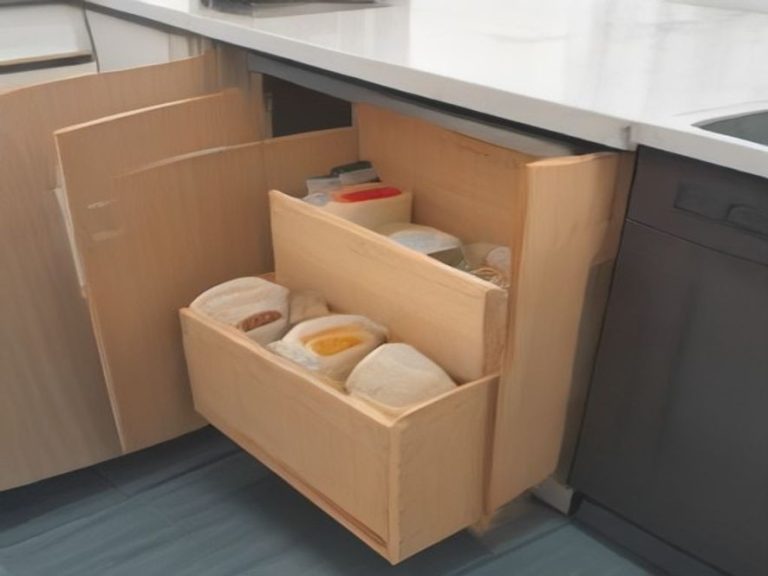
While a lazy Susan can help you spin items around, it often wastes corner space because it needs clearance to rotate. A plastic organizer bin simply sits on your existing shelf, meaning you’re still relying on the shelf itself to support the weight. Pull-out shelves offer a more robust and complete solution. They attach directly to the cabinet walls and slide out smoothly, making the entire depth of the cabinet usable without bending, reaching, or blindly grabbing .
“Most kitchen problems come from small maintenance habits that are often ignored.”
When you can see every item you own, you stop buying duplicates of things you already have. This simple change can reduce food waste, save you money, and make cooking less stressful from the moment you open the cabinet.
How to Fix Your Cabinet Storage: A Step-by-Step Guide
The process of organizing a kitchen cabinet with pull-out shelves can be broken down into a few main phases: planning, installation, and organization. Here’s the best way to approach it.
1. Planning: The Most Important Step
Before you buy or build anything, you need to create a plan. Failing to plan is the biggest cause of problems later on.
- Clear the Cabinet and Clean It: Start by taking everything out of the cabinet. This is the perfect time for a deep clean and to declutter any items you don’t use.
- Measure Precisely: You will need to know the inside width, depth, and height of your cabinet box .
- Width: Measure the opening at the front, but more importantly, measure the interior width between the cabinet walls. This is where your slides will attach.
- Depth: Measure from the back wall to the front opening. You’ll want your pull-out shelves to be slightly shorter than this to allow the door to close.
- Height: Decide how many shelves you want. Measure the total vertical space and divide it to see how much room you have for each shelf and the items you want to store. Installing shelves too high or too low often leads to wasted vertical space.
- Consider Your Items: Think about what you plan to store on the shelves. Heavy items require more robust hardware. A shelf that droops or bends over time is a common problem caused by using flimsy materials for heavy goods .
2. Installation: Buying vs. Building
You have two main paths here: purchase a pre-made pull-out shelf system, or build one yourself.
Option A: Buying Ready-Made Shelves
This is the easiest way to solve the problem. Many companies sell pull-out shelf kits that are designed to be easily installed. These come with pre-drilled holes and all necessary hardware. Just follow the package instructions.
Option B: Building Your Own Shelves
For the handy home cook, a DIY approach can be a satisfying and custom solution. Here’s a simplified breakdown:
- Build the Shelf Frame: Use sturdy wood like ½-inch finished plywood and 1-by-2 boards to construct a rectangular frame. Cut grooves in the inner edges to slide a thin plywood base into for a secure fit .
- Attach the Slides: Install the drawer slides to the sides of your new shelf. Standard drawer slides come in two parts. Attach the larger, outer part to the inside of your cabinet wall. Use a level to ensure the slides are straight and even. You may need to add wooden supports (like 2-by-4s) if your cabinet face frame sticks out, to ensure the shelf clears it.
- Insert the Shelf: Once the slides are mounted in the cabinet and on the shelf, you simply snap the two halves together and slide it in.
Comparing Storage Solutions: Which One is Best?
| Item/Method | Purpose | Effectiveness | Difficulty Level | Cost |
|---|---|---|---|---|
| Pull-Out Shelves | Make the full depth of a cabinet accessible. | High. Greatly improves visibility and access. | Medium-High. Requires measuring, possibly building, and installation. | High. More expensive upfront, but a long-term investment. |
| Lazy Susan | Provide access to items on a rotating platform. | Medium. Works for corners but wastes space for rotation. | Low. Simple to install or just set in place. | Medium. |
| Organizer Bins | Group smaller items together on existing shelves. | Medium. Keeps items tidy but doesn’t improve access to the back. | Low. No installation needed. | Low. |
Organizing Your New Shelves for Maximum Efficiency
Once your pull-out shelves are installed, how you organize them matters just as much.
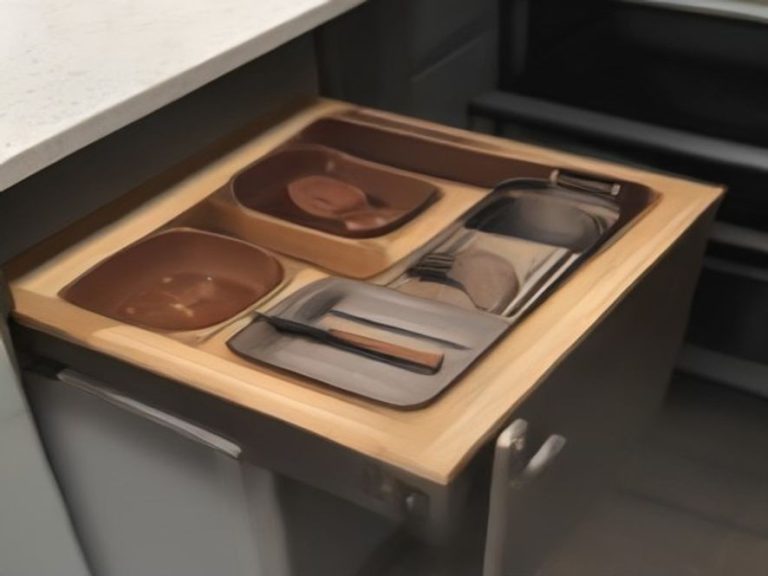
- Create Zones: Group similar items together. For example, make one shelf for all your mixing bowls and colanders, and another for spices and baking supplies . This is one of the top kitchen organization tips for a reason.
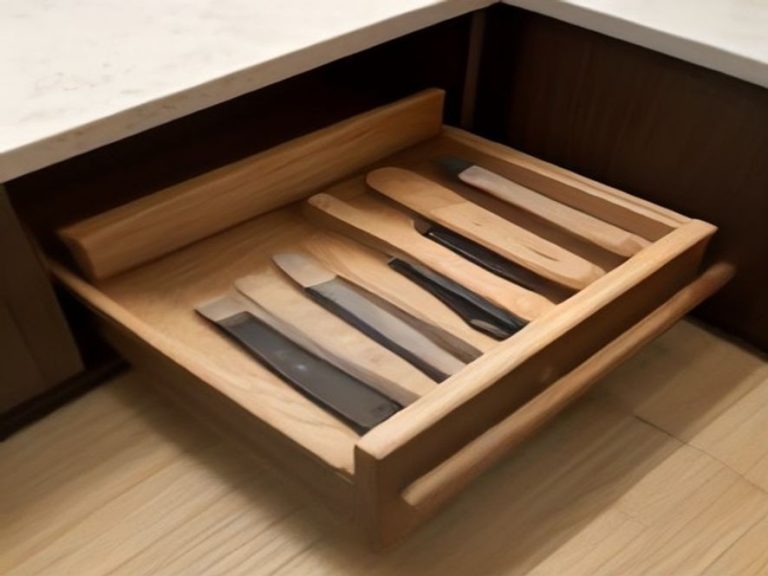
- Use Dividers: Add dividers to your pull-out shelves to separate baking sheets, cutting boards, or pot lids. This prevents them from sliding around and becoming a pile when you pull the shelf out .
- Add Non-Slip Liners: This prevents your items from sliding around and also reduces noise when you open and close the shelf .
- Label the Shelves: To make it easy for everyone in the household to maintain the system, consider labeling the front of the shelf with its contents. This helps make sure things go back to the right spot .
Common Mistakes to Avoid
Many people make these mistakes when trying to implement this kitchen storage solution.
- Not Choosing the Right Hardware for the Load: One of the most common causes of failure is purchasing shelves that are too flimsy for the items they must support. Heavy cast iron skillets and large bottles of oil are too heavy for cheap, lightweight slides. The extra weight strain often leads to the material bending and eventually the hardware failing .
- Installing Too Shallowly: If you use a shelf that doesn’t sit flush against the back of the cabinet interior, you are wasting valuable storage space for the sake of convenience .
- Not Considering Safety: When installing, be careful of sharp tools and ensure the shelves are securely attached to prevent them from tipping when fully loaded. Unsecured shelves can be a safety hazard.
Frequently Asked Questions (FAQ)
Why are my kitchen cabinets so hard to keep organized?
The main reason is the depth of the cabinets, which makes items in the back almost invisible and difficult to reach without moving everything in front.
How do I fix a cabinet that is just a black hole for food?
Install pull-out shelves. They effectively bring the back of the cabinet to the front, instantly solving the problem of hidden items.
What is the best way to clean grease from my new pull-out shelves?
Regular kitchen cleaning with a degreaser and a soft cloth works best. Avoid abrasive cleaners that could damage the finish.
What is the best way to keep my pull-out shelves from failing?
Spread the weight evenly across the shelf and never overload them beyond their weight capacity. Also, regularly wipe the slide tracks to keep them gliding smoothly .
Is it worth it to install pull-out shelves?
Yes. For deep or awkwardly-shaped cabinets, they are one of the most effective kitchen organization upgrades you can make for your cooking space.
Which cabinets are best for pull-out shelves?
They are especially beneficial for lower cabinets and corner cabinets, which are the hardest places to reach.
Which kitchen problem do you want solved next? Share your thoughts in the comments.
More Kitchen Solutions and Home Improvement Guidance: