Why Does My Kitchen Cabinet Smell Musty? Causes, Fixes & Odor Removal Guide
Why Does My Kitchen Cabinet Smell Musty? Causes, Fixes & Odor Removal Guide
That damp, earthy smell coming from your kitchen cabinets isn’t just unpleasant — it’s a warning sign that moisture is trapped somewhere it shouldn’t be.
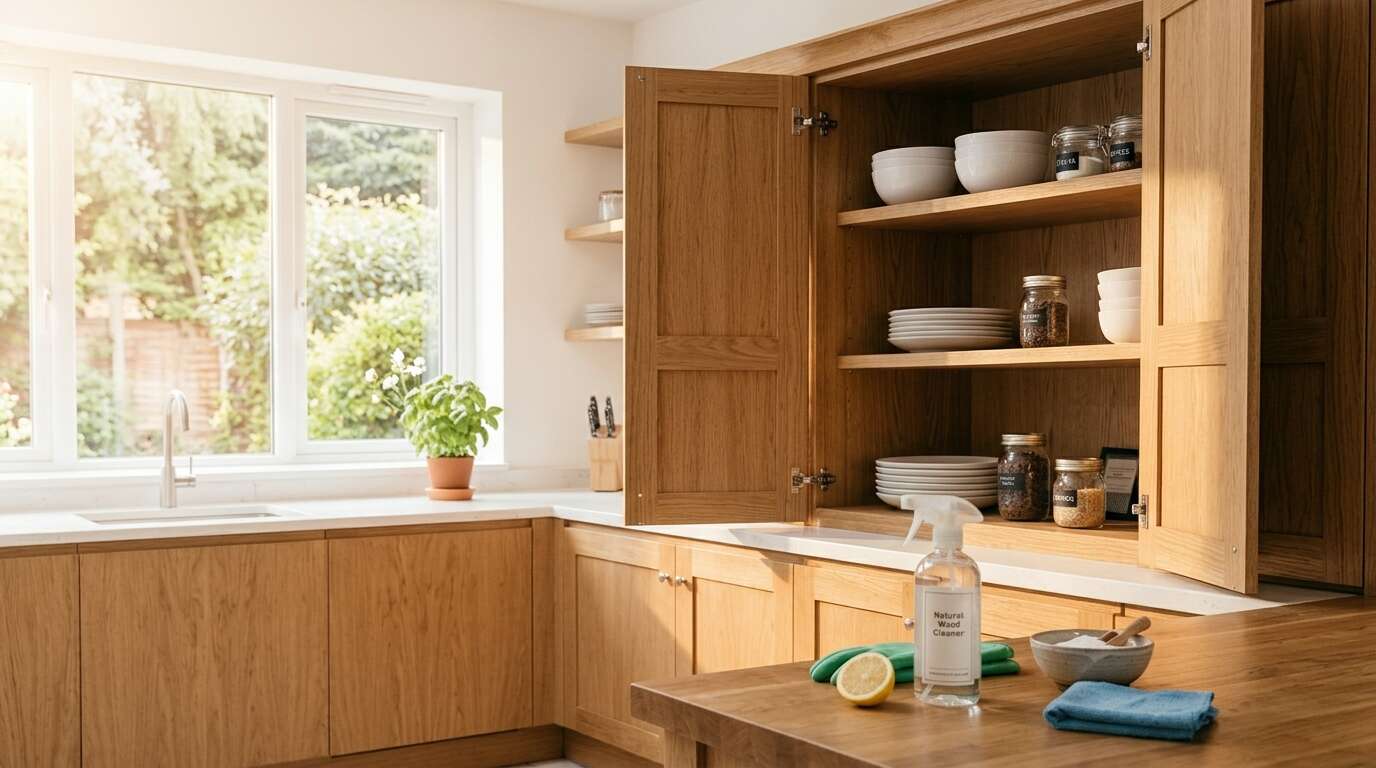
You open a cabinet to grab a pot, and you’re hit with that unmistakable musty odor. It lingers on your dishes, your spices, and even your hands. Sometimes you can’t see anything wrong. Other times, you spot dark spots or warped wood. A musty smell in kitchen cabinets almost always points to one thing: mold or mildew growing in a damp environment.

The good news? You can fix it. This guide explains the real causes, the best odor removal solutions, and the kitchen maintenance habits that keep your cabinets smelling fresh.
TL;DR
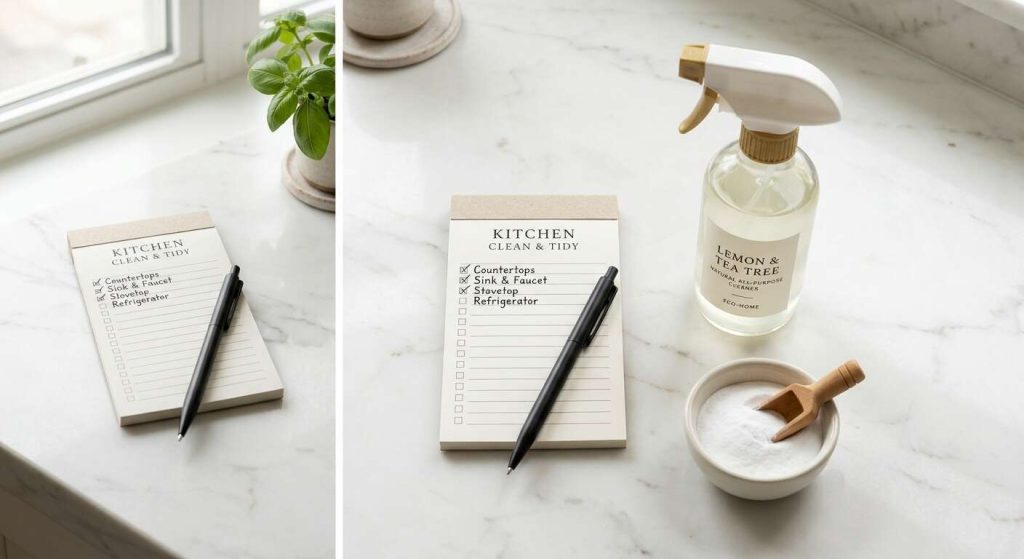
A musty smell in kitchen cabinets usually means mold or mildew is growing due to trapped moisture. Common causes include leaks, high humidity, poor kitchen ventilation, and storing damp items. Fix it by finding the moisture source, cleaning with vinegar or mold remover, drying thoroughly, and adding moisture absorbers. Regular kitchen maintenance prevents it from returning.
Key Takeaways
- Musty odors in kitchen cabinets almost always mean mold or mildew from excess moisture.
- Common causes: hidden leaks, condensation, poor kitchen ventilation, and damp stored items.
- Fix the moisture source first, then clean with white vinegar or a commercial mold remover.
- Dry the cabinet completely with a fan or dehumidifier before putting items back.
- Improve airflow with a small fan or check your exhaust hood and kitchen ventilation.
- Always unplug appliances before cleaning or repairing them — safety first.
The Real Causes Behind Musty Kitchen Cabinets (And How to Fix Them)
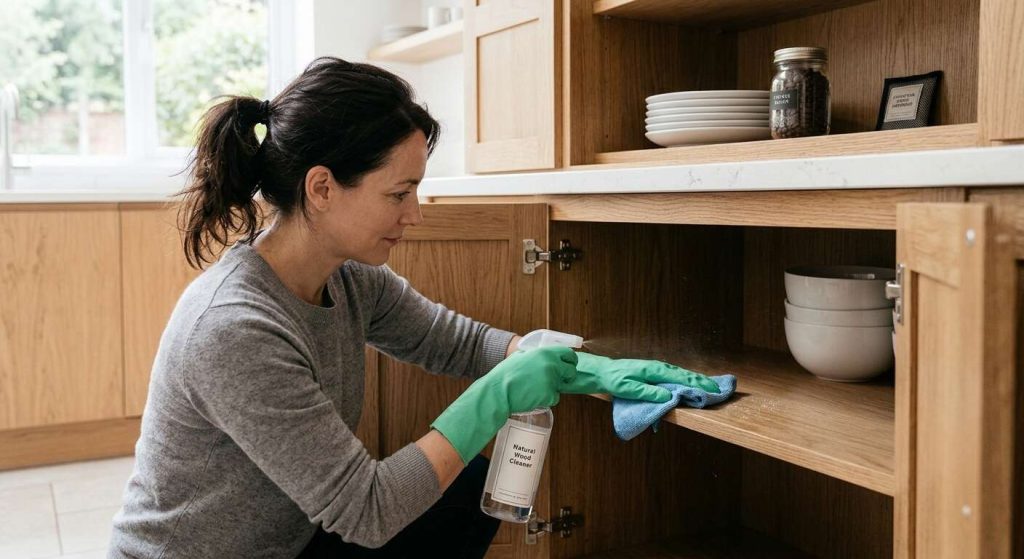
Mold and mildew need three things to grow: moisture, warmth, and organic material like dust or food particles. Kitchen cabinets often provide all three. They’re warm from cooking, they collect dust and crumbs, and they can trap moisture from leaks, steam, or humid air.
The musty smell comes from microbial volatile organic compounds (MVOCs) — gases released by mold as it grows. You can’t always see the mold because it may be hiding behind the cabinet back, under a shelf liner, or inside the wood itself. But your nose knows.
“Most kitchen problems come from small maintenance habits that are often ignored.” — Home maintenance expert
Why Your Kitchen Cabinets Smell Musty: The Top 5 Causes
1. Hidden leaks or drips. A slow leak from a pipe, a loose fitting, or a roof leak can keep the cabinet interior damp. You may not see water, but the wood stays moist enough for mold to grow.
2. High humidity and poor kitchen ventilation. Cooking creates steam. If your exhaust hood isn’t strong enough or your kitchen ventilation is poor, moisture builds up and settles inside cabinets. This is worse in humid climates or during rainy seasons.
3. Condensation on pipes or walls. Cold water pipes can sweat in warm, humid air. That moisture drips onto cabinet shelves and creates a damp spot.
4. Storing damp items. Wet sponges, damp dish towels, or even unsealed flour and spices can introduce moisture into a closed cabinet. Once trapped, it breeds mold.
5. Spills or food debris left behind. A forgotten spill on a cabinet shelf or crumbs in a dark corner create a food source for mold. Regular cleaning prevents grease buildup and bad odors — and it also stops mold from getting a foothold.
Step-by-Step: How to Remove Musty Smells from Kitchen Cabinets
- Safety first. Always unplug appliances before cleaning or repairing them — especially if you’re working near electrical outlets or using a wet vacuum.
- Empty the cabinet completely. Remove all dishes, food, and shelf liners. Throw away anything that smells musty or shows mold.
- Find the moisture source. Look for leaks, condensation, or soft wood. Tighten fittings or replace washers. For persistent leaks, call a plumber.
- Dry the cabinet thoroughly. Use a fan or a dehumidifier. Don’t just wipe — let it dry for hours. If the wood is warped or soft, it may need to be replaced.
- Clean moldy surfaces. Wear gloves and a mask. Spray with white vinegar (undiluted) or a commercial mold remover. Let it sit 10 minutes, then scrub and wipe.
- Disinfect and dry again. After cleaning, run a fan to remove all moisture.
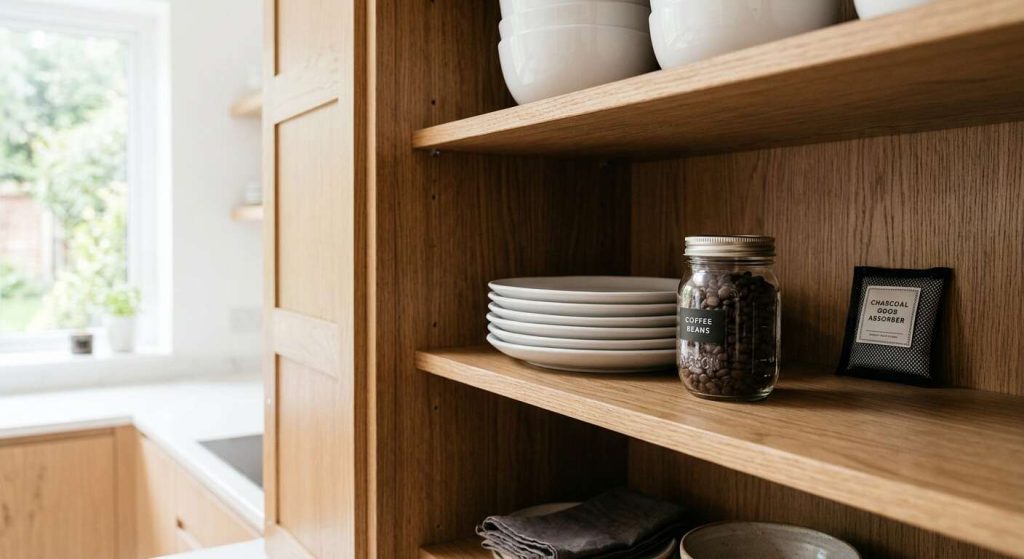
- Add moisture absorbers. Place charcoal bags, silica gel packs, or a small dehumidifier in the cabinet.
- Improve airflow. Leave the cabinet door open for a few hours each week. Consider a small USB fan.
- Check your kitchen ventilation. Make sure your exhaust hood is working. A hood CFM that’s too low won’t remove steam efficiently. For serious kitchen ventilation issues, consult an HVAC pro about exhaust CFM and makeup air.
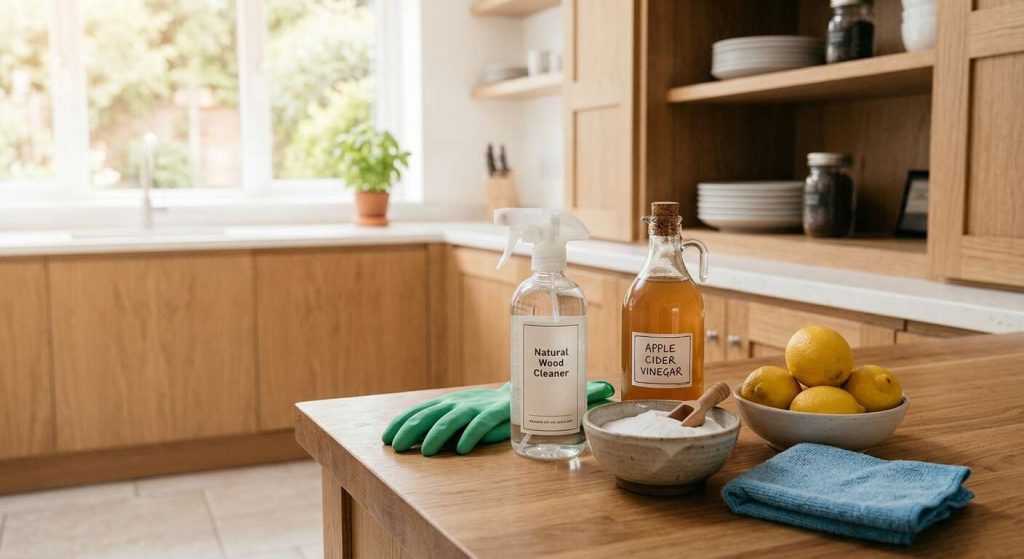
- Use a natural odor absorber. Place an open box of baking soda or a bowl of white vinegar in the cabinet for a few days to absorb lingering smells.
Comparison: Best Ways to Remove Musty Odors from Cabinets
| Method / Tool | Purpose | Effectiveness | Difficulty | Cost |
|---|---|---|---|---|
| White vinegar spray | Kill surface mold, deodorize | High (for mild mold) | Easy | $2–$5 |
| Commercial mold remover | Kill deep mold, stains | Very high | Easy | $8–$15 |
| Baking soda box | Absorb lingering odors | Moderate | Easy | $1–$3 |
| Charcoal bags | Absorb moisture and odors | High | Easy | $8–$15 |
| Small dehumidifier | Keep cabinet dry | High (prevention) | Easy | $25–$60 |
| Leak repair (plumber) | Fix hidden water source | Very high (permanent) | Hard | $150–$400 |
Effectiveness of Musty Odor Removal Methods (1–5 scale)
Frequently Asked Questions About Musty Kitchen Cabinets
Why does my kitchen cabinet smell musty even after cleaning?
The moisture source is still there. Check for hidden leaks, condensation, or high humidity. Mold will return until the cabinet stays dry.
What is the best way to get rid of musty smell in cabinets?
Find and fix the moisture source, clean with white vinegar or mold remover, dry completely, then place charcoal bags or baking soda inside.
Can musty cabinets make me sick?
Mold spores can trigger allergies, asthma, and respiratory irritation. If the smell is strong or you see mold, clean it promptly and improve ventilation.
How do I know if mold is hiding in my cabinets?
Look for dark spots, warped wood, peeling shelf liner, or a persistent earthy smell. Mold often grows behind the cabinet back or under shelves.
Will a dehumidifier help with musty cabinets?
Yes. A small dehumidifier or moisture absorber keeps the cabinet dry and prevents mold from returning. Empty it regularly.
How can I improve kitchen ventilation to prevent musty smells?
Clean your exhaust hood filter monthly and make sure the hood CFM matches your cooking style. For serious issues, consult a pro about makeup air and ventilation sizing.
Should I replace cabinets that smell musty?
Only if the wood is soft, warped, or mold has spread deep inside. For surface mold and mild odors, cleaning and drying usually solve the problem.
Which kitchen problem do you want solved next? Share your thoughts in the comments.
Trusted Resources for Kitchen Mold and Odor Prevention:
- EPA – Mold Cleanup in Your Home
- Family Handyman – Removing Musty Smells from Cabinets
- U.S. Department of Energy – Kitchen Ventilation
- This Old House – Preventing Kitchen Mold
Related kitchen care topics: kitchen ventilation, exhaust hood maintenance, hood CFM, kitchen maintenance, moisture control, and appliance lifespan.