Why Does Grease Keep Building Up on My Kitchen Cabinets? Causes & Cleaning Guide
Why Does Grease Keep Building Up on My Kitchen Cabinets? Causes, Fixes & Prevention Guide
Those sticky, dull cabinet doors near your stove aren’t just an eyesore — they’re a sign that grease is winning the battle in your cooking space.
You clean them on Saturday. By Tuesday, they feel tacky again. The finish looks cloudy, and every fingerprint seems to stay. If this sounds familiar, you’re not alone. Kitchen cabinets — especially the ones closest to the stove — collect airborne grease faster than almost any other surface in the room. The reasons go beyond “I cook a lot.” In this guide, you’ll learn exactly why grease keeps building up, the best way to clean it without damaging your cabinets, and the kitchen maintenance habits that actually stop it from returning.
TL;DR
Kitchen cabinets get greasy fast because cooking releases airborne oil particles that settle on vertical surfaces. Weak kitchen ventilation, high-heat cooking, and using the wrong cleaner make it worse. Fix it by improving your exhaust hood performance, cleaning with a proper degreaser, and applying a protective finish. Regular kitchen cleaning prevents sticky buildup.
Key Takeaways
- Airborne grease from cooking settles on kitchen cabinets, especially those within a few feet of the stove.
- Poor kitchen ventilation or an undersized exhaust hood lets grease circulate instead of being removed.
- High-heat cooking methods like frying and sautéing release the most oil particles.
- All-purpose cleaners smear grease instead of removing it — use a dedicated degreaser.
- Cabinet finish matters: matte and wood surfaces trap grease more than glossy or laminate ones.
- Always unplug appliances before cleaning or repairing them — safety first, especially near the stove.
The Real Causes Behind Sticky Kitchen Cabinets (And How to Fix Them)
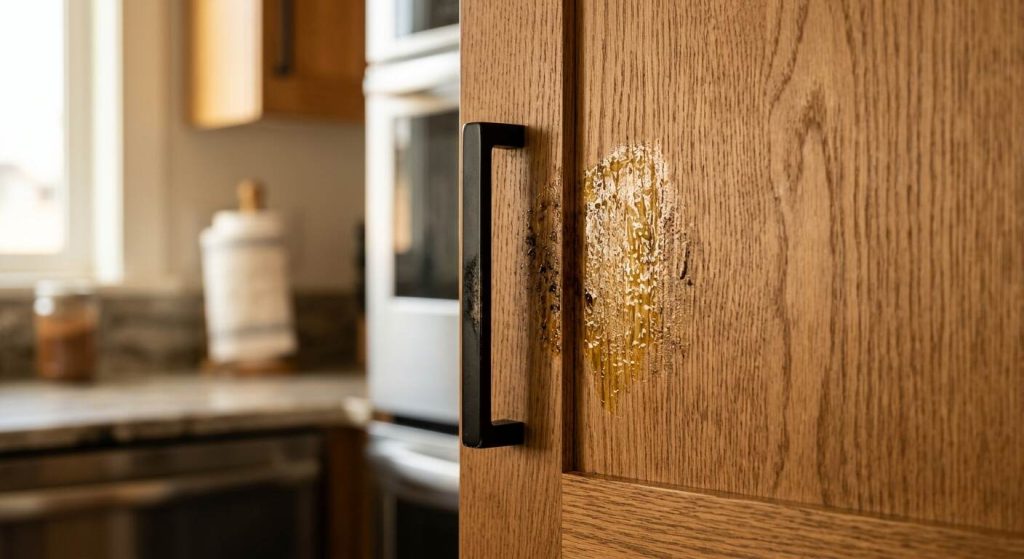
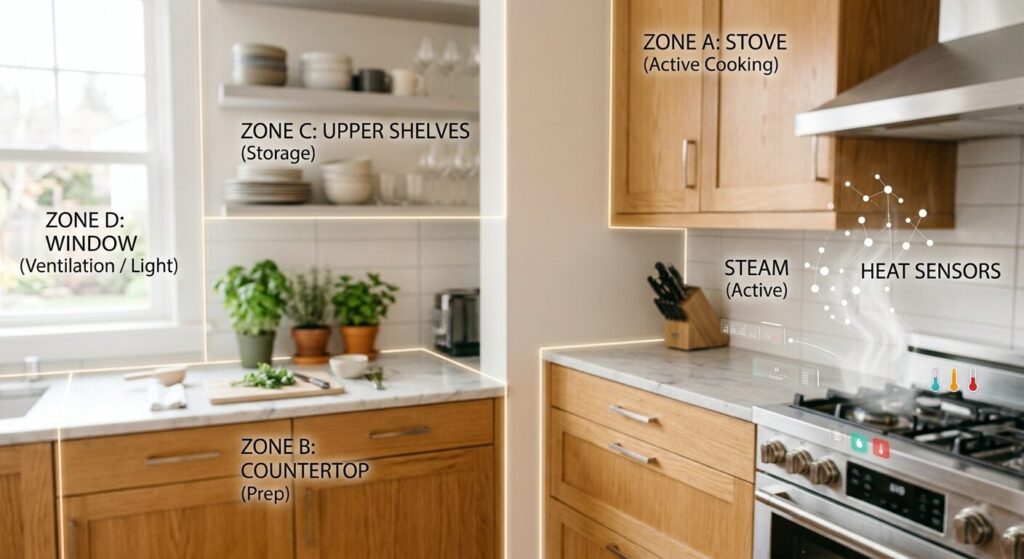
Grease doesn’t just appear out of nowhere. Every time you heat oil, tiny droplets become airborne. They rise with heat, travel with steam, and land on the nearest surfaces. Your kitchen cabinets are prime targets because they surround the cooking zone.
The problem is worse when the air in your kitchen doesn’t move properly. If your exhaust hood isn’t pulling enough air, those grease particles stay suspended and settle on everything. Over time, the layer builds up, traps dust, and becomes a sticky film that’s hard to remove with a simple wipe.
“Most kitchen problems come from small maintenance habits that are often ignored.” — Home maintenance expert
Why Grease Keeps Building Up: The Top 5 Causes
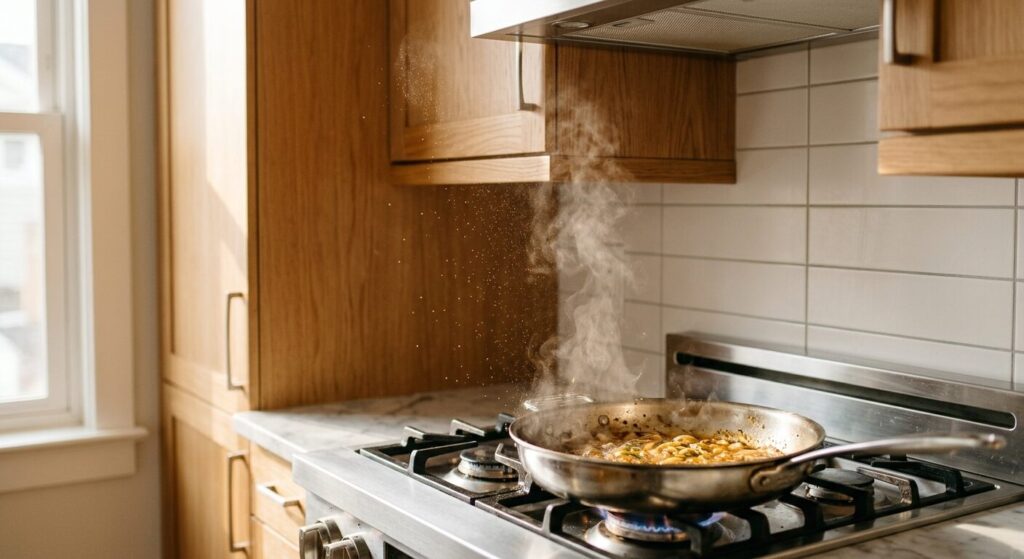
1. Weak or poorly maintained exhaust hood. Your exhaust hood is your first line of defense. If the filters are clogged, the hood CFM is too low, or the hood is mounted too high, grease particles stay in the air and land on cabinets. For serious cooking, ventilation sizing and makeup air matter more than most people realize.
2. Cooking methods that release lots of oil. Frying, searing, and stir-frying produce far more airborne grease than boiling or steaming. If you cook this way daily, expect faster buildup on nearby surfaces.
3. No splatter guard or lid. When oil pops, it sends droplets in every direction. A simple splatter screen or lid can reduce cabinet grease by half.
4. The wrong cleaning products. Soap and water don’t break down kitchen grease. They just spread it around. You need an alkaline degreaser or a dedicated kitchen cleaner. Regular cleaning prevents grease buildup and bad odors — but only if you use the right formula.
5. Porous or damaged cabinet finishes. Matte paint, unfinished wood, and worn varnish absorb oil. Once grease soaks into the surface, a simple wipe-down won’t remove it. You may need a deeper clean or a fresh protective coat.
Step-by-Step: How to Clean Grease Off Kitchen Cabinets
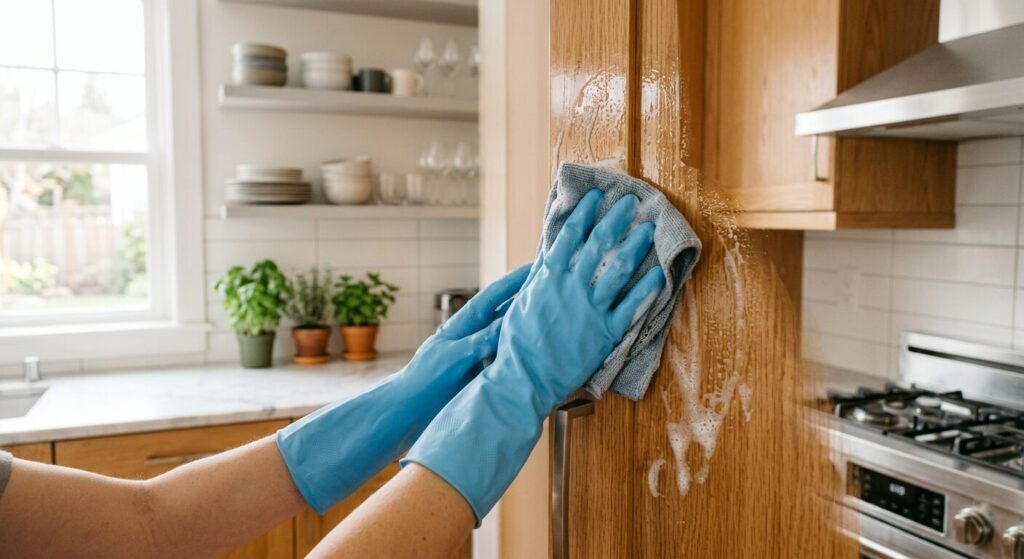
- Safety first. Always unplug appliances before cleaning or repairing them — including your stove, microwave, and any small appliances on the counter.
- Test a hidden spot. Before using any cleaner, test it on the inside of a cabinet door or a less visible area to make sure it doesn’t damage the finish.
- Remove loose dust. Use a dry microfiber cloth to wipe away dust and crumbs. This prevents smearing.
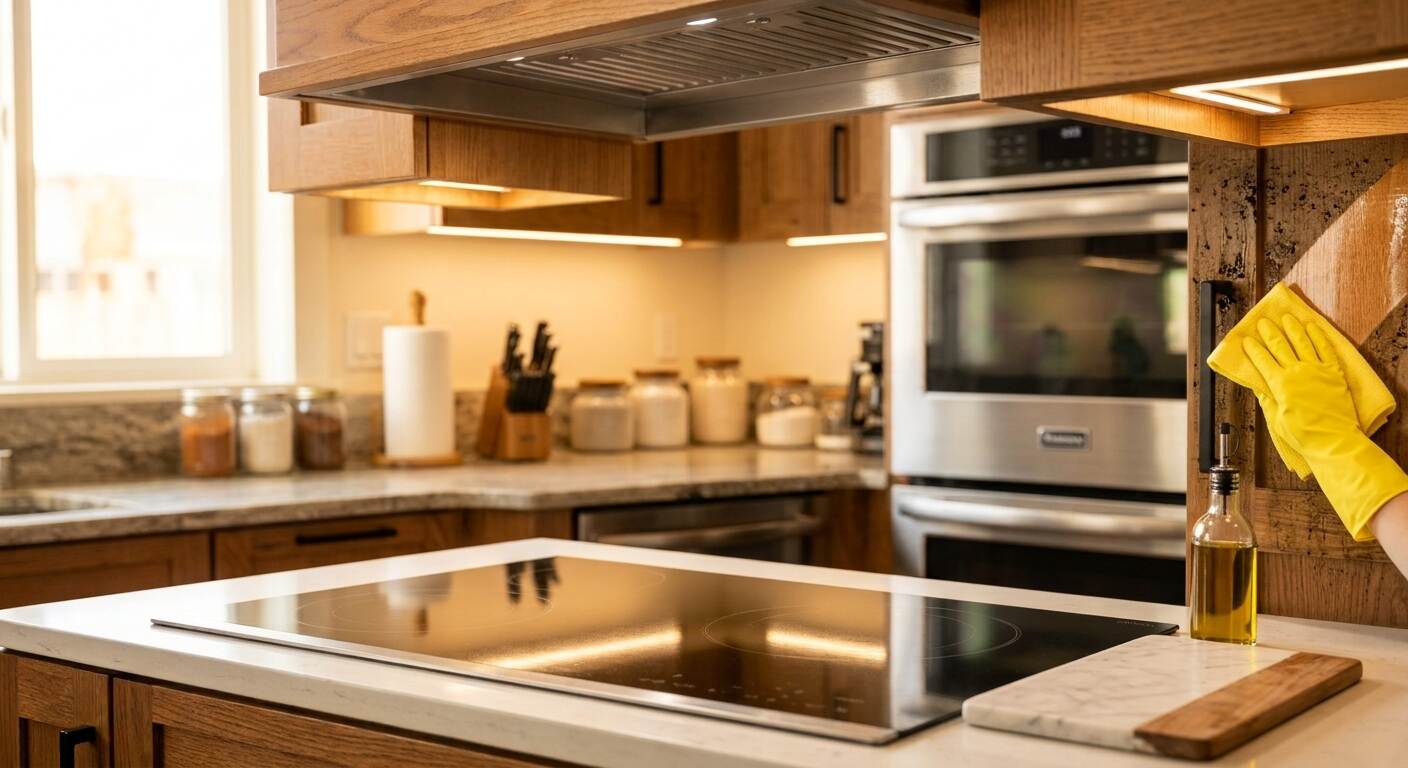
- Apply a degreaser. Spray a kitchen degreaser or a mix of warm water and dish soap onto a cloth — not directly on the cabinet. Let it sit for 3–5 minutes to break down the grease.
- Scrub gently. Use a soft sponge or microfiber cloth. Avoid abrasive pads that can scratch the finish. For tough spots, use a soft-bristle brush.
- Rinse and dry. Wipe with a clean, damp cloth to remove residue, then dry immediately with a microfiber towel. Leaving moisture can damage wood.
- Deep clean twice a year. For heavy buildup, use a steam cleaner or a commercial cabinet cleaner. Follow with a wood conditioner if your cabinets are wood.
- Apply a protective coating. A thin layer of cabinet wax or a commercial protectant makes future cleaning easier and adds shine.
- Improve your kitchen ventilation. Clean your exhaust hood filters monthly. If your hood is undersized, consider upgrading. A hood CFM that matches your cooking style makes a huge difference. For serious kitchens, look into makeup air and ventilation sizing.
- Use a splatter guard. It’s a cheap tool that saves hours of cabinet cleaning.
Comparison: Best Cabinet Cleaning Methods and Tools
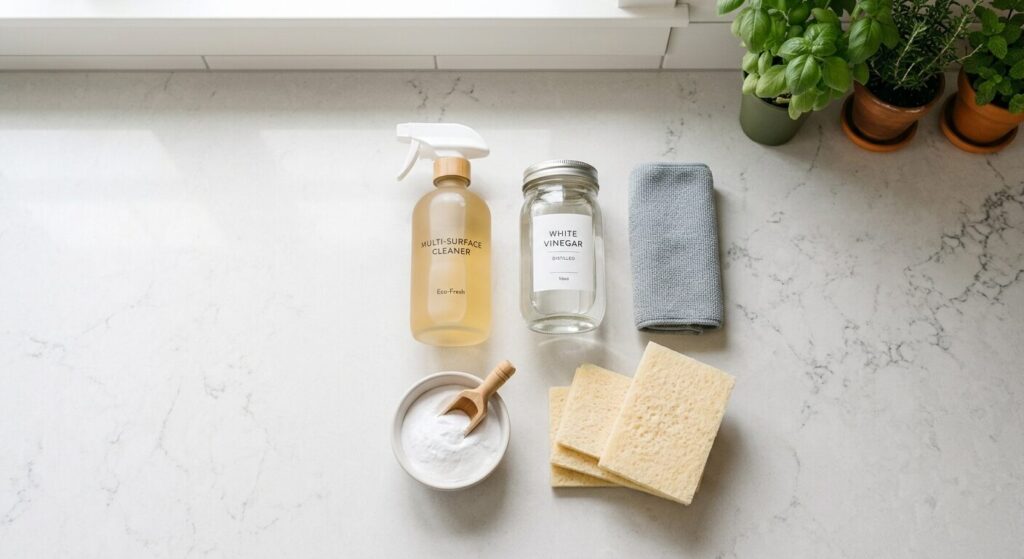
| Method / Tool | Purpose | Effectiveness | Difficulty | Cost |
|---|---|---|---|---|
| Dish soap + warm water | Light grease, weekly wipe-down | Moderate | Easy | $1–$3 |
| Commercial kitchen degreaser | Heavy, sticky grease | Very high | Easy | $6–$12 |
| Baking soda paste | Gentle scrub for light grease | High | Easy | $1–$2 |
| Steam cleaner | Deep clean without chemicals | Very high | Moderate | $30–$80 |
| Cabinet wax / protectant | Prevent grease absorption | High (prevention) | Moderate | $10–$20 |
| Splatter guard | Reduce airborne grease | High (prevention) | Easy | $8–$15 |
Grease Buildup on Cabinets by Cooking Method (Relative Scale)
Frequently Asked Questions About Cabinet Grease
Why do my kitchen cabinets get greasy so fast?
Airborne oil from cooking settles on nearby surfaces. If your exhaust hood is weak or clogged, grease stays in the air longer and lands on cabinets.
What is the best way to clean grease off kitchen cabinets?
Use a dedicated kitchen degreaser or warm water with dish soap. Apply to a cloth, let it sit briefly, then wipe gently and dry immediately.
Can I use vinegar to clean grease off cabinets?
Vinegar works for light grease and deodorizing, but it’s not as effective as a degreaser for heavy, sticky buildup.
How do I protect my cabinets from grease?
Apply a cabinet wax or protective sealant after cleaning. Also use a splatter guard while cooking and clean your exhaust hood filter regularly.
Will a higher CFM hood reduce cabinet grease?
Yes. A properly sized exhaust hood with enough hood CFM captures more airborne grease before it lands on cabinets.
How often should I clean my kitchen cabinets?
Wipe them down weekly with a degreaser, and do a deep clean every two to three months. Clean more often if you fry frequently.
Can grease damage my cabinet finish?
Yes. Over time, grease can dull the finish, trap dust, and even cause discoloration. Regular cleaning and a protective coat prevent damage.
Which kitchen problem do you want solved next? Share your thoughts in the comments.
Trusted Resources for Kitchen Cabinet Care and Ventilation:
- EPA – Indoor Air Quality and Grease Management
- Family Handyman – How to Clean Kitchen Cabinets
- U.S. Department of Energy – Kitchen Ventilation
- This Old House – Choosing Kitchen Cabinets
Related kitchen care topics: kitchen ventilation, exhaust hood maintenance, hood CFM, kitchen maintenance, appliance lifespan, and cleaning routines.