Why Does My Kitchen Backsplash Get Greasy So Quickly? Causes & Cleaning Guide
Why Does My Kitchen Backsplash Get Greasy So Quickly? Causes, Fixes & Cleaning Guide
That sticky film on your kitchen backsplash shows up faster than you can say “dinner’s ready” — and it’s not just about cooking more carefully.
You wipe it down on Sunday. By Wednesday, it’s tacky again. The tiles near the stove look dull, and your finger leaves a smear when you touch them. It’s frustrating, especially when you feel like you just cleaned. The truth is, kitchen backsplash grease is a normal part of home cooking — but how fast it builds up depends on several factors you can actually control. This guide breaks down the real reasons, the best cleaning solutions, and simple kitchen maintenance tips to keep your cooking space looking fresh.
TL;DR
Your kitchen backsplash gets greasy fast because cooking releases airborne oil particles that settle on nearby surfaces. Poor kitchen ventilation, high-heat cooking methods, and the wrong cleaning products make it worse. The best fix: improve exhaust hood performance, clean with a degreaser weekly, and apply a protective coating to make future wipe-downs easier.
Key Takeaways
- Grease splatter and steam carry oil onto the kitchen backsplash during everyday cooking.
- Weak kitchen ventilation or an undersized exhaust hood lets grease linger instead of being pulled away.
- High-heat methods like frying and sautéing release the most airborne grease.
- All-purpose spray won’t cut through baked-on grease — you need a proper degreaser.
- Protective sealants for tile and grout make cleaning much easier.
- Always unplug appliances before cleaning or repairing them — especially near the stove area.
The Real Reasons Your Kitchen Backsplash Gets Greasy So Fast (And How to Fix It)
Every time you cook, tiny droplets of oil become airborne. They rise with heat, drift with steam, and land on the nearest cool surface — which is often your kitchen backsplash. This is normal. What’s not normal is how quickly it turns into a thick, sticky layer that’s hard to remove.
The speed of grease buildup depends on your cooking habits, your kitchen ventilation, and the material of your backsplash. Some surfaces trap grease more than others. Grout lines, for example, are porous and soak up oil like a sponge. Smooth glass or stainless steel wipes clean more easily but still shows every smear.
“Most kitchen problems come from small maintenance habits that are often ignored.” — Home maintenance expert
Why Grease Builds Up Quickly: The Top 5 Causes
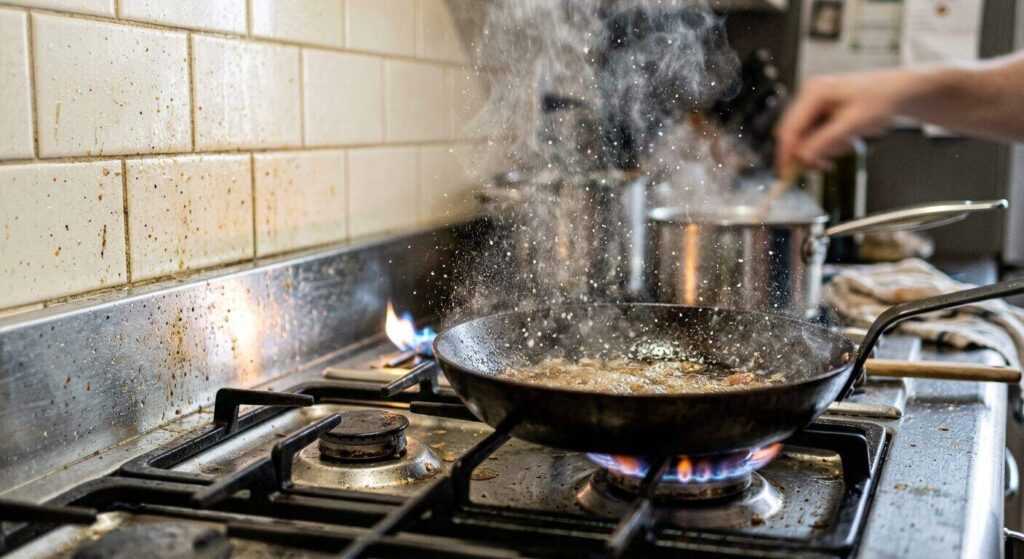
1. Weak or poorly placed exhaust hood. If your exhaust hood doesn’t have enough hood CFM (cubic feet per minute) for your cooking style, grease particles stay in the air and settle on surfaces. A hood that’s too small or mounted too high won’t capture much.
2. High-heat cooking methods. Frying, searing, and stir-frying release far more grease than boiling or steaming. If you cook this way daily, expect faster buildup.
3. No splatter guard or lid. When oil pops and splatters, it lands directly on the backsplash. A simple splatter screen or lid can reduce this by half.
4. Porous backsplash materials. Ceramic tile with unsealed grout, natural stone, and matte finishes absorb oil. Once grease soaks in, surface cleaning won’t remove it.
5. Cleaning with the wrong products. Soap and water don’t break down kitchen grease. You need a degreaser or an alkaline cleaner. Regular cleaning prevents grease buildup and bad odors — but only if you use the right formula.
Step-by-Step: How to Clean and Prevent Backsplash Grease
- Safety first. Always unplug appliances before cleaning or repairing them — including your stove, microwave, and any nearby small appliances.
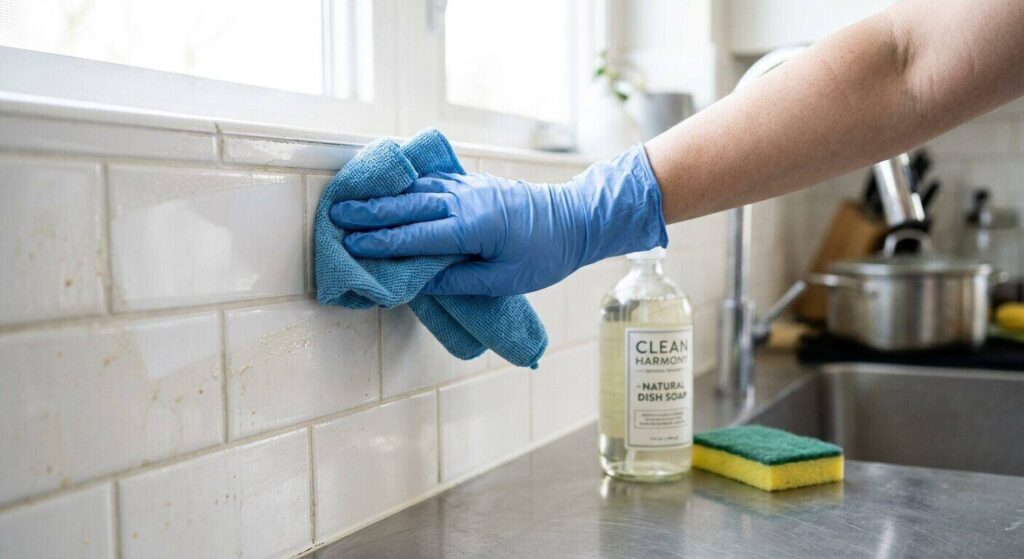
- Start with a dry wipe. Use a microfiber cloth to remove loose dust and surface oil before applying any liquid.
- Apply a degreaser. Spray a dedicated kitchen degreaser or a mix of warm water and dish soap. Let it sit for 3–5 minutes to break down the grease.
- Scrub gently. Use a soft brush or non-scratch sponge. For grout lines, a small grout brush works well. Avoid steel wool on glass or stainless steel.
- Rinse and dry. Wipe with a clean, damp cloth, then dry with a microfiber towel to prevent streaks.
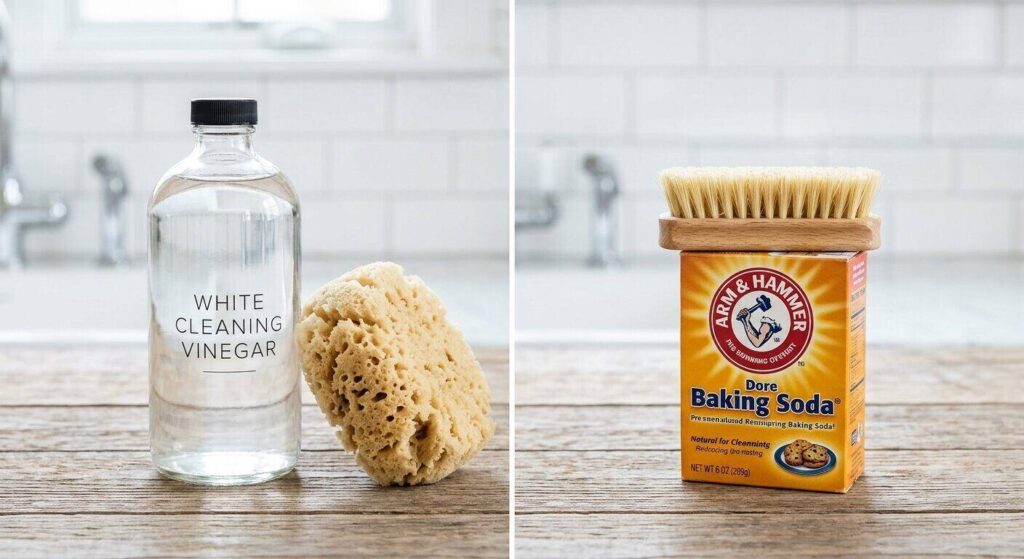
- Deep clean grout monthly. Use a baking soda paste and a brush. For tough stains, a steam cleaner works wonders.
- Apply a protective sealant. For tile and grout, a penetrating sealer keeps oil from soaking in. For glass or stainless steel, a thin coat of mineral oil or a commercial protectant makes future cleaning easier.
- Improve your kitchen ventilation. Check your exhaust hood filter and clean it monthly. If your hood is undersized, consider upgrading. A hood CFM that matches your stove’s output makes a huge difference. For serious cooking, look into makeup air and ventilation sizing.
- Use a splatter guard. It’s a cheap tool that saves hours of cleaning.
Comparison: Best Backsplash Cleaning Methods and Tools
| Method / Tool | Purpose | Effectiveness | Difficulty | Cost |
|---|---|---|---|---|
| Dish soap + warm water | Light grease, daily wipe-down | Moderate | Easy | $1–$3 |
| Commercial kitchen degreaser | Heavy, baked-on grease | Very high | Easy | $6–$12 |
| Baking soda paste | Grout lines, gentle scrub | High (for grout) | Easy | $1–$2 |
| Steam cleaner | Deep clean without chemicals | Very high | Moderate | $30–$80 |
| Protective sealant | Prevent oil absorption | High (prevention) | Moderate | $15–$30 |
| Splatter guard | Reduce airborne grease | High (prevention) | Easy | $8–$15 |
Grease Buildup Speed by Cooking Method (Relative Scale)
Frequently Asked Questions About Backsplash Grease

Why does my backsplash get greasy even when I don’t fry food?
Even baking and roasting release oils into the air. If your exhaust hood is weak, those particles settle on the backsplash.
What is the best way to clean grease off a tile backsplash?
Use a commercial degreaser or warm water with dish soap. Let it sit a few minutes, then scrub gently and dry with a microfiber cloth.
How do I clean grease from grout lines?
Make a paste of baking soda and water. Apply it with a small brush, let it sit for 10 minutes, then scrub and rinse.
Does a higher CFM hood really reduce backsplash grease?
Yes. A properly sized exhaust hood with enough hood CFM captures more airborne grease before it lands on surfaces.
Can I use vinegar to clean grease off my backsplash?
Vinegar works for light grease and deodorizing, but it’s not as effective as a dedicated degreaser for heavy buildup.
How often should I deep clean my kitchen backsplash?
Wipe it down weekly with a degreaser, and do a deep clean monthly. If you fry often, clean more frequently.
What is the best backsplash material for easy cleaning?
Smooth glass, stainless steel, and glazed ceramic tile with sealed grout are the easiest to wipe clean and resist grease absorption.
Which kitchen problem do you want solved next? Share your thoughts in the comments.
Trusted Resources for Kitchen Cleaning and Ventilation:
- EPA – Indoor Air Quality and Grease Management
- Family Handyman – How to Clean Kitchen Grease
- U.S. Department of Energy – Kitchen Ventilation
- This Old House – Choosing a Kitchen Backsplash
Related kitchen care topics: kitchen ventilation, exhaust hood maintenance, hood CFM, kitchen maintenance, appliance lifespan, and cleaning routines.