Why Does My Kitchen Always Get Dusty After Cleaning? Causes & Solutions Guide
Why Does My Kitchen Always Get Dusty After Cleaning? Causes, Fixes & Prevention Guide
You spend an hour scrubbing your kitchen until it shines — then two days later, a fresh layer of dust covers every surface again.
It’s one of the most frustrating parts of home cooking. You wipe down the counters, sweep the floor, and polish the kitchen until it looks brand new. But within a day or two, that fine grey film is back on your shelves, your refrigerator top, and your oven hood. Why does this keep happening?
The answer isn’t just “dust in the air.” It’s a mix of kitchen ventilation issues, cleaning habits, and hidden dust sources you probably haven’t thought about. This guide breaks down the real causes and gives you practical kitchen solutions to keep your cooking space cleaner for longer.
TL;DR
Your kitchen gets dusty fast because of poor kitchen ventilation, recirculated dust from dirty filters, fabric fibers from towels and clothes, and cleaning methods that spread dust instead of removing it. Fix it by improving airflow, using microfiber cloths, cleaning your exhaust hood filters, and reducing fabric clutter. Regular kitchen maintenance keeps dust from settling so quickly.
Key Takeaways
- Dust returns fast when your kitchen ventilation recirculates particles instead of removing them.
- Dirty exhaust hood filters and HVAC vents blow dust back into the room.
- Paper towels and dry rags spread dust around — microfiber cloths trap it.
- Fabric items like curtains, towels, and clothing shed fibers that become dust.
- Static electricity on counters and appliances attracts and holds dust.
- Always unplug appliances before cleaning or repairing them — safety first.
The Real Reasons Your Kitchen Gets Dusty So Fast (And How to Fix It)
Dust isn’t just dirt from outside. In a kitchen, it’s a mix of tiny particles: fabric fibers, dead skin cells, pollen, pet dander, food crumbs, and even grease molecules. Every time you cook, clean, or move around, these particles get stirred up and resettle on surfaces.
The problem is worse in kitchens because they have so many surfaces — shelves, appliances, countertops, and cabinet tops — where dust can land. And if your kitchen ventilation isn’t working properly, those particles just keep circulating instead of being pulled out of the room.
“Most kitchen problems come from small maintenance habits that are often ignored.” — Home maintenance expert
Why Dust Keeps Coming Back: The Top 5 Causes
1. Poor kitchen ventilation and dirty filters. Your exhaust hood and HVAC system are supposed to remove airborne particles. But if the filters are clogged, dust gets recirculated back into the kitchen. A hood CFM that’s too low for your cooking style also means less air is being pulled out. For serious kitchen ventilation issues, check your exhaust CFM and makeup air setup.
2. Cleaning with the wrong tools. Paper towels and dry rags just push dust around. They don’t trap it. Microfiber cloths are designed to grab and hold dust particles. Regular cleaning prevents grease buildup and bad odors — but only if you use the right tools.
3. Fabric fibers from towels, curtains, and clothing. Every time you wipe a counter with a cotton towel or walk through the kitchen in a fuzzy sweater, tiny fibers shed into the air. They settle on surfaces and become part of the dust layer.
4. Static electricity. Counters, appliance surfaces, and plastic containers build up static charge. That charge attracts dust like a magnet. This is especially common in dry climates or during winter.
5. Cooking and food particles. Every time you cook, tiny food particles and grease molecules become airborne. They settle on surfaces and mix with dust. Over time, this creates a sticky film that traps even more dust.
Step-by-Step: How to Keep Your Kitchen Dust-Free Longer
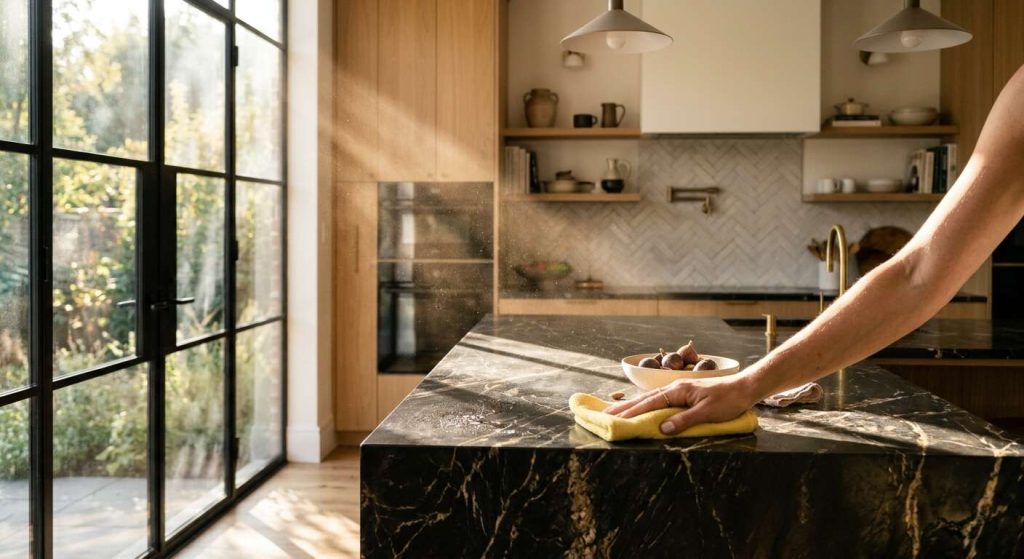
- Safety first. Always unplug appliances before cleaning or repairing them — including your refrigerator, oven, and any small appliances.
- Clean from top to bottom. Start with ceiling fans, cabinet tops, and light fixtures. Dust falls downward, so cleaning the highest surfaces first prevents re-dusting lower ones.
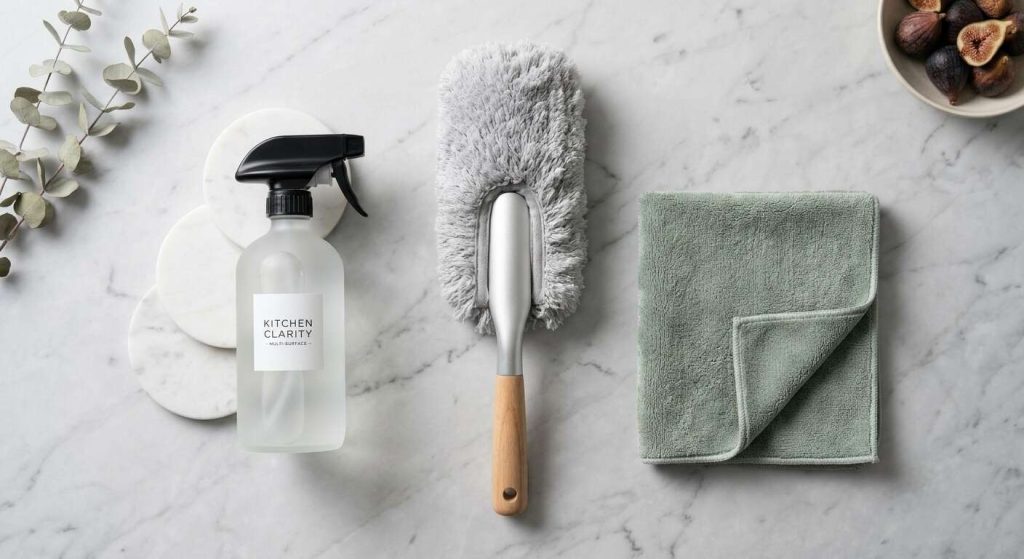
- Use microfiber cloths. Dampen one slightly with water or a mild cleaner. Microfiber traps dust instead of spreading it. For dry dusting, use a separate dry microfiber cloth.
- Clean your exhaust hood filter. Soak it in hot, soapy water or run it through the dishwasher monthly. A clogged filter recirculates dust and grease.
- Check and replace HVAC filters. A dirty HVAC filter blows dust back into every room, including the kitchen. Replace it every 1–3 months.
- Reduce fabric clutter. Wash or replace curtains, towels, and rugs regularly. Avoid storing fabric items on top of cabinets where they collect dust.
- Control static electricity. Wipe surfaces with a dryer sheet or a cloth sprayed with anti-static spray. You can also use a humidifier to add moisture to the air.
- Improve kitchen ventilation. Run your exhaust hood every time you cook. If your hood is undersized, consider upgrading. A hood CFM that matches your stove’s output makes a huge difference. For serious cooking, look into makeup air and ventilation sizing.
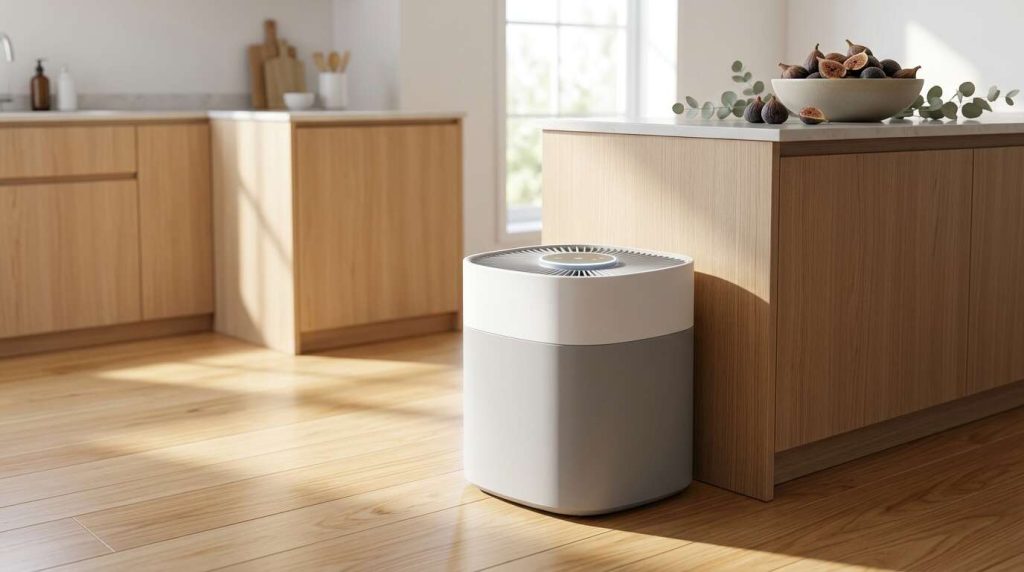
- Use an air purifier. A HEPA air purifier captures fine dust particles and keeps them out of the air. Place it near the kitchen for best results.
- Clean your cleaning tools. Wash microfiber cloths and mop heads regularly. A dirty cloth just spreads dust and bacteria around.
Comparison: Best Dusting Methods and Tools for Kitchens
| Method / Tool | Purpose | Effectiveness | Difficulty | Cost |
|---|---|---|---|---|
| Microfiber cloth (damp) | Trap and remove dust | Very high | Easy | $5–$10 |
| Paper towel (dry) | Quick wipe-down | Low (spreads dust) | Easy | $1–$3 |
| Feather duster | Light dusting | Moderate (stirs dust) | Easy | $5–$12 |
| HEPA air purifier | Remove airborne dust | High (prevention) | Easy | $80–$200 |
| Exhaust hood tune-up | Improve kitchen ventilation | High (whole room) | Moderate | $80–$200 |
| Anti-static spray | Reduce dust attraction | Moderate | Easy | $5–$10 |
Dust Reduction: Effectiveness of Different Methods (1–5 scale)
Frequently Asked Questions About Kitchen Dust
Why does my kitchen get dusty so quickly after cleaning?
Dust returns fast because of poor kitchen ventilation, dirty filters, and cleaning tools that spread particles instead of trapping them. Static electricity also attracts dust to surfaces.
What is the best way to dust a kitchen?
Use a slightly damp microfiber cloth. Work from top to bottom and rinse or replace the cloth often. Avoid paper towels and feather dusters.
Does a dirty exhaust hood filter cause dust?
Yes. A clogged exhaust hood filter recirculates dust, grease, and smoke back into the kitchen. Clean it monthly for best results.
How can I reduce static dust on my counters?
Wipe surfaces with a dryer sheet or an anti-static spray. Using a humidifier also helps reduce static charge in dry air.
Will an air purifier help with kitchen dust?
Yes. A HEPA air purifier captures fine dust particles and keeps them out of the air. Place it near the kitchen for best results.
How often should I change my HVAC filter to reduce dust?
Replace it every 1–3 months. A dirty HVAC filter blows dust back into every room, including the kitchen.
Can cooking really make my kitchen dustier?
Yes. Cooking releases food particles and grease molecules into the air. They settle on surfaces and mix with dust, creating a sticky film that traps more particles.
Which kitchen problem do you want solved next? Share your thoughts in the comments.
Trusted Resources for Kitchen Cleaning and Air Quality:
- EPA – Dust and Indoor Air Quality
- Family Handyman – How to Clean Dust
- U.S. Department of Energy – Kitchen Ventilation
- This Old House – Keeping Your Kitchen Clean
Related kitchen care topics: kitchen ventilation, exhaust hood maintenance, hood CFM, kitchen maintenance, air quality, and cleaning routines.