Why Mold Grows Under Kitchen Sink: Causes, Fixes & Prevention Guide
Why Is Mold Growing Under My Kitchen Sink? Causes, Fixes & Prevention Guide
That musty smell and black spots under your kitchen sink can turn a happy cooking space into a health worry — but you can fix it.
You open the cabinet to grab a sponge, and there it is: fuzzy dark patches and a damp, earthy odor. It’s mold. It happens in thousands of kitchens, from tiny apartments to big family homes. The good news? You don’t need a pro to handle most cases. This guide walks you through the real causes, practical solutions, and simple habits that stop mold from coming back.
TL;DR
Mold under the kitchen sink grows because of leaks, condensation, poor kitchen ventilation, or stored damp items. Fix the moisture source first, clean with vinegar or mold spray, dry everything, and add a small fan or dehumidifier. Regular kitchen maintenance prevents it from returning.
Key Takeaways
- Mold needs moisture, warmth, and organic dust — the cabinet under your sink offers all three.
- Common causes: slow drips, high humidity, poor kitchen ventilation, and leaky pipes.
- Fix leaks immediately. Dry the area. Clean with white vinegar or a mold-killing solution.
- Improve airflow with a small fan or ventilation sizing check for your kitchen hood.
- Use a moisture absorber or dehumidifier in damp climates.
- Always unplug appliances before cleaning or repairing them — safety first.
The Real Causes Behind Mold Under Kitchen Sinks (And How to Fix Them)
Mold spores are everywhere — in the air, on dust, on food particles. They only become a problem when they land on a wet surface. Under a kitchen sink, the environment is often dark, warm, and slightly damp. That’s a perfect breeding ground.
Most people blame the pipes, but the truth is more nuanced. A tiny drip, a sweating pipe, a hidden leak in the cabinet base, or even a habit of storing wet cleaning rags can create enough moisture for mold to bloom. And once it starts, it spreads fast.
“Most kitchen problems come from small maintenance habits that are often ignored.” — Home maintenance expert
Why Kitchen Sink Cabinets Get Moldy: The Top 5 Causes
1. Slow leaks or drips. A worn-out washer, loose compression fitting, or cracked pipe lets water drip slowly. You may not see a puddle, but the wood stays damp.
2. Condensation on cold pipes. In humid months, cold water pipes sweat. That moisture drips onto the cabinet floor.
3. Poor kitchen ventilation. Cooking creates steam. If your exhaust hood or window isn’t moving air properly, humidity builds up and settles in low cabinets.
4. Storing damp items. Wet sponges, mops, or cleaning bottles trap moisture inside the cabinet.
5. Hidden spills. A forgotten spill behind the trash can or under the sink base creates a damp spot that never dries.
Regular cleaning prevents grease buildup and bad odors — and it also stops mold from getting a foothold.
Step-by-Step: How to Fix Mold Under Your Kitchen Sink
- Safety first. Always unplug appliances before cleaning or repairing them — especially if you’re using a wet vacuum or touching electrical outlets.
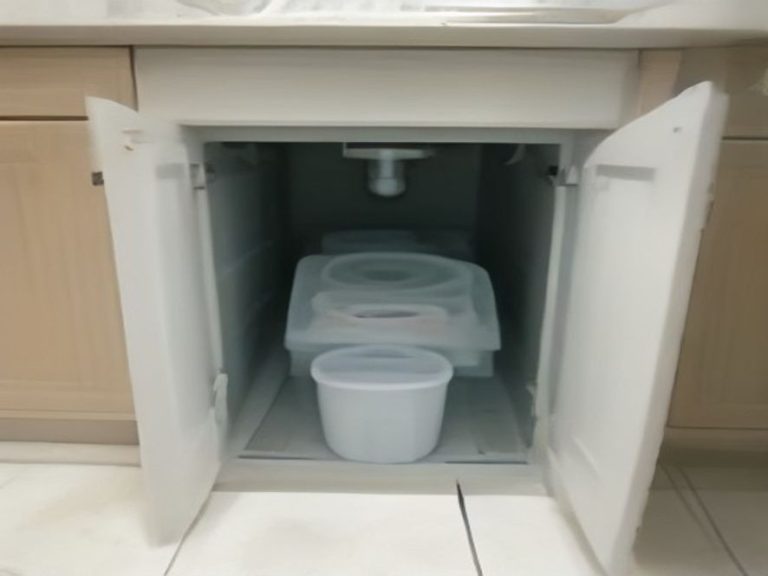
- Empty the cabinet. Remove everything. Check bottles and boxes for dampness. Throw away anything moldy.
- Find the moisture source. Look for drips, condensation, or soft wood. Tighten fittings or replace washers. For persistent leaks, call a plumber.
- Dry the area completely. Use a fan or a dehumidifier. Don’t just wipe — let it dry for hours.
- Clean moldy surfaces. Wear gloves and a mask. Spray with white vinegar (undiluted) or a commercial mold remover. Let it sit 10 minutes, then scrub and wipe.
- Disinfect and dry again. After cleaning, run a fan to remove all moisture.
- Add moisture control. Place a small dehumidifier, charcoal bags, or silica gel packs in the cabinet.
- Improve airflow. Leave the cabinet door open for a few hours each week. Consider a small USB fan.
- Check your kitchen ventilation. Make sure your exhaust hood is working. A hood CFM that’s too low won’t remove steam efficiently. For serious kitchen ventilation issues, consult an HVAC pro about exhaust CFM and makeup air.
Comparison: Best Ways to Remove and Prevent Sink Mold
| Method / Tool | Purpose | Effectiveness | Difficulty | Cost |
|---|---|---|---|---|
| White vinegar spray | Kill surface mold, deodorize | High (for mild mold) | Easy | $2–$5 |
| Commercial mold remover | Kill deep mold, stains | Very high | Easy | $8–$15 |
| Small dehumidifier | Keep cabinet dry | High (prevention) | Easy | $25–$60 |
| Pipe insulation wrap | Stop condensation drips | High | Moderate | $10–$20 |
| Leak repair (plumber) | Fix hidden water source | Very high (permanent) | Hard | $150–$400 |
| Exhaust hood tune-up | Improve kitchen ventilation | High (whole room) | Moderate | $80–$200 |
Cleaning Effectiveness: Mold Removal Methods (1–5 scale)
Frequently Asked Questions About Kitchen Sink Mold
Why does my kitchen smell bad even after cleaning?
Mold or mildew under the sink often causes persistent odors. Check for hidden leaks or damp wood, and clean with vinegar or a mold killer.
How do I fix a clogged sink that keeps leaking?
First, remove the P-trap and clean debris. If the leak continues, replace the washers or call a plumber — a slow drip feeds mold.
What is the best way to clean grease and mold together?
Use a degreaser first to cut grease, then apply white vinegar or a mold spray. Rinse and dry completely.
Will a dehumidifier under the sink really help?
Yes. Small rechargeable dehumidifiers or silica packs absorb moisture and prevent mold from returning. Empty them regularly.
How can I tell if my kitchen ventilation is poor?
If windows fog up during cooking or smells linger, your exhaust hood may be undersized. Check hood CFM and makeup air requirements.
Is it safe to use bleach on sink cabinet mold?
Bleach kills mold but can damage wood and irritate lungs. Vinegar or commercial mold remover is safer for most cabinets.
How often should I check under my kitchen sink?
Do a quick visual check monthly, and deep clean every three months. This simple kitchen maintenance habit prevents big problems.
Which kitchen problem do you want solved next? Share your thoughts in the comments.
Trusted Resources for Kitchen Mold Prevention and Maintenance:
- EPA – Mold Cleanup in Your Home
- Family Handyman – How to Remove Mold Under a Kitchen Sink
- U.S. Department of Energy – Kitchen Ventilation
- This Old House – Preventing Kitchen Mold
Related kitchen care topics: appliance lifespan, kitchen maintenance, exhaust CFM, hood sizing, moisture control, and cost planning for repairs.