How to Use Awkward Kitchen Corners for Extra Storage: Practical Guide
That moment you open your corner cabinet and a cascade of mismatched lids, forgotten spices, and mystery containers tumbles out.
If you’ve ever dreaded opening that dark corner cabinet, you’re not alone. Kitchen corners are notorious for becoming black holes where good storage goes to die . But here’s the thing: with the right approach, these awkward spots can become some of the most valuable storage in your kitchen. Modern hardware and clever design have turned corners from frustrations into functional gems .
TL;DR
- Corners Don’t Have to Be Wasted: With smart hardware like lazy Susans, pull-outs, and magic corners, you can access every inch .
- Choose Your Solution Based on Usage: Heavy pots need sturdy pull-outs, while spices and jars work great on rotating trays .
- Consider the Magic Corner: A premium but highly effective system that pulls entirely out, making every basket visible .
- Don’t Forget the Upper Corner: Tiered turntables and shelf risers make upper corners accessible and organized .
- Think Beyond Cabinets: Open shelving, appliance garages, and even breakfast nooks can turn corners into functional zones .
Why Kitchen Corners Are So Tricky
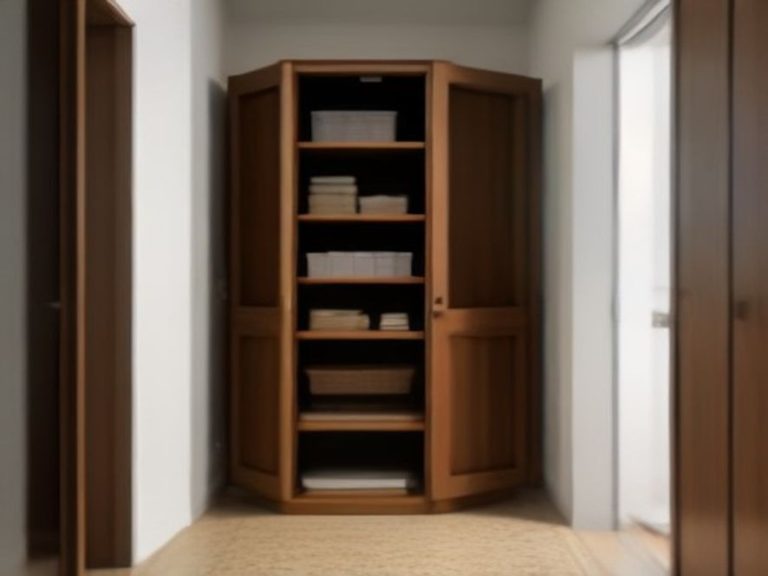
The main problem with corner cabinets is simple: they’re deep and awkward. The standard approach—a single shelf with a door—means the back half of the cabinet becomes a “dark zone” where items go to be forgotten. You end up with duplicate purchases and expired food because you can’t see what’s back there .
The good news? Hardware innovation has completely changed the game. Systems like magic corners, blind-corner pull-outs, and swing-out shelves can pull hidden storage into plain view . The catch is that premium hardware costs more, but for kitchens where storage is tight, the upgrade pays off in daily convenience .
Smart Solutions for Awkward Kitchen Corners
1. Lazy Susan with Modern Features
The classic lazy Susan has gotten a serious upgrade. Modern versions feature layered organizers, removable inserts, and 360-degree rotation that brings the back of the cabinet to you with one spin . They’re brilliant for pots, pans, and those oversized serving bowls you only use during holidays .
Pros: Affordable, easy to install, and makes deep corners accessible .
Cons: Can be tricky to install precisely; items near the center can get lost behind taller items on the outer ring .
*Tip: *Use two-tier turntables in upper corner cabinets so small jars don’t disappear behind taller bottles. It instantly makes spices and extracts visible, which is half the battle in a deep corner .*
2. Blind Corner Pull-Out Systems
Blind corners—where one cabinet wraps behind another—are notorious for lost Tupperware and mystery lids. Modern pull-out systems solve this by sliding the rear trays forward while the front trays move aside . In a 450 sq ft apartment, this simple upgrade turned the hardest cabinet to access into the easiest one in the kitchen .
Best for: Heavy cookware, sauté pans, and deep pantry items.
Catch: Measure precisely and install level. Expect a higher price tag, but the usability payoff is huge in small kitchens .
3. Magic Corner System
The “magic corner” is a revolutionary mechanism that pulls the entire storage unit out of the corner, making every basket visible and accessible . It typically comes with four trays: two attached to the inner wall and two attached to each other. The front trays can be removed for cleaning, while the back shelves pull out for easy loading and unloading .
Requirements: Needs approximately 3.5 x 4 feet of space with a minimum depth of 2 feet .
Cost: The mechanism alone runs about $350-600 USD, with finishes adding another $120-840 .
What to store: Less frequently used items like pots, pans, and tableware to free up primary cabinet areas for daily essentials .
4. Corner Drawers
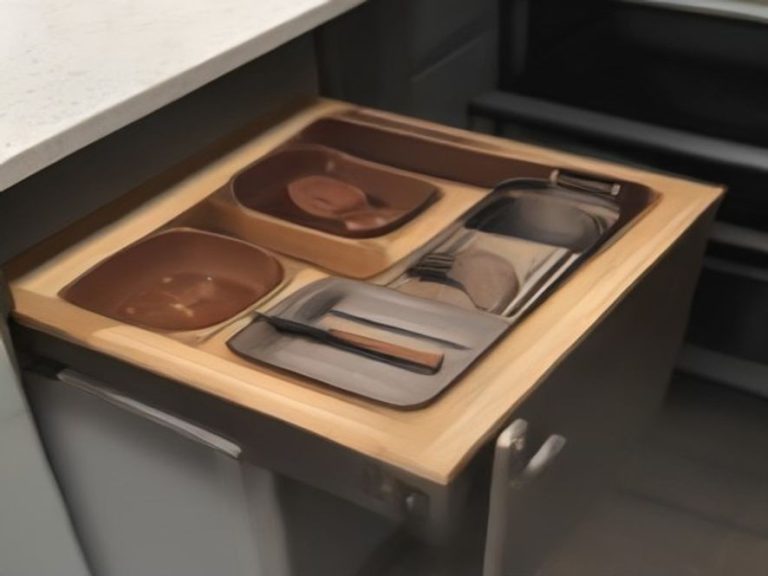
Real drawers in the corner—with angled fronts and shaped boxes that follow the corner—offer better segmentation than open shelves . They’re perfect for spices, linens, and utensils. The clean, sleek facade works well if you prefer a polished look .
Reality check: Corner drawers sacrifice some cubic volume compared to shelves, and the custom drawer boxes cost more. Plan a shallow top drawer for everyday tools and deeper drawers for bulky items .
5. Open Corner Shelves
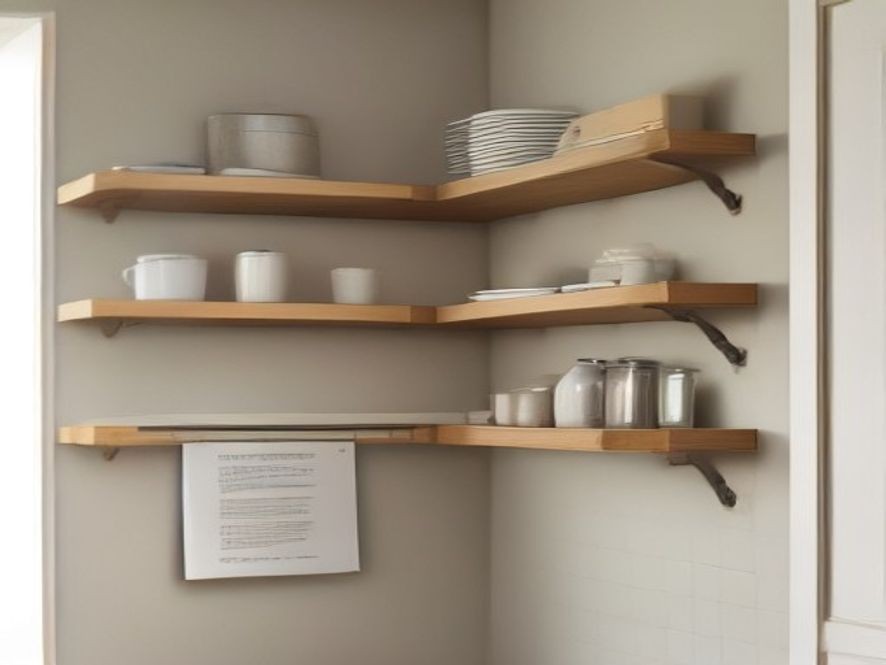
Open shelves in a corner add visual lightness and give you a spot for plants, cookbooks, and pretty jars . They keep the kitchen feeling airy and casual while providing accessible storage . Use vertical dividers to store cutting boards and platters standing up .
Pro: Budget-friendly and easy to install.
Con: They won’t hide messes, so they work best if you’re tidy or willing to style items regularly .
6. Corner Appliance Garage
Tuck your blender, toaster, or mixer behind a lift-up or roll-down door in the corner. This keeps counters clean while appliances stay accessible . Good ventilation planning is essential, and vertical lift doors avoid collisions with nearby cabinets .
Bonus: Works well in tight L-shaped kitchens where every inch of counter space matters.
7. Built-In Breakfast Nook
Convert an unused corner into a cozy dining spot with a bench and compact table. One designer squeezed a four-person nook into a 9 square meter kitchen using bench storage and a foldable table leaf . The bench can hide additional storage underneath, maximizing utility while adding character .
Comparison of Corner Solutions
| Solution | Best For | Effectiveness | Difficulty Level | Approx. Cost |
|---|---|---|---|---|
| Lazy Susan | Pots, pans, pantry items | High | Easy | Low to Medium |
| Blind Corner Pull-Out | Heavy cookware, deep storage | Very High | Medium | Medium to High |
| Magic Corner | Maximizing full corner access | Very High | High (pro install) | $500-1,500 |
| Corner Drawers | Spices, tools, linens | High | High (custom) | Medium to High |
| Open Shelves | Display, cookbooks, jars | Medium-High | Easy | Low |
| Appliance Garage | Hiding countertop appliances | High | Medium | Medium |
| Breakfast Nook | Seating with hidden storage | Medium-High | Medium | Medium |
Step-by-Step Guide: Assess and Fix Your Corner
- Empty and Clean: Pull everything out of your corner cabinet. Toss expired food and wipe the shelves—you’ll be amazed what’s been hiding back there .
- Measure Carefully: Note the width, depth, and height. For pull-out systems, measure the front opening and consider door swing clearances. The National Kitchen & Bath Association recommends at least 42 inches of clearance for a one-cook layout .
- Decide What to Store: Heavy pots need sturdy pull-outs. Spices and oils work on rotating trays. Less-used items can go in a magic corner system.
- Choose Your Solution: For renters, start with a lazy Susan or open shelves . For homeowners, consider premium systems like magic corners or blind-corner pull-outs .
- Install Carefully: For complex systems, consider hiring a professional. Poor installation can lead to misalignment and wasted space .
FAQ: Your Corner Storage Questions, Answered
1. What’s the best corner solution for a very small kitchen?
A corner pull-out pantry or layered lazy Susan usually offers the best balance of storage and accessibility in tight spaces .
2. Are Lazy Susans still used in modern kitchens?
Yes, but they’re less dominant than they used to be. Many modern kitchens prefer pull-out systems because they maximize storage and improve accessibility .
3. Are corner drawers worth the cost?
If you value organization and quick access, yes—especially for spices, tools, and linens. Just know you’ll sacrifice some raw storage volume compared to shelves .
4. Can corner solutions support heavy cookware?
Heavy-duty lazy Susans and pull-out systems are built to handle pots and pans. Always check weight ratings on hardware specs .
5. How much clearance do corner cabinet doors need?
Plan door swings so they don’t collide with handles or appliances; leave at least 1-2 inches of buffer. For overall kitchen movement, NKBA recommends 42 inches for one cook and 48 inches for two .
6. What’s a typical budget for corner hardware upgrades?
Simple lazy Susan kits often cost $150-300, while blind corner pull-outs can range from $400-900 depending on finish and capacity .
7. What materials and hardware last longest in corner cabinets?
Plywood boxes with sturdy corner blocking, full-extension soft-close slides, and heavy-duty tray bearings hold up best .
8. Can I put a sink in the corner with cabinets?
You can, and it can free up straight runs for prep, but plumbing access is trickier and the under-sink corner can get tight .
Conclusion
Awkward kitchen corners don’t have to be wasted space. Whether you choose a classic lazy Susan, a premium magic corner system, or a cozy breakfast nook, there’s a solution that fits your space and budget. Start by emptying and measuring your corner, decide what you need to store, and pick the solution that works best for your lifestyle. Your kitchen has more storage than you think—you just need to look in the corners.
Remember: The best corner solution is one you’ll actually use. Prioritize accessibility over pure volume, and you’ll be amazed at how much more functional your kitchen becomes.
Which corner problem in your kitchen are you ready to solve? Share your thoughts in the comments.
More kitchen organization guides and expert tips: