How to Store Cutting Boards in a Small Kitchen Without Wasting Space
“That moment when you have to move three cutting boards just to find a clean spot to chop an onion? It makes even a quick dinner feel like a messy obstacle course.”
TL;DR: Small kitchens can handle a collection of cutting boards without losing counter space. Use vertical storage on walls, inside cabinet doors, or in narrow gaps. Use bookends, under-shelf racks, or drawer dividers to keep boards upright, dry, and easy to grab. The best way to store cutting boards is to treat them like books — vertical and airy.
Key Takeaways
- Go vertical: Use wall hooks, pegboards, or under-cabinet brackets to free up counters.
- Use hidden spots: Inside cabinet doors, beside the fridge, or in skinny cabinets — every inch counts.
- Keep boards dry: Good airflow prevents warping and bacteria. Always dry before storing.
- Repurpose cleverly: Bookends and tension rods work beautifully as budget-friendly cutting board organizers.
- Separate by use: Keep a board for meat, one for veg, and one for bread if you can — this helps with kitchen hygiene.
Small Kitchen, Big Board Collection? Here’s How to Fix That
If you’ve ever had to dig through a cluttered cabinet, holding your breath while a heavy wooden board threatens to avalanche onto your toes, you’re not alone. Cutting boards are essential, but in a compact cooking space, they can quickly turn into countertop bullies.
The solutions aren’t complicated — they’re all about using space you didn’t know you had. Let’s walk through the most practical, renter-friendly, and even stylish ways to tame your board collection. Whether you have one cherished wooden board or a whole set for different foods, there’s a trick here that will fit your kitchen.
Why the Best Way to Store Cutting Boards Is Not Flat in a Drawer
Most of us default to stacking boards flat in a drawer or cupboard. But this common habit can cause real problems. Wood and bamboo boards need airflow. When you stack them while they’re even slightly damp, you trap moisture. That can lead to warping, cracking, or even mold growth over time. Plus, it’s a pain to pull out a heavy board from the bottom of a stack.
“Most kitchen problems come from small maintenance habits that are often ignored.” — and cutting board storage is a perfect example. Storing boards vertically, with space between them, is the gold standard. It lets air circulate, keeps them dry, and makes them much easier to grab when you’re mid-recipe.
7 Smart Solutions for Storing Cutting Boards in a Tiny Kitchen
1. Turn Your Cabinet Doors Into Storage Real Estate
The inside of a cabinet door is prime, unused space. A slim adhesive rack or mounted bamboo holder can hold two or three thinner boards without taking up any shelf room. This is especially handy for kitchen organization in a rental — strong adhesive strips work well and won’t damage the door. Just make sure your boards are completely dry before sliding them in.
“A well-organized drawer can feel like a luxury in a tiny kitchen.” And the same goes for a clutter-free cabinet door.
2. Use Bookends for a Surprisingly Stylish Fix
Here’s a brilliant, budget-friendly hack: grab a pair of sturdy bookends from your local office supply store. Place them on your counter or a shelf, and slide your cutting boards upright between them. It creates a neat, adjustable “library” for your boards. This keeps them accessible, looks intentional, and allows for natural airflow.
For less than $25, this is one of the most practical space-saving tools I’ve seen. It works perfectly for large boards that don’t fit well in cabinets, and you can easily adjust the width to add more boards later.
3. Install an Under-Shelf Rack
This is a game-changer. A rack mounted under your upper kitchen cabinets lets you slide cutting boards right underneath, completely off the countertop. It’s like adding a hidden parking garage for your boards.
There are many styles available, from simple metal brackets to the sleek Joseph Joseph Folio system, which even color-codes boards to help avoid cross-contamination. When you’re done chopping, wash, dry, and slide the board back in — it’s that simple.
4. Hang Them on Hooks or a Pegboard
If you have a small wall space, use it. A simple rail with S-hooks or a pegboard can turn your cutting boards into functional wall art. Wooden boards, in particular, look lovely on display and dry perfectly in the open air.
For renters, Command hooks or suction-cup rails are a fantastic option — no drilling required. This method is not just practical; it adds a warm, chef’s-kitchen feel to your cooking space. Plus, you can see every board at a glance, so you always grab the right one for the job.
5. Use the Slim Gap Next to Your Fridge
That awkward gap between your fridge and the wall? It’s not useless — it’s a narrow storage opportunity. A slim rolling rack, designed for baking sheets, can slide right into that space and hold all your cutting boards. It pulls out like a drawer, making everything accessible, and then tucks away completely out of sight. This is one of the best solutions for reclaiming floor space without any permanent changes.
6. Go Vertical in a Drawer With Dividers
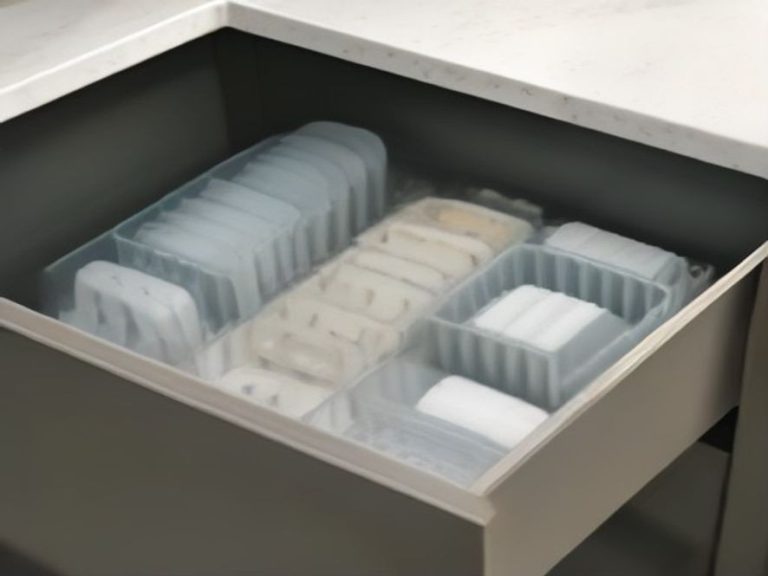
If you have a deep drawer, don’t let it become a junk drawer. Install adjustable dividers or tension rods to create slots where you can store cutting boards upright. This keeps them separated, prevents them from toppling over, and makes them easy to lift out. It’s an especially good method for plastic boards, which can sometimes slip and slide in a drawer.
7. Put a Wire Rack Inside a Cabinet
A simple wire rack or file sorter placed inside a cabinet can corral cutting boards and baking sheets in one vertical row. This is a classic organizer for a reason — it works. Just make sure you measure the height of your cabinet to ensure the rack fits, and always dry your boards before putting them away to avoid moisture in the enclosed space.
Comparison Table: Cutting Board Storage Methods
| Storage Method | Best For | Effectiveness | Difficulty Level | Approx. Cost |
| Under-Shelf Rack | Thin to medium boards | ⭐⭐⭐⭐⭐ (Great airflow, zero counter use) | Easy (screw or adhesive) | $$ (Under $40) |
| Wall Hooks / Pegboard | Any board, especially heavy wood | ⭐⭐⭐⭐⭐ (Instant access, decorative) | Easy to Medium | $ (Under $20) |
| Inside Cabinet Door | Thinner boards | ⭐⭐⭐⭐ (Hides clutter, uses dead space) | Very Easy | $ (Adhesive racks) |
| Bookends on Counter | Large or multiple boards | ⭐⭐⭐⭐ (Stylish, adjustable) | Very Easy | $ (Under $25) |
| Skinny Gap Rack | All sizes, especially large | ⭐⭐⭐⭐⭐ (Maximizes hidden space) | Easy | $$ (Rolling racks) |
Chart: Which Storage Method Works Best for You?
Frequently Asked Questions About Cutting Board Storage
Why does my wooden cutting board warp?
Exposure to moisture and heat causes warping. Always dry it thoroughly on its edge before storing, and keep it away from the stove or direct sunlight.
Should I store cutting boards flat or upright?
Upright is always better. It allows air to circulate, prevents moisture from getting trapped, and makes boards easier to grab.
How can I store cutting boards without damaging cabinets?
Use strong adhesive strips or hooks, or place a freestanding rack inside a cabinet. Tension rods between shelves also work well for vertical storage.
Is it okay to keep my cutting board on the counter all the time?
It’s fine if it’s used daily, but in a small kitchen, keeping it out can eat up valuable workspace. Try a vertical stand or bookends to keep it accessible but tidy.
How do I prevent my cutting boards from getting smelly?
Bacteria from trapped food particles cause odors. Clean thoroughly with soap and water, dry completely, and store in a ventilated spot.
What’s the best way to organize multiple cutting boards for different foods?
A vertical sorter or under-shelf rack with separate slots is ideal. Color-coded boards (e.g., red for meat, green for veg) help prevent cross-contamination and make selection quick.
Can I store cutting boards in the fridge?
Not recommended unless it’s a dedicated flexible mat for raw meat. The cold and moisture can damage wooden boards and is generally unnecessary.
References & Further Reading
Practical cutting board storage tips and kitchen organization guides:
- Myhomistry — Cutting Board Storage Ideas
- Livingetc — Under-Shelf Chopping Board Set Review
- Yahoo — Cutting Board Organization Hacks
- Streamlined Living — Chopping Board Storage Solutions
Which kitchen problem do you want solved next? Share your thoughts in the comments.