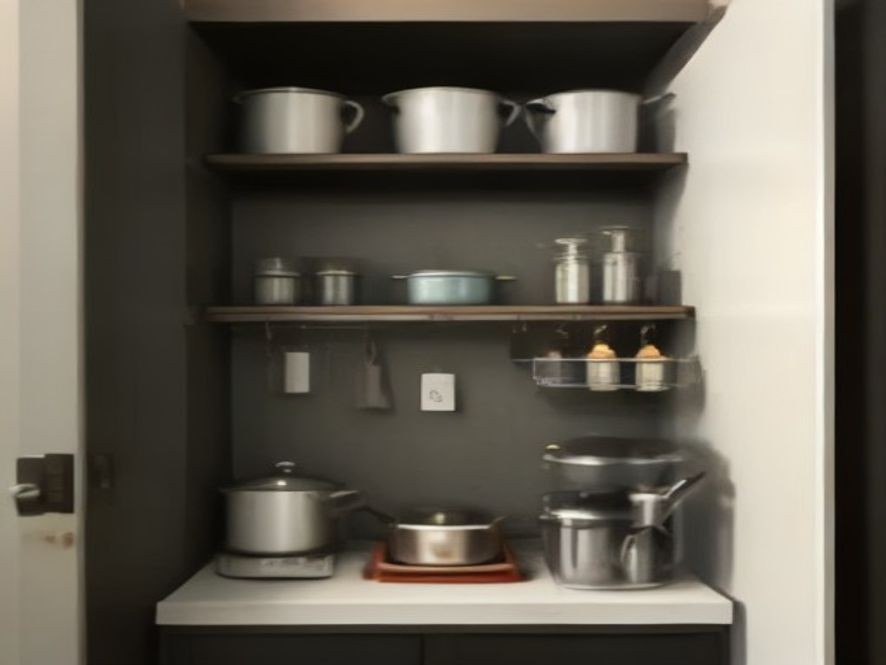
How to Store Pots and Pans in a Small Kitchen With Limited Cabinets: Smart Space-Saving Solutions
That cabinet avalanche of clanging pots and pans every time you cook can finally become a thing of the past with a few clever changes.
TL;DR
This guide explains why cookware takes over small kitchens and gives you practical solutions that don’t require a renovation. You’ll learn about vertical storage, hanging racks, pull-out organizers, and smart ways to use dead space. With a few simple adjustments, your cookware can go from chaotic clutter to an organized system that actually makes cooking easier.
Key Takeaways
- The main cause of cookware chaos is treating all pots and pans as one category instead of sorting by frequency of use.
- Vertical storage is the most efficient way to store pans because you can grab any one without moving others.
- Wall-mounted racks and ceiling racks free up cabinet space entirely for other items.
- Declutter first—most kitchens only need a frying pan, a saucepan, and one larger pot.
- Store lids separately using racks, bins, or door-mounted organizers to eliminate the daily lid hunt.
The Real Reasons Your Cookware Takes Over Your Kitchen
If you’ve ever opened a lower cabinet and had a cast iron skillet land on your foot, you know the struggle. Pots and pans are uniquely hard to organize for three reasons: they have irregular shapes, they’re heavy, and stacking them damages non-stick coatings while making bottom items impossible to reach.
The biggest mistake most people make is treating every piece of cookware the same. Your daily frying pan shouldn’t live in the same spot as that turkey roaster you use twice a year. In a small kitchen, you need a strategy that matches how you actually cook—not a one-size-fits-all approach.

Step-by-Step Guide to Organizing Your Cookware
Ready to tame that clanging chaos? Here’s a system that actually works.
Step 1: Declutter Before You Organize
Pull every pot, pan, and lid out onto your counter. This is the most important step.
- Sort by use. Put your weekly cookware on the counter. Set aside baking pans, roasting pieces, and special-occasion items.
- Be realistic. If a pan is warped, peeling, rusted, or a duplicate you never touch, let it go. Most kitchens only need a frying pan, a saucepan, and one larger pot.
- Group by category. Separate your daily drivers from the rarely used pieces.
Getting rid of cookware you don’t use is the fastest way to free up space in a small kitchen.
Step 2: Choose Your Storage Method
Here are the best solutions for small kitchens, from simplest to most involved.
Vertical Pan Storage (Best for Cabinets and Drawers)
Instead of stacking pans flat, store them vertically like files. You can use an adjustable pan rack, a bakeware divider, or even repurposed magazine holders. This lets you grab any pan without unstacking five others. This was my biggest quality-of-life upgrade in a small kitchen.
Wall-Mounted Pot Racks (Best for Empty Wall Space)
Using a pan rail or pegboard turns cookware into visible, useful storage and frees up cabinet space entirely. Install it near your stove so your daily pans are within arm’s reach. This works especially well with stainless steel and cast iron.
Pull-Out Cabinet Organizers (Best for Deep Cabinets)
Deep cabinets are notorious for becoming black holes where cookware disappears. A pull-out drawer brings the entire contents to you, so you never have to crawl into the back. Professional organizers recommend this as one of the best ways to reclaim dead cabinet space, and shoppers report it triples storage capacity.
Ceiling-Mounted Racks (Best for Island or Empty Ceiling Space)
If wall space is limited, look up. A ceiling pot rack keeps cookware within easy reach while keeping counters and cabinets clear. Just make sure you anchor it securely into ceiling joists.
Inside-the-Door Organizers (Best for Lid Storage)
The inside of cabinet doors is often wasted space. Install a slim rack or adhesive hooks to hold lids and lightweight pans. This is a low-cost, high-impact hack that works for renters too.
Step 3: Organize by Frequency of Use
Once you have your storage system, think about placement.
- Everyday pans go in the easiest-to-reach spot near the stove.
- Weekly cookware goes on lower shelves or pull-out baskets.
- Rarely used items go on top shelves, in the pantry, or outside the kitchen entirely.
Step 4: Protect Your Pans
Stacking can scratch non-stick and enamel coatings. If you must stack, place a paper towel, felt protector, or tea towel between each pan. A soft barrier prevents damage and extends the life of your cookware.

Creative Alternatives for Cookware Storage
Maybe standard options don’t fit your kitchen. Here are a few more creative solutions.
The Deep Drawer Peg System
If you have a deep lower drawer, install an adjustable peg system to create custom slots for each pan. Stand pans upright with lids in a separate organizer next to them. This gives you 100% access without moving any other pan—traditional stacking gives you 0%.
Nesting Cookware Sets
If your pans don’t stack neatly, no organizer fully fixes the problem. A nesting set is purpose-built to solve it—the whole set stores in the footprint of a single pot. This is the single biggest space-saver for cookware.
Rolling Cart
A rolling kitchen cart with shelves gives you extra workspace and cookware storage. When you’re finished cooking, roll it into the pantry or laundry room.
Under-Sink Pull-Out
If your sink plumbing leaves a strip of space, a narrow pull-out can hold small pots and lighter pans. This trick freed up major cabinet space in a 450-square-foot apartment.
Tension Rod Hack
Place a tension rod horizontally in a lower cabinet to hang pan lids or shallow pans by their handles. It’s cheap, easy, and damage-free.

Quick Comparison of Cookware Storage Methods
| Method | Best For | Effectiveness | Difficulty Level | Cost |
|---|---|---|---|---|
| Vertical Pan Rack | Cabinets, drawers | Very High | Easy-Medium | Low-Moderate |
| Wall-Mounted Rack | Empty wall space | High | Medium | Moderate |
| Pull-Out Organizer | Deep lower cabinets | Very High | Medium-Hard | Moderate-High |
| Ceiling Rack | Islands, empty ceilings | High | Hard | High |
| Door-Mounted Organizer | Lid storage, small pans | Good for lids | Easy | Low |
| Nesting Set | Minimalist kitchens | Excellent | Very Easy | Varies |
FAQ Section
1. How do you store pots and pans in a small kitchen with no cabinet space?
Use wall-mounted racks, ceiling racks, pegboards, or rolling carts. These move cookware off counters and out of cabinets entirely.
2. What is the best way to store non-stick pans without scratching them?
Store them vertically in a rack or single layer in a drawer. If you must stack, put a felt protector, paper towel, or tea towel between each pan.
3. How do you organize pot lids so they don’t get lost?
Store lids separately in a vertical rack, a shallow bin, or an inside-door organizer. Stand them upright like files so you can see every size.
4. Should I hang pots and pans on the wall?
Yes, especially if you have limited cabinet space. Hanging them frees up cabinets and keeps daily pans within easy reach. Just install anchors rated for the weight.
5. How many pots and pans does one household need?
Most families only need a frying pan, a saucepan, and one larger pot. Donate duplicates and rarely used pieces before reorganizing.
6. What is the cheapest way to organize pots and pans?
Use tension rods, repurposed magazine holders, or simple hooks. You can also stack with paper towel barriers between pans.
7. Where do you store large stockpots in a small kitchen?
Store them on top shelves, in the pantry, or on a rolling cart. Reserve prime cabinet space for your daily-use cookware.
Conclusion
Organizing pots and pans in a small kitchen isn’t about buying expensive gadgets—it’s about using the right strategy for your space. The secret is simple: declutter first, store vertically, separate the lids, and put your daily pans where you can reach them easily. Whether you choose hanging racks, pull-out organizers, or a nesting set, the goal is to make every piece accessible without the daily digging and clanging. A little planning can save you time, frustration, and scratched cookware—and make cooking far more enjoyable.
“Most kitchen problems come from small maintenance habits that are often ignored.”
Start with one cabinet or wall today, and you’ll wonder why you didn’t do it sooner. Which kitchen problem do you want solved next? Share your thoughts in the comments.
Trusted resources for kitchen storage and organization: