How to Maximize Under-Sink Storage in a Small Kitchen: Practical Solutions and Tips
That frustrating moment when you open your under-sink cabinet and a cascade of spray bottles, sponges, and trash bags tumbles out onto your feet.
If you’ve ever dreaded opening that cabinet door, you’re not alone. The space under the kitchen sink is one of the most challenging storage areas in any home. Between the pipes, garbage disposal, and awkward angles, it often becomes a chaotic black hole where organization goes to die. But with a few smart strategies, you can transform this tricky spot into a functional storage zone that actually makes sense.
TL;DR
- Start Fresh: Empty everything out, clean the space, and measure carefully before buying any organizers.
- Work Around Pipes: Use adjustable shelves with U-shaped cutouts, sliding drawers, and tension rods to maximize space despite plumbing.
- Go Vertical: Stackable bins, tiered shelves, and door-mounted racks help you use every inch of height.
- Pull-Out Solutions Win: Sliding drawers and pull-out trays let you reach items in the back without crawling inside the cabinet.
- Protect Your Cabinet: A waterproof mat on the bottom catches leaks and prevents damage to your cabinet.
Key Takeaways
- Measure First: Always measure the width, depth, and height of your cabinet and note the pipe locations before buying organizers.
- Use the Door: Install over-door racks or adhesive hooks on the inside of the cabinet door for sponges, gloves, and small supplies.
- Hang Spray Bottles: A tension rod across the cabinet lets you hang spray bottles by their triggers, freeing up floor space.
- Group Like Items: Use clear bins to categorize cleaning supplies, trash bags, and dish items so you can see everything at a glance.
- Think Sliding: Pull-out drawers and trays bring the back of the cabinet to you, making everything accessible.
Why Under-Sink Cabinets Are So Hard to Organize
The space under your kitchen sink has problems that other cabinets don’t. Pipes block the center, leaving only the edges usable. A garbage disposal might take up space on one side. Water supply lines limit where you can place items, and potential leaks mean you need to be able to see the cabinet floor. According to organization experts, under-sink cabinets are the number one complaint from apartment dwellers.
But don’t let that discourage you. These issues are manageable with the right approach.
Step-by-Step: How to Fix Your Under-Sink Storage
Step 1: Empty and Assess
The first thing you need to do before arranging the space is to empty it out completely. This gives you an idea of how much space actually exists and what you can work with. Once you’ve emptied the place, check the items you absolutely need, make a separate pile of things you don’t need or are past their use-by dates, and a third pile of things that can be given away or shifted elsewhere in the house. Take a damp cloth and disinfectant spray and clean the area thoroughly.
Step 2: Measure Accurately
Once you have cleaned the space, take a measuring tape and accurately measure the width, depth, and height of the cabinet. Also, take careful note of the pipe locations. This step is crucial because under-sink organizers only work if they fit your specific space. As one expert put it, “In my first attempt, I measured wrong, so trust me, double-check before ordering parts.”
Step 3: Categorize Your Items
Turn your attention to the pile of things that you absolutely need. From there, segregate the items into different categories like cleaning supplies, tools, trash bags, compost bins, etc. This helps you figure out what storage solutions you need and where to place them.
Smart Solutions: The Best Ways to Use Under-Sink Space
Use Pull-Out Drawers and Trays
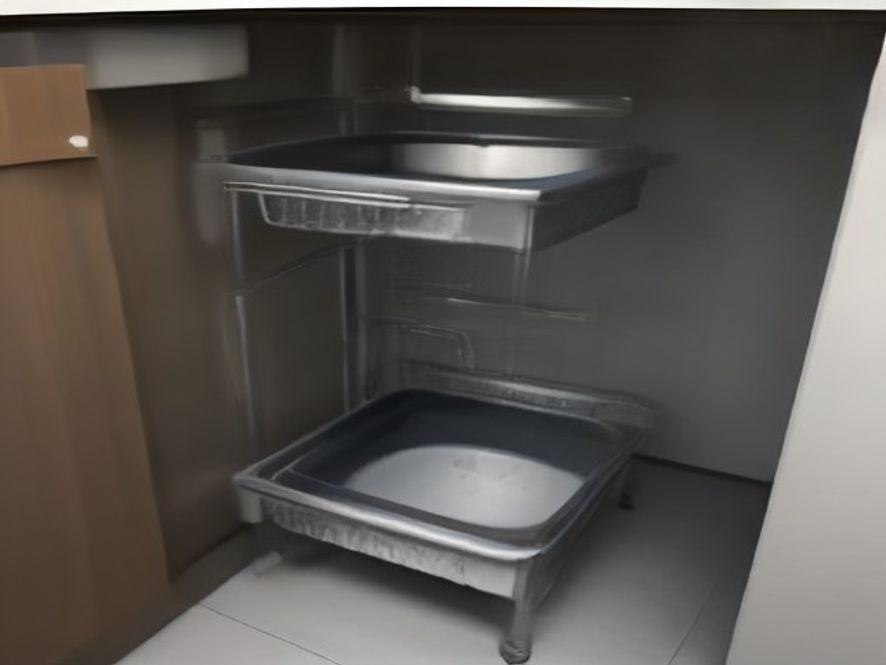
Pull-out drawers are a game-changer for under-sink storage. Instead of crouching down and blindly grabbing things, you can see everything in one smooth pull. Martha Stewart is a fan of this approach, recommending a shallow pull-out tray that spans the entire cabinet floor. As she explains, “A nice pull-out tray makes it easy to get cleaning products. They’ll be right at your fingertips.”
You can buy pre-made pull-out drawer kits or, if you’re handy, build your own using plywood and drawer slides. For renters or those who can’t make permanent modifications, there are adhesive pull-out trays that are fully removable.
Tip: A pull-out drawer system can be installed on one side of the cabinet to avoid the center pipe, creating a multi-tiered storage unit that holds everything from spray bottles to sponges.
Add an Expandable Shelf
An expandable under-sink shelf is one of the single best purchases you can make for this space. These shelves have U-shaped cutouts that wrap around pipes and adjust to fit different cabinet widths. They typically expand from 15 to 25 inches wide and create two levels of storage in dead vertical space.
Install a Tension Rod for Spray Bottles
This is one of the cheapest and most effective tricks. Install a tension rod horizontally near the top of your cabinet and hang spray bottles by their triggers. This uses vertical space that normally sits empty and instantly reclaims the floor space those bottles occupied.
Use the Door
The inside of your cabinet door is prime real estate that often goes to waste. Install an over-door rack or adhesive hooks to hold sponges, gloves, trash bags, or small tools. The open-door design lets you spot what you need immediately and keeps frequently-used items within easy reach.
Important: Be mindful not to overload door-mounted racks. Heavy items can strain the hinges or cause the door to sag over time.
Use Clear Bins and Stackable Storage
Clear bins are essential under-sink organization tools because you need to see what you have. Dark cabinets plus opaque containers equals forgotten supplies. Use them to group similar items together—all your dish soap refills in one bin, trash bags in another, and so on. Stack them vertically to make use of the full height of your cabinet while keeping everything categorized and accessible.
Protect Your Cabinet with a Waterproof Mat
No matter how organized you are, leaks can happen. A waterproof mat or tray on the cabinet base saves you from warped wood or nasty stains. Choose one with a small lip to contain spills. As one expert advises, “A waterproof liner protects your cabinet from leaks and spills while making cleanup easier. These flexible silicone or plastic mats catch drips before they damage the wood.”
Under-Sink Storage Solutions Comparison
| Method | Best For | Effectiveness | Difficulty Level | Approx. Cost |
|---|---|---|---|---|
| Pull-Out Drawer/Tray | Accessing items at the back | Very High | Medium | Medium to High |
| Expandable Shelf | Creating vertical layers around pipes | Very High | Easy | Low to Medium |
| Tension Rod | Hanging spray bottles | High | Very Easy | Very Low |
| Door-Mounted Rack | Sponges, gloves, small items | High | Very Easy | Low to Medium |
| Clear Stackable Bins | Grouping categories | High | Very Easy | Low |
| Lazy Susan | Corner spaces and hard-to-reach areas | Medium | Very Easy | Low |
FAQ: Your Under-Sink Storage Questions, Answered
1. How do I maximize storage under my kitchen sink?
Use vertical space with stackable bins, door-mounted racks, adjustable shelving with cutouts for pipes, and pull-out drawers.
2. Can I store food under the sink?
I don’t recommend it due to humidity and potential leaks—stick to cleaning supplies and non-edibles.
3. What’s the cheapest way to organize this space?
A tension rod for spray bottles and a few clear bins can be done for under $20.
4. How do I protect the cabinet from leaks?
Place a waterproof mat or tray on the bottom to catch drips—this prolongs cabinet life.
5. Are custom under-sink drawers worth it?
If you plan to stay long-term and use the space daily, yes. They provide a tailored fit around plumbing.
6. How do I keep the space organized over time?
Group items by category, label containers, and do a quick check monthly to toss expired items and re-organize.
7. What if my pipes are awkwardly placed?
Use adjustable shelves that wrap around pipes, install organizers on the door instead of inside the cabinet, and consider using a lazy susan in corner spaces.
8. What should I do if I notice a leak?
Temporarily move the contents elsewhere until the problem is solved. Any damages and leaks need to be repaired immediately.
Conclusion
Transforming the chaotic space under your kitchen sink is one of the most satisfying organization projects you can tackle. With a few smart purchases—like a pull-out drawer, an expandable shelf, or a simple tension rod—you can turn this awkward, cluttered cabinet into a functional storage zone that actually works for you. The key is to measure first, work with your specific plumbing layout, and make use of every available surface, including the cabinet door.
Remember, the best organization system is one that you’ll actually maintain. Start small, and you’ll be amazed at how much better your kitchen feels when even the trickiest spots are under control.
Which kitchen storage problem do you want solved next? Share your thoughts in the comments.
More kitchen organization tips and storage solutions: