How to Store Baking Sheets and Trays in a Small Kitchen: Simple Solutions for Clutter-Free Cabinets
That jumbled cabinet where baking sheets slide around and fall every time you reach for one can finally become an organized, easy-to-access storage spot.
TL;DR
This guide shows you why baking sheets and trays create such a mess and gives you practical solutions that work in even the smallest kitchens. You’ll learn about vertical dividers, pull-out racks, tension rods, and clever ways to use dead space. With a few simple changes, your bakeware can go from chaotic clutter to a system where every sheet has its place.
Key Takeaways
- The main cause of baking sheet chaos is stacking them flat, which makes them hard to access and causes scratches.
- Vertical storage is the most space-efficient way to organize baking sheets and trays.
- Use dividers, tension rods, or file-style organizers to keep sheets upright and separated.
- Door-mounted and wall-mounted options free up valuable cabinet space entirely.
- Declutter first—get rid of warped, rusty, or unused sheets to instantly reduce the pile.
The Real Reasons Baking Sheets Take Over Your Kitchen
If you’ve ever opened a cabinet and had a baking sheet slide out and hit you on the head, you know the struggle. Baking sheets and trays are awkwardly shaped, they’re often stored flat, and they tend to slide around when stacked. This makes them hard to access and can damage non-stick coatings.
The biggest problem is treating all bakeware the same way. Your daily cookie sheet shouldn’t share a space with that giant roasting pan you use twice a year. In a small kitchen, you need a strategy that matches how you actually bake.

Step-by-Step Guide to Organizing Your Baking Sheets
Ready to tame that bakeware chaos? Here’s a system that actually works.
Step 1: Declutter Before You Organize
Pull every baking sheet, tray, cooling rack, and muffin tin out onto your counter.
- Check for damage. Throw away any sheets that are warped, rusted, or have peeling non-stick coatings.
- Sort by use. Keep your weekly bakeware within easy reach. Set aside specialty items like pizza pans and roasting trays.
- Group by size. Separate half-sheet pans, quarter-sheet pans, cooling racks, and muffin tins.
Getting rid of damaged or unused bakeware is the fastest way to free up space.
Step 2: Choose Your Storage Method
Here are the best solutions for small kitchens, from simplest to most involved.
Vertical Dividers (Best for Lower Cabinets)
Vertical dividers are the most popular and effective solution. They let you store baking sheets upright like files, so you can grab any sheet without unstacking a pile.
You can buy adjustable wire dividers that fit into existing cabinets. These often come with multiple slots and can be customized to fit different sheet sizes. Many users report that these organizers “turn an awkwardly shaped cabinet into an easily accessible space”.
The key benefit is that you can see every sheet at a glance without digging.
Tension Rods (Best for Narrow Upper Cabinets)
If you have a narrow upper cabinet, tension rods create a simple barrier that keeps sheets upright. Install a rod horizontally about 2 to 3 inches from the front edge of the shelf. Place sheets behind the rod, and they’ll stay standing without falling forward.
This method costs almost nothing and requires no drilling—perfect for renters.
Pull-Out Drawers or Racks (Best for Deep Cabinets)
Deep cabinets are notorious for becoming black holes where bakeware disappears. A pull-out organizer brings the entire contents to you, so you never have to crawl into the back.
One user described a pull-out rack as transforming how they manage their kitchen: “Now, instead of digging through a cluttered shelf, I can see all my baking supplies at a glance”. These racks slide out smoothly and can hold multiple sheets with vertical dividers.
The Gap Between Stove and Wall (Best for Tiny Kitchens)
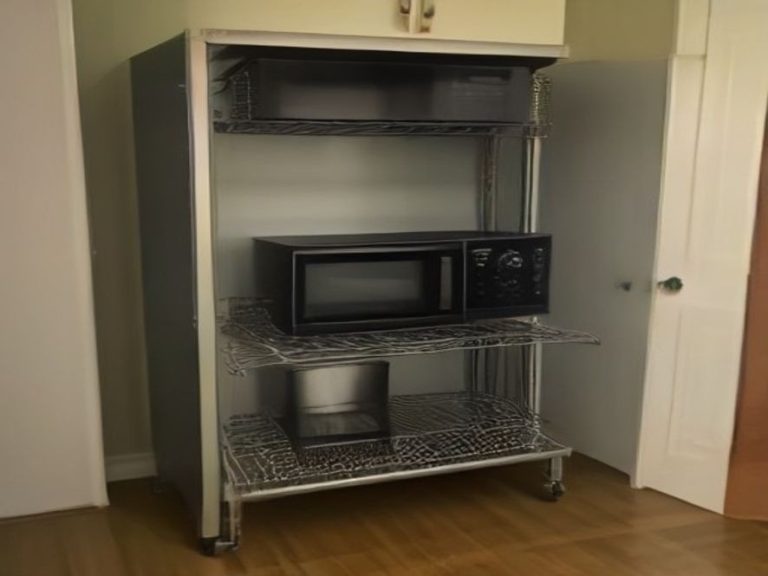
If there’s a gap between your stove and the wall or cabinets, this can be an excellent spot to store baking sheets. Use a slim shelving unit or trolley made of stainless steel or metal—avoid plastic or untreated wood near heat sources.
This often-overlooked space can become a perfect home for your flat bakeware.
Wall-Mounted or Door-Mounted Holders (Best for Limited Cabinet Space)
If cabinet space is nonexistent, look at your walls or cabinet doors. Wall-mounted bakeware holders or under-shelf baskets can free up valuable cabinet space entirely.
Some organizers can be mounted on the inside of a cabinet door, using space you’re probably ignoring.

Step 3: Organize by Frequency of Use
Once you have your system in place, think about placement.
- Daily sheets go in the easiest-to-reach spot near the oven.
- Weekly bakeware goes on lower shelves or mid-height spots.
- Specialty items like roasting pans go on top shelves or in the pantry.
Step 4: Protect Your Bakeware
Stacking can scratch non-stick and enamel coatings. If you must stack, place a paper towel or felt protector between each sheet. A soft barrier prevents damage and extends the life of your bakeware. Some organizers come with heat-resistant silicone strips to protect non-stick surfaces.
Creative Alternatives for Baking Sheet Storage
Maybe standard options don’t fit your kitchen. Here are a few more creative solutions.
Under-Shelf Baskets
Slide a wire basket under a shelf to hold baking sheets. This uses dead space and keeps sheets within easy reach. The wire mesh allows air circulation and prevents moisture buildup.
File Organizers
Repurpose a magazine or file organizer to stand your baking sheets upright. This can be placed in a cupboard or on a counter for a budget-friendly solution.
Ceiling Racks
If wall space is limited, look up. A ceiling pot rack can also hold baking sheets, keeping them within easy reach while keeping counters and cabinets clear.
Shelf Risers
If you have extra vertical clearance, shelf risers create two levels of storage within one cabinet shelf. Place larger sheets on the lower level and smaller ones on the riser platform.

Quick Comparison of Baking Sheet Storage Methods
| Method | Best For | Effectiveness | Difficulty Level | Cost |
|---|---|---|---|---|
| Vertical Dividers | Lower cabinets, multiple sheets | Very High | Easy-Medium | Low-Moderate |
| Tension Rods | Narrow upper cabinets | Good | Very Easy | Very Low |
| Pull-Out Racks | Deep lower cabinets | Excellent | Medium-Hard | Moderate-High |
| Wall/Door Mounts | Limited cabinet space | High | Medium | Moderate |
| File Organizers | Budget setups, small collections | Good | Very Easy | Very Low |
| Shelf Risers | Extra vertical clearance | Moderate | Easy | Low |
FAQ Section
1. What is the best way to store baking sheets in a small cabinet?
Store them upright using vertical dividers or a tension rod. This lets you grab any sheet without moving others.
2. Where do you store baking sheets if you have no cabinet space?
Use wall-mounted racks, under-shelf baskets, or the gap between your stove and wall. Ceiling racks are also an option.
3. Should baking sheets be stored flat or upright?
Upright is better. It saves space, prevents scratches, and makes sheets easier to access.
4. How do you organize muffin tins and odd-shaped bakeware?
Use adjustable dividers that can accommodate different widths. Store them with your baking sheets if space allows.
5. Can you store baking sheets in the oven drawer?
Only if the drawer is for storage. If it’s a warming drawer, store your bakeware elsewhere.
6. How many baking sheets does a household need?
Most kitchens only need 2–3 standard half-sheet pans. Declutter damaged or unused sheets first.
7. What’s the cheapest way to organize baking sheets?
Use tension rods or repurposed magazine holders. Both cost very little and work well for most collections.
Conclusion
Organizing baking sheets in a small kitchen isn’t about buying expensive gadgets—it’s about using the right strategy for your space. The secret is simple: store them upright, separate them with dividers, and put your daily sheets where you can reach them easily. Whether you choose vertical dividers, tension rods, or wall-mounted racks, the goal is to make every sheet accessible without the daily digging and sliding.
“Most kitchen problems come from small maintenance habits that are often ignored.”
Start with one cabinet or wall today, and you’ll wonder why you didn’t do it sooner. Which kitchen problem do you want solved next? Share your thoughts in the comments.
Trusted resources for kitchen storage and organization: