How to Organize a Pantry to Stop Buying Duplicate Food
You pull out a jar of paprika, and three more identical jars roll out from the back of the shelf. You’ve done it again — bought something you already owned.
Buying duplicate food doesn’t just waste money—it creates clutter, leads to more waste, and makes cooking harder because you can’t find what you actually need. The root cause is almost always the same: you don’t have a clear view of what’s already in your pantry.
Step 1: Do a Full Pantry Audit
Before you organize anything, you need to know exactly what you’re working with. Take everything out of your pantry—yes, everything—and lay it on your kitchen counter or table. Professional organizer Allison Weigensberg says, “We inevitably find surprises even when people claim to know exactly what’s in there”.
Check expiration dates as you go. Toss anything that’s expired, stale, or that your family realistically isn’t going to eat. As you sort, group items into categories like canned goods, grains and pasta, baking supplies, snacks, condiments, oils, and spices. This step alone will reveal how many duplicates you already have.
This audit isn’t a one-time event. Aim to do a lighter version every three to six months.
Step 2: Group Like Items Together
Once you know what you have, group categories into zones—specific sections of your pantry based on how your household cooks and eats. Professional organizer Allison Weigensberg emphasizes, “Don’t overcomplicate it… The categories should feel obvious so that anyone in your home can find things and put things away”.
How to zone your pantry:
- Everyday staples (oils, salt, pasta, canned tomatoes) go at eye level for easy access
- Baking supplies live together on one shelf so you can grab everything at once
- Snacks go on lower shelves if kids need to reach them
- Bulk or backup items go higher or further back, where they’re not taking prime real estate
When every item has a home, you’ll always know at a glance what you have and what you’re running low on. That visual clarity is your best defense against buying things you already own.
Step 3: Use the FIFO Rule
FIFO stands for First In, First Out. It’s the system grocery stores use, and it’s the single most effective habit for preventing duplicates and food waste.
Here’s how it works: When you restock, push older items to the front and place new ones behind them. This way, you always reach for the oldest item first, and nothing gets forgotten at the back.
For canned goods, place newer cans behind older ones. For dry goods in containers, always finish what’s in the container before refilling. This small habit prevents food waste and keeps your pantry naturally rotating.
Step 4: Shop Before You Shop
Before you write your grocery list or head to the store, do a quick scan of your pantry. Actually look at what you have, don’t just try to remember it. Dietician Sonal Ratan advises “making an inventory by creating a list of what to buy to avoid purchasing duplicates”.
Ways to check before you shop:
- Keep a simple inventory list on your phone, a whiteboard on the pantry door, or a shared digital document
- Update it consistently—remove items when you use the last of them, add them back when you restock
- Before every grocery run, check your inventory rather than trying to mentally picture what’s on the shelves
- Take a quick photo of your pantry shelves before heading to the store for a visual reference
Step 5: Use Clear Containers and Labels
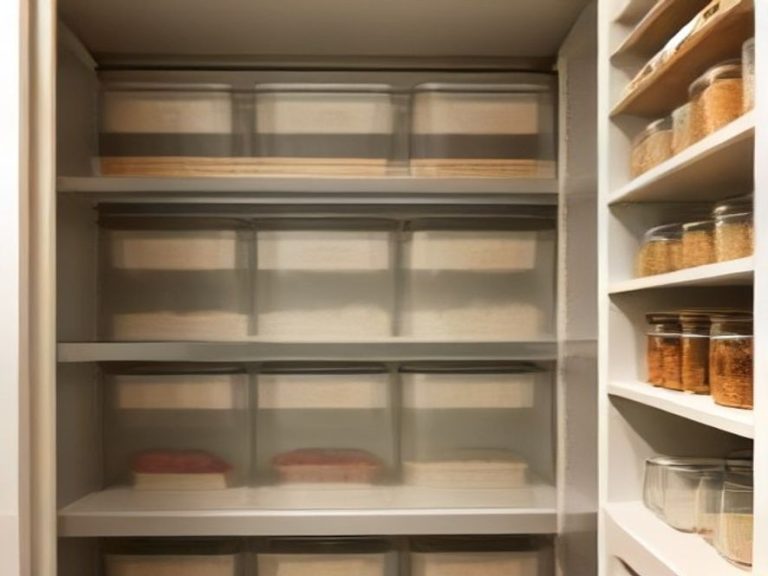
Being able to see exactly how much rice, flour, or oats you have left means no more guessing at the store. Transfer dry goods into clear, stackable, airtight containers that use vertical space efficiently and keep food fresher longer.
Label clearly:
- Include the item name and the expiration date
- Use a label maker, chalkboard labels, or even masking tape with a marker
- Labels are especially important after a big pantry overhaul—it helps everyone in the household get used to the new system
For a simple trick to quickly see how many items you have, rip the box tops off your food products and store them sideways.
Step 6: Designate a “Use Soon” Zone
Create a specific spot—a small basket or a front-of-shelf area—for items close to expiration. This keeps these items visible so you’ll actually use them before they go bad. Check this zone first when planning meals.
Step 7: Consider a Pantry Tracking App
If a written inventory feels like too much maintenance, apps can handle the tracking for you. Apps like “Pantry: Inventory Food Tracker” let you scan barcodes, track expiry dates, and share your pantry inventory with family members. One review notes it helps families who’ve “stopped buying duplicates and wasting food”. These apps can send reminders for items close to expiry and create shared shopping lists that stay in sync.
Comparison: Methods to Stop Duplicate Buying
| Method | How It Works | Best For |
|---|---|---|
| Pantry Audit | Empty and categorize everything every 3-6 months | Finding existing duplicates, starting fresh |
| Zones | Group items by how you cook and eat | Making categories obvious so everyone can find items |
| FIFO | New items behind older ones | Preventing hidden items and expiration |
| Inventory check | Scan pantry before shopping | Stopping “I thought we were out of that” purchases |
| Clear containers | See quantities at a glance | Visual clarity for restocking |
| Use Soon zone | Front-of-shelf basket for expiring items | Actually using food before it goes bad |
| Pantry app | Track inventory, expiry dates, share lists | Families with multiple shoppers |
FAQ: Stopping Duplicate Food Purchases
1. Why do I keep buying duplicates?
Most people buy duplicates because they don’t have a clear visual of what’s already in their pantry. Items get lost at the back, and you don’t remember what you own. A clear system solves this.
2. What’s the most important habit to stop duplicates?
Shop your kitchen before you shop the store. A quick scan before every grocery trip prevents buying duplicates that crowd shelves and push things out of order.
3. Do I really need to take everything out?
Yes. “And I really mean everything,” says professional organizer Allison Weigensberg. You cannot see what you actually have until it’s all in front of you.
4. How often should I do a full pantry audit?
Once or twice a year for a full audit, with lighter checks every three to six months. Martha Stewart recommends discarding expired pantry items twice a year and reviewing spices annually.
5. What’s a “Use Soon” zone?
A small basket or front-of-shelf area where you place items close to expiration. This keeps them visible and top of mind so you actually use them before they go bad.
Start Today
You don’t need a pantry remodel or fancy containers to stop buying duplicates. Start with a full audit. Empty everything, group like items, and see what you actually have. Then, before every grocery run, do a quick scan. Over time, these habits become automatic—and your wallet will thank you.
Which duplicate-buying habit are you breaking first? Share your thoughts in the comments.
How to Organize a Pantry to Stop Buying Duplicate Food: A Simple System to Save Money and Reduce Waste