
Why Does My Pantry Get Messy So Quickly? Causes and Solutions for a Clutter-Free Kitchen
You organized your pantry just last week, and somehow it already looks like a disaster zone again. You’re not alone in this frustration—it feels like the mess multiplies overnight. The good news is that there are specific, fixable reasons why your pantry gets messy so quickly. This guide will show you exactly what causes the chaos and how to solve it for good.
TL;DR
Pantries get messy quickly because of a combination of bad habits and system failures. The main culprits are not using FIFO (First-In, First-Out), overcomplicating organization systems, using the wrong containers, and skipping regular maintenance . To fix this, simplify your system to broad categories, switch to stackable square containers, commit to a weekly 5-minute tidy-up, and always rotate stock when restocking . Most importantly, get everyone in your household on board with the new system .
Key Takeaways
- Bad Habits Create the Mess: The real problem is usually how you and your family use the pantry, not how you organized it in the first place .
- FIFO is Essential: Not rotating your stock is the fastest way to create a graveyard of forgotten, expired food at the back of your pantry .
- Simplify Your System: Overly complicated systems with too many tiny labels and categories often fail in busy households. A simple, flexible system is more sustainable .
- Containers Matter: Using round containers or keeping food in original packaging wastes space and creates clutter. Square, stackable, airtight containers are a better choice .
- Maintenance is Key: An organized pantry isn’t a one-time event—it requires a quick weekly check and a monthly clean-out to stay that way .
The Real Causes Behind Rapid Pantry Mess
Understanding the specific reasons your pantry gets messy quickly is the first step to preventing the cycle.
Cause 1: You’re Not Using the FIFO Method
This is arguably the biggest culprit. When you buy new groceries and shove them in front of older items, the old stuff gets pushed to the back and eventually expires . This creates a “buried treasure” effect where you discover expired food months later.
How to fix it: Use the First-In, First-Out (FIFO) method. When you restock, place new items behind older ones so you naturally reach for the oldest food first . This is the same system professional kitchens use .
Cause 2: Your System is Too Complicated
Fancy systems with too many tiny labels, specific categories, and strict rules often break down in real life . They require too much effort to maintain, especially on busy weeknights.
How to fix it: Keep it simple. Use broad category labels like “breakfast,” “snacks,” “baking supplies,” and “canned goods” rather than labeling every single item . A flexible approach works better for busy households .
Cause 3: You’re Storing Items in the Wrong Containers
Round containers create dead space between them on square shelves. Opaque containers hide what’s inside, so you forget what you have. Keeping food in original packaging means you’re dealing with boxes and bags that don’t seal properly and are hard to stack .
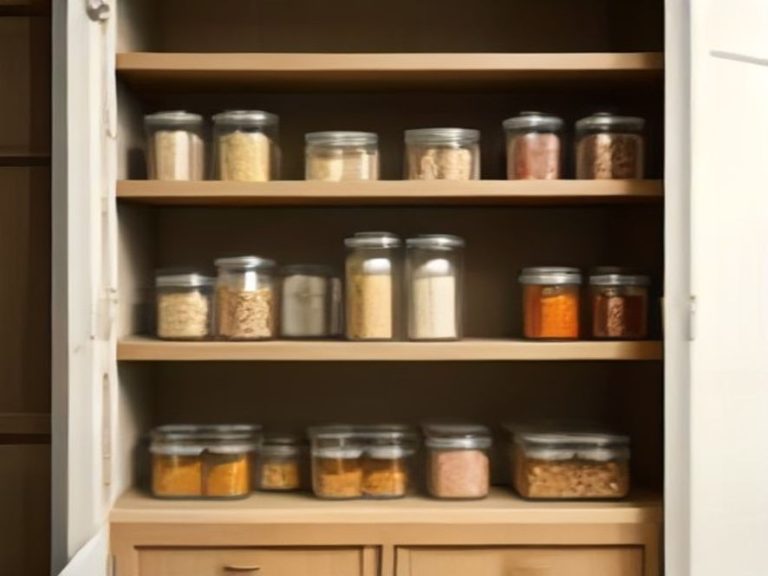
How to fix it: Use clear, square or rectangular, airtight containers. They line up neatly, let you see your stock at a glance, and keep food fresh .
Cause 4: You’re Not Doing Regular Maintenance
An organized pantry isn’t a one-time project—it requires maintenance. Without a regular check-in, even the best system will eventually fall apart .
How to fix it: Do a quick five-minute weekly check where you face items forward and spot anything about to expire. Then, schedule a monthly 30-minute clean-out to check expiration dates and wipe down shelves .
Cause 5: You’re Storing Non-Food Items in the Pantry
Storing cleaning supplies, pet food, or paper goods in your pantry takes up valuable space and can create safety hazards . Cleaning chemicals can contaminate food through spills or fumes, and pet food attracts pests .
How to fix it: Keep your pantry exclusively for food. Store cleaning supplies under the sink, pet food in a sealed container in a separate area, and paper goods in a linen closet .
Cause 6: You Don’t Have a Home for Everything
If items don’t have a designated spot, they end up wherever they fit. This is the fastest way to create clutter .
How to fix it: Every item in your pantry should have a designated home. This is non-negotiable for maintaining organization. Take the extra ten seconds to put items where they belong .
Cause 7: You’re Not Getting the Whole Family Involved
You can’t be the only one who follows the system. If other family members are just shoving things in wherever they fit, your hard work will be undone quickly .
How to fix it: Show everyone where things go and explain the system. Use clear labels so it’s obvious. Make it easy for kids by putting their snacks on a low shelf they can reach .
Cause 8: You Didn’t Create Zones Based on How You Actually Cook
If your pantry doesn’t reflect your actual cooking habits, it won’t work for you . For example, if you bake a lot, your flour and sugar should be front and center.
How to fix it: Organize around your habits . Keep frequently used items at eye level and within easy reach. Put less-used items on higher or lower shelves.
Cause 9: You’re Buying Too Many Groceries at Once
A huge grocery haul can overwhelm even the best-organized pantry. When you buy more than you have space for, you start shoving things in wherever they fit, and the organization breaks down .
How to fix it: Be realistic about how much your pantry can hold. Consider doing smaller, more frequent shopping trips rather than one giant haul. If you do buy in bulk, have a plan for storing overflow outside the kitchen .
Cause 10: You’re Keeping Food in Its Original Packaging
Flimsy cereal boxes and open bags of chips don’t seal out air or pests . Stale food is a sure sign that you need better storage solutions.
How to fix it: Ditch the cardboard and decant items into airtight, reusable containers . This not only looks better but also extends the shelf life of your food and makes it easier to see what you’re running low on.
Quick Reference: Causes and Solutions
| Cause | Solution |
|---|---|
| Not using FIFO | Place new items behind older ones when restocking |
| Complicated system | Use broad categories, not specific labels for every item |
| Wrong containers | Use clear, square, airtight containers |
| No regular maintenance | Do a weekly 5-minute check and monthly clean-out |
| Storing non-food items | Keep cleaning supplies and pet food out of the pantry |
| No designated home for items | Assign a specific spot for every item |
| Family not following system | Train everyone and make it easy with clear labels |
| Not organizing by habits | Place frequently used items at eye level |
| Buying too much at once | Do smaller shopping trips or plan for overflow storage |
| Storing in original packaging | Decant into airtight containers |
A Simple 5-Step Fix to Stop the Cycle
Here’s a quick plan to fix your messy pantry cycle for good.
Step 1: Do a Complete Reset
Empty everything, toss expired items, and wipe down shelves. This gives you a clean slate to build a better system.
Step 2: Simplify Your System
Create just 4-5 broad zones: breakfast, snacks, baking, canned goods, and grains/pasta. Use simple, clear labels. Don’t overcomplicate it.
Step 3: Get the Right Containers
Invest in clear, square or rectangular, airtight containers. Transfer dry goods out of their original packaging. This alone makes a huge difference.
Step 4: Commit to FIFO
Make it a habit to always place new items behind older ones when you restock. This prevents the “buried treasure” problem.
Step 5: Build a Maintenance Routine
- Weekly: Spend 5 minutes facing items forward and checking for expiring items.
- Monthly: Spend 30 minutes doing a full clean-out and checking expiration dates.
Frequently Asked Questions
Why does my pantry get messy so fast?
Most pantries get messy quickly because of a combination of bad habits like not using FIFO, overcomplicated systems, and using the wrong containers .
What is the FIFO method and why is it important?
FIFO stands for “First-In, First-Out.” You place new items behind older ones so you always use the oldest food first. This prevents food waste and helps maintain organization .
What are the best containers for a pantry?
Clear, square or rectangular, airtight containers are the best choice. They maximize space, keep food fresh, and make your stock visible .
How often should I clean out my pantry?
Do a quick 5-minute weekly check and a thorough 30-minute clean-out once a month to check expiration dates and wipe down shelves .
How do I get my family to follow the system?
Use clear labels so it’s obvious where things go. Make it easy for kids by putting their snacks on a low shelf. Show everyone how the system works and gently remind them to put things back .
What should I not store in my pantry?
Keep cleaning supplies, pet food, paper goods, and large appliances out of your pantry. These items take up valuable space and can create safety hazards .
References
Expert Solutions for a Clutter-Free Pantry:
- The Spruce – Why You Can’t Keep Your Pantry Organized
- Better Homes & Gardens – 6 Pantry Mistakes You Didn’t Know You Were Making
- Good Housekeeping – 7 Common Pantry Mistakes Pro Organizers Would Never Make
- Tasting Table – Why Buying Pantry Container Sets Will Backfire
A pantry that stays organized isn’t about perfection—it’s about building simple, consistent habits that work for your lifestyle. By fixing these common causes and following a straightforward maintenance routine, you’ll break the cycle of constant reorganizing and finally enjoy a clutter-free kitchen.
Which kitchen problem do you want solved next? Share your thoughts in the comments.