How to Organize a Blind Corner Kitchen Cabinet: Simple Solutions for That Dead Space
That dark corner cabinet where kitchen items go to disappear forever? You can finally fix it with the right organizers and a simple plan.
You know the feeling. You open the cabinet door, reach into that deep, awkward corner, and knock over three pots just to find the one mixing bowl you need. Or worse, you forget what’s even back there and end up buying duplicates of items you already own. Blind corner cabinets are notorious for wasting space in kitchens everywhere. The good news? You don’t need a full kitchen remodel to solve this problem. With a few smart solutions, you can turn that dead zone into one of the most useful storage spots in your cooking space.
TL;DR:
- The Problem: Blind corner cabinets are deep and hard to reach, making items in the back nearly impossible to access without digging.
- The Solution: Mechanical organizers like pull-out systems, lazy Susans, and magic corner units bring items to you instead of forcing you to reach into the void.
- The Strategy: Choose a solution based on your budget, cabinet size, and what you store—then organize by category and use vertical space wisely.
Key Takeaways
- Measure your cabinet carefully before buying any organizer. Door opening width and interior depth are critical dimensions.
- Pull-out systems are the most effective solution for full accessibility. They bring the entire shelf outside the cabinet.
- Lazy Susans work well for smaller budgets but have limitations with vertical space and reach.
- The back of the cabinet is perfect for rarely used items like holiday platters and special occasion cookware.
- Good lighting makes a huge difference in how usable your corner cabinet feels.
Why Blind Corner Cabinets Are So Frustrating
A blind corner cabinet is different from a regular corner cabinet. It has a door that opens to one side, while the other side of the corner is “blind” or hidden behind the door frame. This design creates a deep, L-shaped space where items at the back are completely out of sight.
“Most kitchen problems come from small maintenance habits that are often ignored.”
Without proper organizers, these cabinets become black holes. Items get pushed to the back and forgotten. You waste time searching. You waste money buying things you already own. And you waste space that could be storing your pots, pans, and kitchen gadgets efficiently.
Best Solutions for Organizing a Blind Corner Cabinet
1. Install a Pull-Out Corner System (Magic Corner)
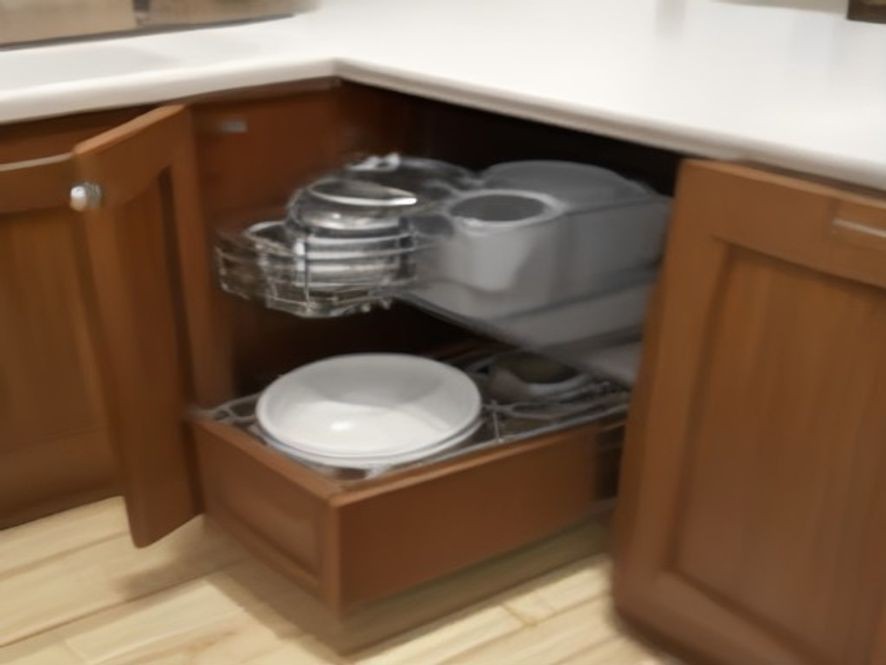
This is the most effective solution for blind corner cabinets. The system uses two-tiered shelving units that work together: when you pull the front shelf out, the rear shelf swings forward to meet it. You get full access to everything in the cabinet without any digging.
What makes it great:
- Brings items from the back completely outside the cabinet
- Works well for heavy items like cast iron pans and Dutch ovens
- Multiple tiers give you organized, structured storage
The catch: These systems cost more than other options. Prices range from around $130 to $500 or more depending on the brand and features. They also require careful installation and a minimum cabinet width, typically around 15 inches for the door opening.
2. Use a Lazy Susan (Budget-Friendly Classic)
A lazy Susan is the simplest fix for a blind corner cabinet. You place a rotating tray or tiered shelves inside, and a quick spin brings items from the back to the front.
Options include:
- Full-round turntables that rotate continuously
- Half-moon (kidney-shaped) shelves that fit snugly around the cabinet edges
- Two-tier rotating shelves for double the storage space
The good: Affordable at $20-$60 for a quality unit. Easy to install with basic tools. Works great for spices, canned goods, and small appliances.
The not-so-good: Items at the back of the rotation can still be tricky to grab. The mechanism can wobble if you choose a cheap model—opt for sturdy ball-bearing versions.
3. Add Pull-Out Shelves or Sliding Trays
If spinning isn’t enough and you want full access without reaching, pull-out shelves are a solid upgrade. These slide completely out on heavy-duty runners, turning that hidden corner into a drawer you can see and grab from.
Why it works: You use the full depth of the cabinet instead of losing the back half. Perfect for pots, pans, or bulky pantry items.
Budget option: Look for freestanding sliding trays that sit on the existing shelf with no drilling required.
4. Use Tiered Shelving and Bins
Sometimes you don’t need a mechanical system—just better organization. Tiered wire shelves create separate levels for plates, canned goods, or small bowls. They stop everything from turning into one giant pile.
Additional tips:
- Use clear containers so you can see what’s inside at a glance
- Label bins to make it easy for everyone in the household to find and return items
- Store rarely used items in the deep back area: holiday serving dishes, large trays, and occasional-use appliances
5. Add LED Strip Lighting
Darkness makes a blind corner feel even more frustrating. A simple battery-powered LED light strip can make a dramatic difference. You immediately see what’s inside without pulling everything out.
Quick Comparison: Which Solution Is Right for You?
| Item/Method | Purpose | Effectiveness | Difficulty Level | Cost |
|---|---|---|---|---|
| Magic Corner Pull-Out | Brings both shelves outside the cabinet | Very High. Full access to everything | Hard. Takes 30-60 minutes, precise alignment needed | $200-$500+ |
| Pull-Out Shelves | Slides entire shelf forward | High. Good visibility and access | Medium. Requires measuring and mounting | $80-$150 |
| Lazy Susan | Rotates items to the front | Medium. Works but some items still hard to reach | Easy. Quick screw-in installation | $20-$60 |
| Tiered Shelving & Bins | Uses vertical space and grouping | Medium. Helps but doesn’t solve the reach problem | Very Low. Just place and organize | $10-$30 |
Installation Tips and Common Mistakes
If you decide to install a mechanical system, keep these tips in mind:
- Measure twice, buy once. Cabinet opening width, depth, and height matter. Some units require a minimum 15-inch opening.
- Check for face frame clearance. If your cabinet has a face frame that sticks out, you may need spacers to ensure the shelves don’t hit it when opening.
- Follow instructions carefully. Complex systems like magic corners require precise alignment. One reviewer noted that components need to line up exactly with the template, otherwise the shelves won’t swing out properly.
- Be patient with installation. Several users mentioned that installation takes longer than expected but is manageable if you read the instructions first.
Frequently Asked Questions (FAQ)
What is a blind corner cabinet?
It’s a corner cabinet where one side is hidden behind the door frame, making items in the back very hard to reach without specialized organizers.
What is the best organizer for a blind corner cabinet?
A pull-out system or magic corner organizer gives you the best access because it brings items completely outside the cabinet.
Are lazy Susans good for blind corners?
They work well for smaller budgets and are easy to install, but they have limitations with vertical space and items at the back of the rotation can still be hard to grab.
How much does a blind corner pull-out system cost?
Prices range from around $80 for basic pull-out trays to $500 or more for high-end magic corner systems with soft-close features.
Can I install a blind corner organizer myself?
Yes, but installation time varies. Simple lazy Susans take minutes. More complex pull-out systems can take 30-60 minutes and require careful measurement and alignment.
What should I store in a blind corner cabinet?
Store heavy pots and pans that you use regularly in pull-out systems. Use the deep back area for rarely used items like holiday platters and special occasion cookware.
Which kitchen problem do you want solved next? Share your thoughts in the comments.
More Kitchen Organization Tips and Home Improvement Guides: