How to Store Bulk Food When Your Kitchen Has Very Little Storage: Space-Saving Solutions for Tiny Kitchens
You come home from Costco feeling great about the money you saved, only to realize you have absolutely nowhere to put that 20-pound bag of rice or the giant box of snacks. In a tiny kitchen with limited storage, bulk buys can feel more like a burden than a blessing. The good news is that with a few clever strategies, you can store bulk food in even the smallest spaces. This guide will show you the best way to store bulk food when your kitchen has very little storage, so you can enjoy the savings without the clutter.
TL;DR
Storing bulk food in a small kitchen starts with being selective about what you buy—focus on versatile, shelf-stable staples you use regularly . The most effective strategy is decanting bulk items into stackable, airtight containers to save space and keep food fresh . Use vertical storage like shelf risers and over-the-door racks, and consider storing overflow outside the kitchen in a closet or basement . For freezer space, try the “brick-stacking” method—freezing food in flat, stackable portions instead of bulky containers . And don’t forget to label everything with dates so nothing expires before you use it .
Key Takeaways
- Buy Smart, Not Just Bulk: Focus on versatile, shelf-stable staples like rice, pasta, beans, and oats that you use regularly. Skip bulky or perishable items that will clutter your space .
- Decant Into Stackable Containers: Transfer bulk dry goods into clear, airtight containers that stack neatly. This saves space, keeps food fresh, and lets you see what you have at a glance .
- Use Vertical and Door Space: Shelf risers double your shelf capacity, and over-the-door racks turn unused door space into valuable storage .
- Store Overflow Outside the Kitchen: Use a closet, basement, or garage for backstock so your kitchen stays functional .
- Freeze Flat for Space: The “brick-stacking” method—freezing food in flat, stackable portions—maximizes freezer space and prevents bulky containers from taking over .
The Real Challenges of Bulk Storage in a Small Kitchen
Storing bulk food in a tiny kitchen comes with three main problems: not enough shelf space, food getting lost in the back of deep cabinets, and bulk packaging that’s bulky and hard to stack. Understanding these challenges helps you choose the right solutions.
The “Bulky Packaging” Problem
Bulk items often come in oversized bags and boxes that don’t stack well and take up way more space than the food itself actually needs. Decanting into space-saving containers is the single most impactful change you can make .
The “Out of Sight, Out of Mind” Problem
When you store bulk items in deep cabinets or on high shelves, they get forgotten. Food expires, money is wasted, and you end up buying duplicates .
A Step-by-Step Guide to Storing Bulk Food in a Tiny Kitchen
Here is a practical plan to store bulk food in even the smallest kitchen.
Step 1: Be Smart About What You Buy in Bulk
When space is limited, not every bulk deal is a good deal. Focus on versatile, shelf-stable staples that you use regularly and that don’t require special storage conditions .
Great bulk buys for small kitchens:
- Rice, pasta, and oats
- Dried beans, lentils, and legumes
- Flour, sugar, and baking essentials
- Canned goods
- Dried fruits, nuts, and seeds
- Coffee and tea
- Shelf-stable snacks (granola bars, crackers)
Skip these: Oversized frozen items, industrial tubs of condiments, or novelty items that will clutter your space and likely go to waste . Remember—a great deal is a waste of money if you can’t use it before it expires.
Step 2: Decant Into Stackable, Airtight Containers
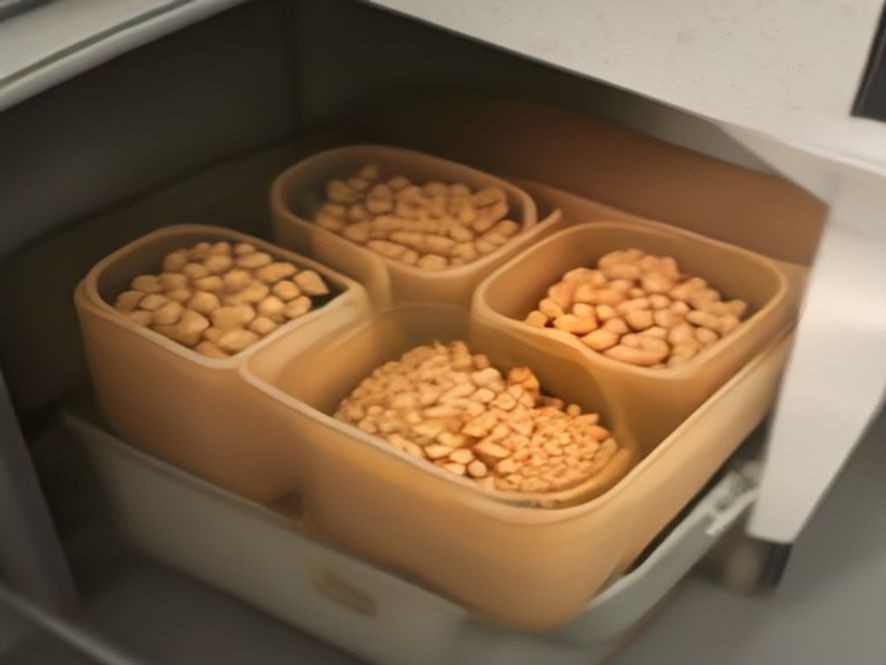
This is the most important step for storing bulk food in a small space. Transferring dry goods from bulky store packaging into clear, airtight containers saves space, keeps food fresh, and makes it easy to see what you have .
What to look for in containers:
- Clear: You can see what’s inside at a glance
- Airtight: Keeps out moisture and pests
- Stackable: Square or rectangular shapes line up neatly
- Collapsible options: Containers that collapse when empty save even more space
Why it works: You can build vertical stacks and use every inch of shelf space . Plus, clear containers let you monitor your stock so you never forget what’s in the back.
Step 3: Use Shelf Risers and Vertical Storage
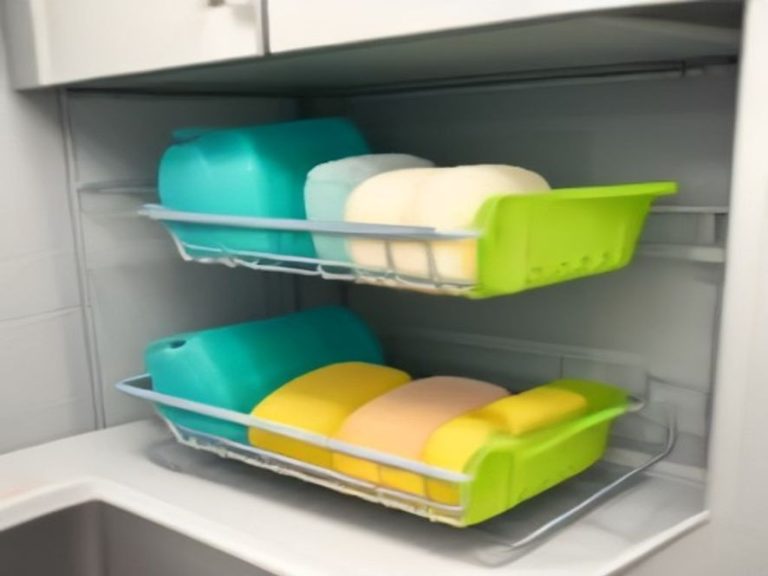
In a small kitchen, height is your secret weapon. Shelf risers create a second tier on existing shelves, effectively doubling your storage capacity without adding new shelves .
Vertical storage wins:
- Shelf risers: Create “stadium seating” for cans and jars so you can see everything
- Stackable bins: Build upward without wasting floor space
- Tension rods: Fit between cabinet walls to create extra shelving levels
- Turntables: Bring items from the back of deep cabinets to the front with a spin
Step 4: Use the Back of the Door
The back of your pantry or cabinet door is valuable, often-overlooked real estate. Over-the-door organizers with adjustable wire baskets can hold canned goods, condiments, and bulk spice refills .
What to store on doors:
- Canned goods and jars
- Bulk spice refills
- Oils and condiments
- Snack pouches
Just make sure your door can support the weight—heavy-duty steel frames work best for heavy items .
Step 5: Store Overflow Outside the Kitchen
If your kitchen is truly packed, you don’t have to store everything in the kitchen. Use alternative storage spaces for backstock.
Overflow storage ideas:
- Basement metal shelves for bulk staples
- Closet shelves for extra canned goods and snacks
- Garage storage for items that don’t need temperature control
- Under the bed for non-perishable items in sealed containers
This creates a “mini grocery store” outside your kitchen, letting you restock your kitchen pantry without cluttering it .
Step 6: Use the “Brick-Stacking” Method for the Freezer
If you batch cook or freeze bulk items, the “brick-stacking” method is a game-changer. Instead of storing food in bulky containers, freeze it in flat, even portions that stack neatly .
How it works:
- Use silicone freezer molds (like Souper Cubes) to freeze food in neat rectangles
- Once frozen, pop out the blocks and store them in reusable freezer bags
- Stack the flat blocks like bricks to maximize every inch of freezer space
Why it’s better: No more half-empty containers wasting space. You can see exactly what you have and grab portion-sized blocks for quick meals .
Step 7: Label Everything with Dates
In a small kitchen with bulk food, labels are essential. When you have multiple containers of similar items, you need to know what’s what—and what needs to be used first.
What to label:
- Ingredient name
- Purchase date or expiration date
- “Use by” date for opened items
Labeling tools: Reusable label stickers, a label maker, or masking tape with permanent marker all work great .
Step 8: Repurpose What You Already Have
You don’t need to buy expensive storage systems. Repurposing items you already own can save money and reduce waste .
Free or cheap storage ideas:
- Glass jars from pasta sauce or pickles for dry goods
- Plastic takeout containers for snacks and leftovers
- Old crates or cigar boxes for cleaning supplies or odds and ends
- Clear plastic containers from bulk foods (wash and reuse)
Grandma’s thrifty approach still works—she used Country Crock containers for everything .
Quick Reference: Bulk Storage Solutions
| Problem | Solution |
|---|---|
| Bulky packaging takes too much space | Decant into stackable, airtight containers |
| Not enough shelf space | Use shelf risers and stackable bins |
| Items lost in the back of cabinets | Use turntables or pull-out shelves |
| No storage in the kitchen | Store overflow in a closet, basement, or garage |
| Freezer is a mess of bulky containers | Use the “brick-stacking” method to freeze flat portions |
| Can’t find what you have | Label everything with names and dates |
| High cost of new containers | Repurpose glass jars and takeout containers |
Frequently Asked Questions
What is the best way to store bulk food in a small kitchen?
Decant bulk dry goods into clear, stackable, airtight containers to save space and keep food fresh. Use shelf risers and over-the-door racks to maximize vertical storage .
What foods are best to buy in bulk for a small kitchen?
Focus on shelf-stable staples you use regularly: rice, pasta, beans, oats, flour, sugar, canned goods, and coffee. Skip bulky or perishable items that will clutter your space .
How can I store bulk food if I have no pantry?
Use shelf risers to create more space in cabinets, store overflow in a closet or basement, and use the back of your door with an over-the-door organizer .
How do I keep bulk food fresh in a small kitchen?
Use airtight containers to keep out moisture and pests. Store items in a cool, dark place away from heat. Label everything with dates and use the FIFO (First-In, First-Out) method to use older items first .
How can I maximize freezer space for bulk food?
Try the “brick-stacking” method—freeze food in flat, stackable portions using silicone molds, then store them in reusable freezer bags. This eliminates bulky containers and makes everything visible .
References
Smart Solutions for Bulk Storage in Small Kitchens:
- Habitatista – Organizing a Tiny Pantry After Buying in Bulk
- Moms Budget – Smart Bulk Food Storage in a Small House
- Food Republic – How to Store Bulk Foods When You Don’t Have Tons of Space
- Yahoo – The Brick-Stacking Method for Maximizing Freezer Space
Storing bulk food in a small kitchen is all about smart choices and clever storage. By being selective about what you buy, decanting into stackable containers, using vertical and door space, and even freezing flat, you can enjoy the savings of bulk shopping without the clutter. Remember, the goal isn’t to store more—it’s to store smarter.
Which kitchen problem do you want solved next? Share your thoughts in the comments.