How to Store Food Containers in a Small Kitchen With Limited Drawer Space: Smart Storage Solutions
That cabinet full of mismatched containers and lids that never match can finally become an organized, easy-to-use part of your kitchen.
TL;DR
This guide explains why food container storage gets so chaotic and gives you practical fixes that don’t require more drawer space. You’ll learn about nesting containers, lid-organizing tricks, and clever ways to use vertical space. With a few simple changes, your container collection can go from frustrating to functional.
Key Takeaways
- The main cause of container chaos is having too many mismatched pieces without a clear system.
- Nesting containers by size and shape is the best way to save space in small cabinets.
- Store lids separately in a bin, organizer, or on the inside of cabinet doors to avoid the “lid hunt”.
- Consider storing containers with lids already on if you have tall cabinet space—it saves time and frustration.
- Using clear, stackable containers for dry goods helps you see what you have and frees up drawer space.
The Real Reasons Your Container Storage Is a Mess
If you’ve ever stood in front of your kitchen cabinet with a container in one hand and a lid that doesn’t fit in the other, you know the struggle. The problem usually comes down to a few things: too many mismatched pieces, no clear system for putting them away, and not using the right storage tools for your space.
Another big issue is wasted vertical space. Most people stack containers in piles, but that leaves gaps above them and makes it hard to reach the ones at the bottom. The solution isn’t about having more drawers—it’s about using the space you already have more wisely.
Step-by-Step Guide to Organizing Your Food Containers
Ready to fix that chaos? Here’s a proven system.
Step 1: The Clean Slate Reset
Start fresh. Empty your entire container cabinet or drawer. Lay everything out on your counter so you can see what you actually have.
- Match containers with lids. If a lid doesn’t have a matching container, set it aside for donation or recycling.
- Be ruthless. Throw away anything that’s warped, stained, cracked, or smells bad. Most households only need about 10–15 good containers, not 40.
- Group by shape. Separate round containers from square and rectangular ones.
Step 2: Choose Your Storage Method
Here are the best ways to store containers, depending on your kitchen setup.
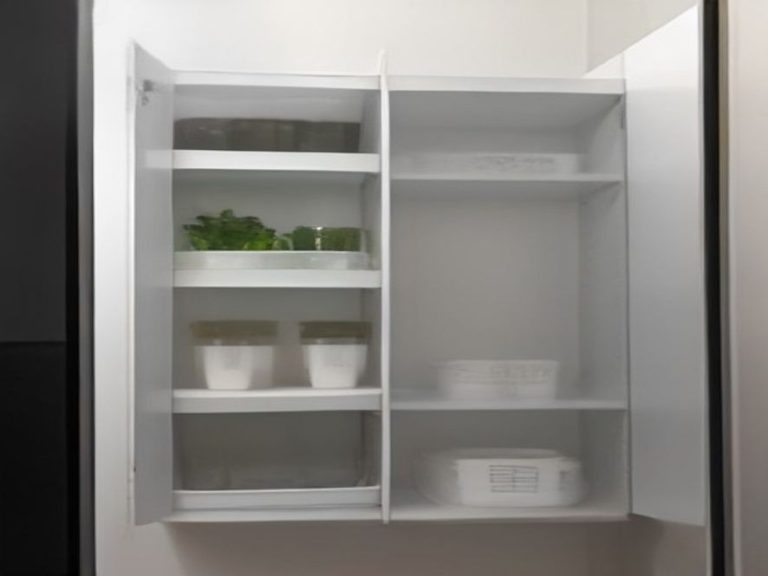
- Nest and Corral (Best for Small Cabinets): Group containers by shape and nest them inside each other from largest to smallest. For the lids, use a small plastic bin to stand them up vertically right next to the nested stacks. This keeps everything together and saves major space.
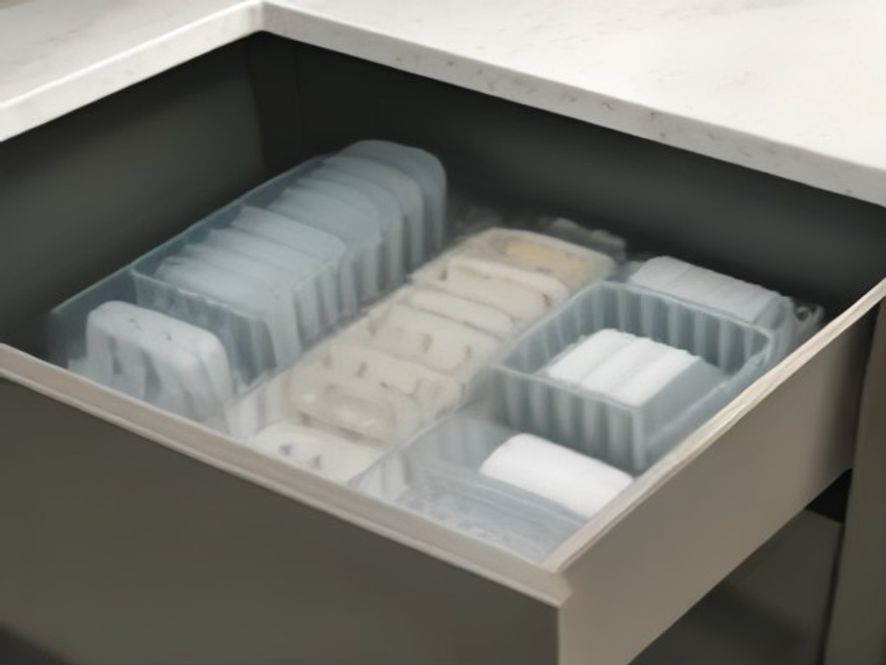
- File and Fold (Best for Deep Drawers): If you have deep drawers, use dividers to create “files” for your containers and stand lids up vertically like records. This way, you can see every size at a glance without digging.
- Snap and Stack (The Minimalist Choice): Store containers with the lids already snapped on. This takes up more vertical space but completely eliminates the stress of hunting for matching lids. It works best in tall cabinets with adjustable shelves.
- Inside-the-Door Hack: Use adhesive bins, wire racks, or a shallow shelf mounted to the inside of your cabinet door to store lids. This frees up the whole shelf for the bulky containers.
- The Lazy Susan (For Corner Cabinets): Place your nested containers on a rotating turntable. One spin brings the back-of-the-shelf items right to your fingertips.
Step 3: Maintain the System
The hardest part isn’t the setup—it’s keeping it that way.
- The unloading rule: When the dishwasher is done, take the extra 30 seconds to nest containers properly instead of just tossing them in.
- One-in, one-out: If you buy a new container set, donate or recycle an old one to keep your collection balanced.
Creative Alternatives for Container Storage
Maybe your cabinet is beyond hope. Here are a few other ways to tackle the problem.
- Hanging Storage: Use small containers or baskets that hook onto rails under your cabinets. This uses vertical space you’re probably ignoring and keeps small tools and items visible and accessible.
- Repurpose Kitchen Drawers: Convert a shallow drawer into a “container drawer” by using airtight bins that fit the drawer’s height. This works great for storing dry goods like pasta, rice, and flour—and frees up cabinet space for your bulky containers.
- Use Stackable, Clear Containers: For dry goods, switch to a uniform set of stackable containers. The clear design lets you see what’s inside, and the stackable shape saves space. Many sets come with airtight lids that keep food fresh longer.
Quick Comparison of Container Storage Methods
| Method | Best For | Effectiveness | Difficulty Level | Space Impact |
|---|---|---|---|---|
| Nest and Corral | Small cabinets with limited shelf space | High | Easy | Saves space horizontally |
| Snap and Stack | Tall cabinets, minimalist households | High | Very Easy | Takes more vertical space |
| File and Fold | Deep pull-out drawers | Very High | Medium | Maximizes drawer space |
| Inside-the-Door | Cabinet doors with available space | Good for lids | Easy-Medium | Uses hidden space |
| Lazy Susan | Corner cabinets | Good | Easy | Makes hard-to-reach space accessible |
FAQ Section
1. What is the best way to store food containers with lids?
For maximum accessibility, store containers and lids together by snapping lids on before stacking. For maximum space saving, nest containers and store lids separately in a bin.
2. How do you organize containers without a drawer?
Use a cabinet with shelves. Nest containers by size and use a small bin or lid organizer to store lids vertically right next to them.
3. Should I throw away mismatched containers?
Yes. If a lid doesn’t have a matching container, recycle or donate it. Keeping only complete sets makes organizing much easier.
4. How many food storage containers does one household need?
Most families only need about 10–15 good containers. Having too many creates clutter and makes it harder to find what you need.
5. How do you store container lids so they don’t get lost?
Use a lid organizer, a small bin, or an over-the-door rack. Stand lids vertically like files so you can see every size at a glance.
6. What’s the best type of container for small kitchens?
Choose a uniform set that is stackable, clear, and airtight. Square or rectangular shapes fit better in tight spaces than round ones.
7. How do you store tall containers in shallow cabinets?
Store them on their side or use them for dry goods and keep them on a countertop or open shelf for easy access.
Conclusion
Organizing food containers in a small kitchen doesn’t require a magic solution—just a clear system and a little discipline. Whether you choose to nest and corral, snap and stack, or use inside-the-door storage, the goal is to make your kitchen work for you, not against you. A few small changes can turn that frustrating cabinet into a space that actually makes cooking and clean-up easier.
“Most kitchen problems come from small maintenance habits that are often ignored.”
Start with one cabinet today, and you’ll wonder why you didn’t do it sooner. Which kitchen problem do you want solved next? Share your thoughts in the comments.
Trusted resources for kitchen organization advice: