How to Store Small Appliances Without Cluttering Kitchen Counters
Your countertops have become a parking lot for appliances, and it is making cooking feel harder than it should be.
You love your air fryer, coffee maker, and blender, but they seem to multiply overnight. The real problem is not the appliances themselves—it is that they have no designated home. This guide will show you the best way to fix counter clutter, with practical solutions for every budget and kitchen size.
TL;DR
This guide shows you how to store small appliances without cluttering your counters. You will learn to sort appliances by how often you use them, use appliance garages and pull-out shelves to hide daily gadgets, and find creative storage spots for weekly and occasional items. The result is a cleaner, more functional kitchen where you actually have space to cook.
Key Takeaways
- Only daily-use appliances like coffee makers and toasters should stay on the counter.
- Heavy appliances belong in lower cabinets with pull-out shelves for easy access.
- An appliance garage can hide frequently used gadgets while keeping them plugged in and ready.
- Store accessories with their appliances to avoid lost parts and frustration.
- Consider adjacent rooms like pantries or laundry areas for overflow appliance storage.
How to Store Small Appliances Without Cluttering Kitchen Counters: Smart Solutions
The secret to a calm kitchen is giving every appliance a real home. You do not need a bigger kitchen—you just need to be smarter about using the space you already have. Let us look at the most effective strategies to get those counters clear.
The Real Causes Behind Counter Clutter and How to Fix Them
Your counters are messy because they have become the default home for everything. The toaster stays out because crumbs are annoying to clean up. The blender stays out because the cabinet is too deep to reach. The air fryer claims a corner because it is heavy. Before you know it, you have no room to actually chop vegetables.
The fix starts with one simple rule: stop treating your counter like a storage unit. Think of your counter as prime real estate. Only the appliances you use every single day should have a spot there. Everything else needs a designated, easy-to-access home.
Step-by-Step Fix Guide: Decluttering Your Counters
Here is a practical plan to get your kitchen organized for good.
1. Take Inventory and Sort by Frequency
Pull out every small appliance you own. Group them by how often you use them:
- Daily Drivers: Coffee maker, kettle, toaster. These earn a spot on the counter or in an appliance garage.
- Weekly Workers: Blender, rice cooker, food processor. These should go in a lower cabinet or pantry with easy access.
- Occasional Guests: Slow cooker, waffle maker, stand mixer. These can live in harder-to-reach cabinets or even outside the kitchen.
2. Choose Your Storage Strategy
Here is a comparison of the most effective solutions.
| Storage Solution | Best For | Effectiveness | Difficulty | Cost |
|---|---|---|---|---|
| Appliance Garage | Daily-use items you want to hide but keep accessible | Very High – Hides clutter, keeps appliances plugged in | Medium – May require custom cabinetry | $100 – $800+ |
| Pull-Out Shelf | Heavy items like stand mixers in lower cabinets | Very High – Saves your back, easy access | Easy – DIY shelf kit | $50 – $200 |
| Rolling Cart | Renters, flexible storage, extra prep space | High – Mobile, no permanent changes | Very Easy – Assemble and roll | $100 – $400 |
| Designated Cabinet | Lower cabinets with deep shelves | High – Uses existing space, low cost | Very Easy – Just clear a shelf | $0 – $50 |
| Appliance Lift | Heavy mixers you use weekly | Very High – Ergonomic, hidden | Hard – Custom installation | $200 – $500+ |
Chart: Storage Solutions Effectiveness Comparison
The Appliance Garage Solution
An appliance garage is a dedicated hideaway for your everyday gadgets. It is usually a small cabinet sitting on the countertop where you can keep your toaster, coffee machine, or air fryer plugged in and ready to use. When you are done, you simply close the doors.
Why it works: It gives you the best of both worlds. Your appliances are accessible and ready to use, but they are hidden from view when not needed.
What to consider:
- Safety: Do not operate heat-producing appliances like toasters behind closed doors. Always open the door fully and follow appliance instructions.
- Ventilation: Ensure there is enough clearance for air to flow around appliances when doors are closed.
- Outlets: The best garages have electrical outlets installed inside so appliances can stay plugged in.
Door style options:
- Tambour doors slide up and down like a garage door.
- Pocket doors slide back into the cabinet frame.
- Bifold doors fold back on themselves, good for tight spaces.
- Swing doors blend in with surrounding cabinetry.
Storing Appliances in Cabinets and Pantries
If an appliance garage is not in your budget, a regular cabinet or pantry can work just as well.
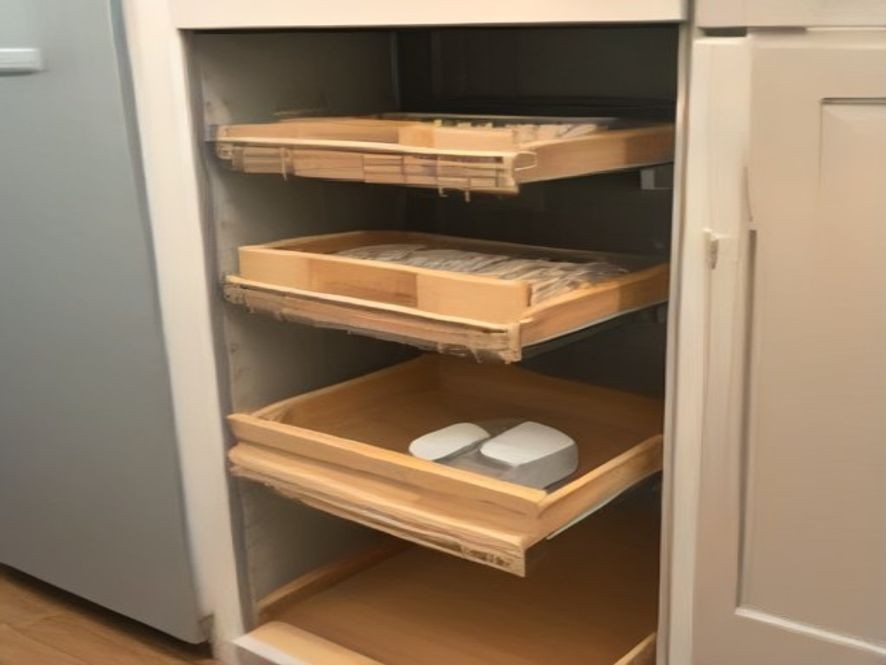
Pull-out shelves are a game-changer for lower cabinets. They eliminate the need to kneel and reach into the dark. A full-extension shelf lets you see everything and pull the item toward you. This is especially useful for stand mixers, air fryers, pressure cookers, and food processors.
Create a pantry appliance zone with clear stackable bins and labels. Place heavier devices on lower shelves with sliding trays. Keep cords neatly wrapped with Velcro ties to prevent tangles.
Store accessories with their appliances. Use quart-sized bags for small parts and gallon-sized bags for larger attachments. Label everything clearly so you can find what you need instantly.
Creative Solutions for Small Kitchens
Sometimes you need to think outside the kitchen.
Corner cabinets with lazy Susans are ideal for appliances. The rotating motion brings everything within easy reach and prevents items from getting lost in the back.
Utilize vertical wall space. Wall-mounted shelves or under-cabinet mounts can store less-used appliances overhead. Just make sure shelves are sturdy enough for the weight.
Consider adjacent rooms. It is common to store countertop appliances in pantries, laundry rooms, or mudrooms if kitchen space is lacking. Just make sure there are electrical outlets and enough shelf depth.
The one-in, one-out rule can prevent future clutter. When you buy a new appliance, consider donating an old one you no longer use.
What Belongs on Your Counter?
You need to be ruthless about what earns a permanent spot on your counter. According to professional organizers, you should remove these five clutter culprits from your counters:
- Packages of food. Store bread and cereal in the cabinet nearest where you use them.
- Nonessential small appliances. Save counter space for items you use every day.
- Cookbooks. Display your favorite on a stand, but store the rest on a shelf or in a cabinet.
- Herbs, spices, and oils. They degrade faster when exposed to light and heat. Store them in a drawer or cabinet away from the stove.
- Mail and paperwork. Set up a processing station elsewhere, or keep it hidden in a drawer.
Bulky knife blocks also take up valuable prep space and can harbor bacteria. Swap them for drawer organizers or magnetic strips to free up counter space.
“Overcrowding the counter with appliances makes the space feel smaller and more chaotic. Keep only daily-use items like a coffee maker or kettle on the counter, while stowing the rest in cabinets or a pantry to grab when needed.” – Corey Pence, The Container Store
FAQ Section
Why does my kitchen counter always feel cluttered?
Your counter has become the default storage spot for appliances that do not get used daily. Move them to designated storage and keep only daily items out.
What is the best way to store heavy appliances?
The best way is to use a pull-out shelf in a lower cabinet. This eliminates heavy lifting and saves your back.
Can I add an appliance garage to an existing kitchen?
Yes, but it may require custom work to match counter depth and finishes. A simpler option is to use a countertop cabinet or a designated cabinet.
Is it safe to store appliances plugged in inside cabinets?
It can be safe if there is proper ventilation to prevent overheating. Unplug heat-producing appliances like toasters and air fryers when not in use.
How do I organize appliance accessories?
Store attachments in labeled bags or bins right next to the appliance so you never lose small parts.
What if I am renting and cannot change cabinets?
Use a rolling kitchen cart or freestanding shelves. These are removable and do not require any permanent changes to the kitchen.
Conclusion
Clearing your kitchen counters of small appliances is not about getting rid of your favorite gadgets. It is about giving them a home that works for your cooking habits. By sorting by frequency, using smart storage like appliance garages and pull-out shelves, and being ruthless about what belongs on the counter, you can reclaim your workspace and actually enjoy cooking again.
Which kitchen problem do you want solved next? Share your thoughts in the comments.
How to Store Small Appliances Without Cluttering Kitchen Counters: The Ultimate Guide to a Clutter-Free Kitchen