How to Organize a Pantry That Gets Messy Every Week: Simple Solutions for Long-Term Order
You organize your pantry on Sunday, and by Wednesday, it looks like a disaster zone again. This is a frustrating cycle, but the good news is that a pantry that gets messy every week isn’t a sign of failure—it’s a sign that your system isn’t built for real life. This guide will show you how to fix a weekly messy pantry with practical solutions that actually stick.
TL;DR
A weekly messy pantry is usually caused by systems that are too rigid for real life, not the right storage containers, or a lack of regular maintenance. To fix it, organize your pantry around your actual habits, not a standard layout . Use zones that reflect how you cook, keep daily-use items at eye level, and set aside just 10 minutes each week for a quick reset . Skip overcomplicated labeling systems and focus on simple categories that everyone in your household can follow .
Key Takeaways
- Organize by Your Habits: Group items based on what you actually use, not just by food type .
- Create Flexible Zones: Use broad categories like “breakfast,” “snacks,” and “dinner bases” instead of overcomplicating with too many labels .
- Do a 10-Minute Weekly Reset: Spend a few minutes each week combining duplicates, wiping crumbs, and moving older items to the front .
- Choose Containers That Work for You: Clear containers can help with visibility, but you don’t need to decant everything—use what makes sense for your lifestyle .
- Keep Daily Items Accessible: Store items you use most at eye level so everyone can grab what they need .
- Plan a “Pantry Reset Meal”: Use one meal each week to clear out half-used ingredients before they expire .
The Real Reasons Your Pantry Gets Messy Every Week
A weekly messy pantry usually isn’t about laziness—it’s about a system that doesn’t match how you actually live. Let’s break down the most common culprits.
Cause 1: Overly Complicated Systems
It’s easy to go overboard with labels, bins, and rigid categories. But when you have to read fifty labels to find a snack, the system stops being helpful. Overly specific systems are hard to maintain and will inevitably lead to clutter if they don’t work for your lifestyle .
How to fix it: Keep it simple. Use broad category labels like “breakfast,” “grains,” “snacks,” “baking,” and “canned goods.” This gives you structure without making you feel like you’re running a grocery store .
Cause 2: Systems That Don’t Reflect Your Habits
The most well-designed pantry won’t work if it doesn’t match how you actually cook and eat. If you eat oatmeal every morning, keeping it in the back of the pantry makes no sense . Organizing around your habits and routine—not just a standard layout—makes your pantry more functional and efficient .
How to fix it: Be honest about what you use frequently. Keep daily staples at eye level. If snacks are your go-to, make them front and center. If baking is your thing, create a dedicated baking section .
Cause 3: No Regular Maintenance Routine
An organized pantry isn’t a one-time event—it requires maintenance. Without a regular check-in, even the best system will eventually fall apart . A quick 10-minute weekly reset helps keep things from spiraling out of control .
How to fix it: Schedule a 10-minute weekly reset. Combine duplicates, wipe crumbs, move older items to the front, and check for expired items . A weekly five-minute check-in can help you discard expired goods and replenish .
A Step-by-Step Guide to Building a Pantry That Stays Organized
Here’s a practical plan to break the weekly messy cycle for good.
Step 1: Do a Complete Reset and Audit
You can’t build a new system on top of chaos. Start with a clean slate.
- Empty Everything: Take all items out of your pantry and lay them on your counter .
- Check Expiration Dates: Toss anything expired, stale, or that you haven’t used in months. A thorough audit can remove 20–35% of pantry contents by volume, giving you room to function without crowding .
- Donate Unexpired Items: If you have unopened, unexpired items you won’t use, donate them to a local food bank .
- Wipe Down Shelves: Clean shelves thoroughly before putting anything back .
Step 2: Group by How You Actually Cook
Forget organizing purely by food type. Group items based on how you use them .
- Breakfast Zone: Cereal, oatmeal, pancake mix, coffee, tea.
- Snack Zone: Granola bars, chips, fruit snacks, nuts .
- Baking Zone: Flour, sugar, baking powder, vanilla, chocolate chips.
- Dinner Bases Zone: Pasta, rice, canned tomatoes, broths .
- Canned Goods Zone: Vegetables, soups, beans, fruits.
Step 3: Keep Frequently Used Items at Eye Level
Accessibility is key to staying organized. If people have to dig, things get messy.
- Daily Items at Eye Level: Place items you use every day at eye level .
- Heavy Items Lower: Put heavy cans, oils, and bottles on lower shelves .
- Kids’ Snacks Low: If you have children, create a lower shelf with snacks they can reach independently .
Step 4: Choose Storage Solutions That Fit Your Space
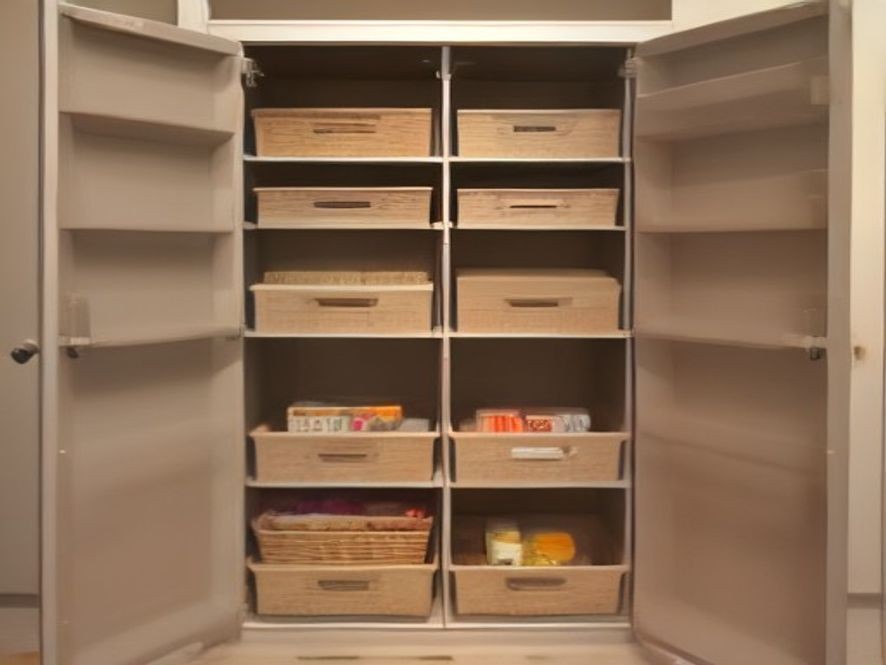
Skip the aesthetic-only bins and focus on function. Clear bins or mesh baskets work best because you can see what’s inside . And remember, you don’t have to decant everything into containers if it doesn’t work for you—some organizers prefer using clips or rubber bands to secure bags .
- Use Shelf Risers: Elevating items creates a second layer and improves visibility .
- Try Lazy Susans: A turntable is perfect for deep corners where items often get lost .
- Consider Drawer Organizers: Pull-out baskets and bins make it easier to access items in the back .
Step 5: Label Clearly, But Don’t Overdo It
Labels are helpful, but going overboard creates visual clutter and extra work.
- Label Zones, Not Every Item: Instead of labeling every can, label the bin “canned vegetables” .
- Use Simple Labels: Post-it Super Sticky Notes are great for quick and easy labeling .
- Date Your Containers: For items in canisters, write the expiration date on a note and stick it to the underside of the lid—out of sight but still in mind .
Step 6: Build a 10-Minute Weekly Reset Routine
This is the habit that keeps the weekly mess at bay.
- Pick a Day: Choose one day each week for a quick refresh (perhaps the day before grocery shopping) .
- Combine Duplicates: If you have multiple half-empty bags of the same item, combine them .
- Wipe Crumbs: Clean up any spills or crumbs, especially around sticky bottles like oils and honey .
- Move Older Items to the Front: Use the FIFO (First-In, First-Out) method to ensure older food gets used first .
- Check Inventory: Quickly check levels of common items against your shopping list .
Step 7: Plan a “Pantry Reset Meal” Each Week
This is a clever trick to clear out half-used ingredients before they expire .
- How It Works: Dedicate one meal each week to using only what you already have in your pantry .
- Ideas: Vegetable stir-fries, hearty soups, grain bowls, or omelettes that combine leftover produce and pantry staples .
- Why It Works: It reduces waste, saves money, and encourages creativity in the kitchen .
Quick Reference: Weekly Mess Fixes
| Problem | Solution |
|---|---|
| Overcomplicated labels and systems | Use broad categories like “snacks,” “breakfast,” and “dinner bases” |
| Items not organized by use | Keep daily-use items at eye level |
| No weekly maintenance routine | Schedule a 10-minute reset each week |
| Half-used bags and duplicates | Combine duplicates during your weekly reset |
| Sticky shelves and spills | Wipe spills immediately and check bottles before putting them back |
| Expired food accumulating | Check dates during weekly reset and toss anything expired |
Frequently Asked Questions
Why does my pantry keep getting messy even after I organize it?
Most likely, you’re using an overly complicated system that doesn’t match how you actually cook and eat. Simplify your categories and organize around your habits .
How often should I clean out my pantry?
Do a full clean-out twice a year, but a quick 10-minute weekly reset is essential for keeping things organized in between .
What is a “pantry reset meal”?
It’s a weekly meal made primarily from ingredients already in your kitchen. It helps clear out half-used items before they expire and reduces waste .
Should I use clear containers for everything?
Clear containers can help with visibility, but you don’t have to decant everything. Use what makes sense for your lifestyle—some organizers prefer using clips or rubber bands to secure bags .
How do I get my family to follow the system?
Use simple labels and keep it easy. Store frequently used items at eye level and make kids’ snacks accessible. When everyone can find what they need without digging, the system works .
References
Practical Solutions for a Weekly Messy Pantry:
- Better Homes & Gardens – 6 Pantry Mistakes You Didn’t Know You Were Making
- Good Housekeeping – 7 Common Pantry Mistakes Pro Organizers Would Never Make
- Storage Organisers – December Pantry Reset
- ABP Live – Weekly Meal Planning Tricks
- Martha Stewart – Pantry Organization Tips
A pantry that gets messy every week doesn’t mean you’re bad at organizing—it just means your system needs tweaking. By organizing around your actual habits, keeping it simple, and committing to a quick weekly reset, you can break the cycle and finally enjoy a pantry that works for you.
Which kitchen problem do you want solved next? Share your thoughts in the comments.