How to Create a Pantry in a Small Kitchen Without Remodeling: Practical Solutions
Think you need a renovation to have a pantry in a small kitchen? Think again — these clever, renter-friendly solutions prove otherwise.
TL;DR
You don’t need a remodel to create pantry space in a small kitchen. Use rolling carts and furniture to add portable storage, install open shelving on empty walls, organize cabinets efficiently with clear containers and zones, hang mesh bags for produce, and use door racks for spices and snacks. Most solutions require no tools or permanent changes.
Key Takeaways
- A rolling cart can serve as a mobile pantry that tucks into unused corners or narrow gaps
- Bookshelves or dressers make affordable freestanding pantries without built-in cabinetry
- Clear containers and baskets maximize existing cabinet space
- Mesh bags and hanging organizers use vertical space without floor footprint
- Door-mounted racks add storage without taking shelf or counter space
Why You Don’t Need a Remodel
If you’re working with a tiny kitchen or an apartment with limited cabinets, you might assume you’re stuck without a pantry. But a pantry doesn’t need to be a built-in closet or a separate room. You can create functional food storage anywhere — on walls, in corners, on rolling carts, or even inside a closet.
The key is looking beyond traditional pantry design. You can hack a pantry with what you already have or with small investments that require no tools. Whether you’re a renter or a homeowner on a budget, these solutions work.
Best Ways to Create a Pantry Without Remodeling
Get a Rolling Cart
A rolling utility cart is one of the simplest ways to add pantry space. These versatile carts can hold canned goods, boxed ingredients, spices, or even small appliances, and you can tuck them into unused corners or narrow gaps between your fridge and stove . Some are designed specifically as slim cabinets with shelves and wheels, making them ideal for tight spaces .
Best for: Canned goods, spices, everyday ingredients, small appliances
Cost: $30-100 depending on size and style
Installation: None — just roll into place
If floor space is tight, look for a slim cart that slides into the gap between your fridge and stove.
Use Open Shelving
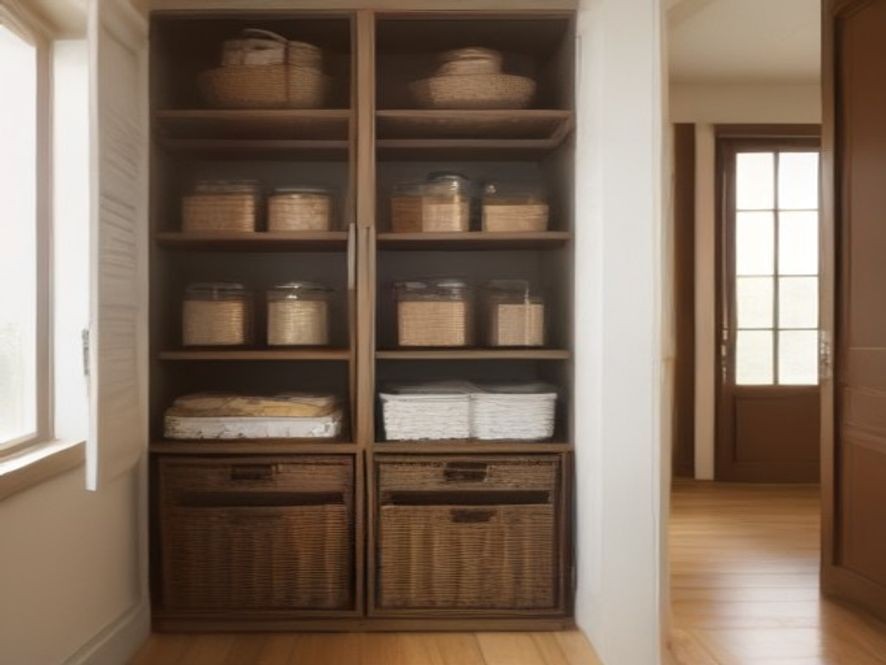
Adding floating shelves to empty wall space creates instant storage for dry goods. Transfer pasta, rice, coffee, and spices into matching clear glass containers or ceramic canisters — they become part of your kitchen decor while staying functional . You can also take doors off existing cabinets to create open shelving, which makes items more visible and accessible .
Best for: Everyday dry goods, coffee, tea, spices
Cost: $10-30 per shelf
Installation: Requires wall mounting, but some rental-friendly adhesive options exist
The key to open shelving is keeping it organized and intentional — arrange matching containers for a clean look.
Repurpose Furniture
That old bookshelf, sideboard, or dresser sitting in storage? It can become your new pantry. Bookshelves come in all sizes, and the shelves are often adjustable, so you can customize heights for canned goods, cereal boxes, and pasta containers . Deep dresser drawers can store bulk pantry items, linens, or utensils .
Best for: Dry goods, cookware, linens
Cost: Free if you already own furniture
Installation: None — just place and organize
Style the top with decorative items like a plant or cookbook stack to make it look intentional.
Use a Broom Closet or Awkward Nook
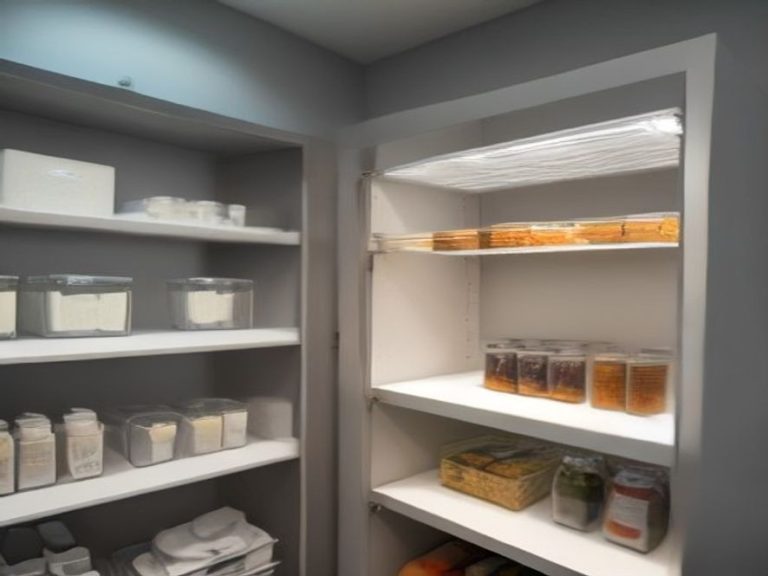
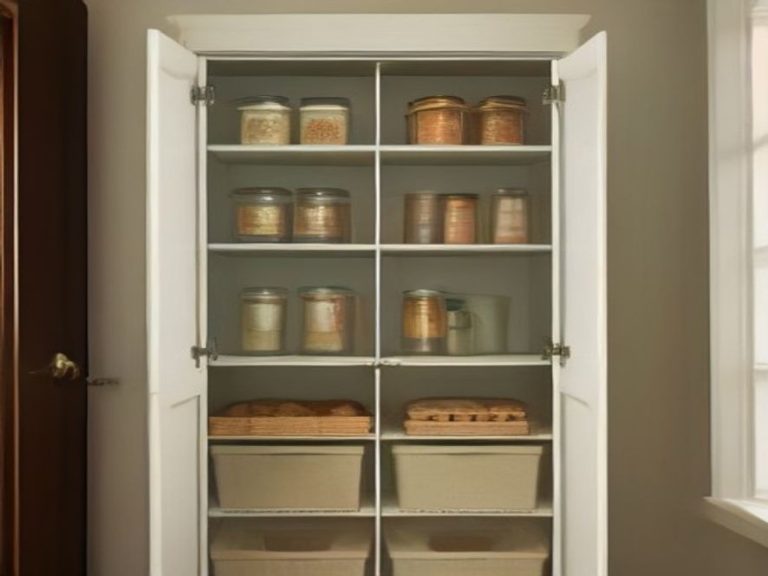
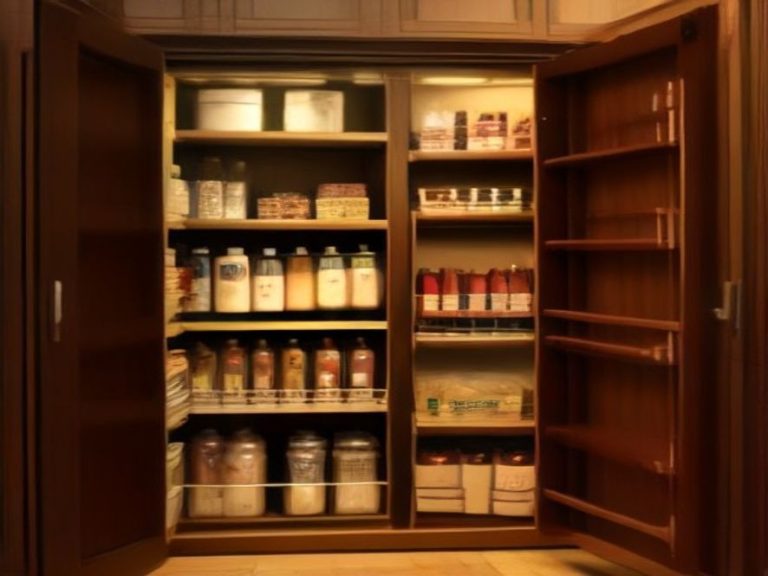
Even a tiny broom cupboard can become a pantry with some planning. Start by clearing out old cleaning supplies, then install simple shelving at varying heights to accommodate tins, jars, and packets . A narrow 12-inch section at the end of cabinets can also be transformed into a built-in look with a premade cabinet or shelving .
Best for: Pantry staples, spices, jars
Cost: Low if you reuse existing shelves
Installation: Minimal — just rearrange and add organizers
Clear storage jars, labeled containers, and a light color palette make a small pantry feel calm and intentional .
Use Mesh Hanging Bags
Hanging mesh bags are an inexpensive and stylish way to store produce and snacks while freeing up counter and cabinet space. They’re especially useful for potatoes, onions, apples, and oranges since the mesh allows airflow . You can hang them on hooks from the wall, cabinet handles, or under-cabinet hooks — they take advantage of unused vertical space .
Best for: Produce, snacks, lightweight items
Cost: Under $10 for a pack
Installation: Just hang from a hook
French-style mesh produce bags look decorative and help you see what you have so nothing goes to waste .
Organize Existing Cabinets
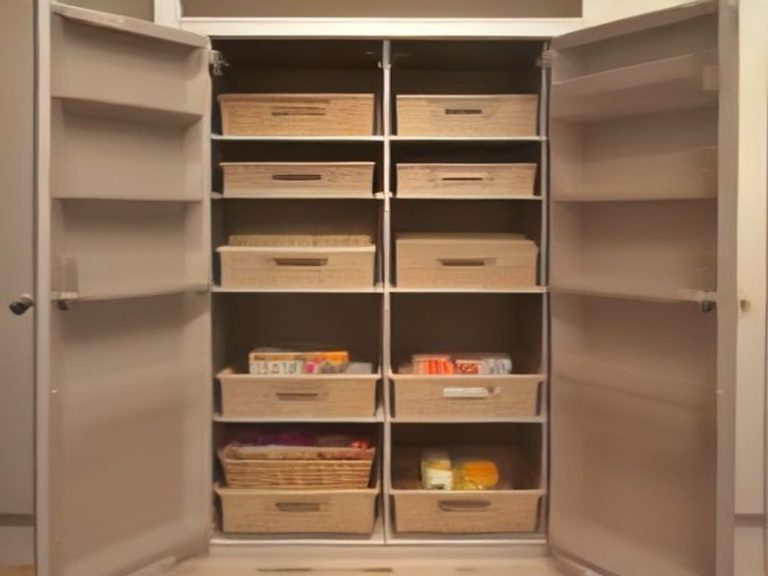
Before creating new storage, maximize what you already have. Clear containers make dry goods easy to see and stack — transfer flour, sugar, rice, pasta, and snacks into matching airtight containers . Pull-out bins or baskets help categorize items so you can slide out a basket instead of digging through clutter . Use tiered shelf risers to double vertical capacity on existing shelves . Lazy Susans are perfect for deep or corner cabinets so you can spin to access everything . Labels help maintain the system long-term .
Use Door and Wall Space
The back of a cabinet door or the side of your fridge is prime storage real estate. Over-the-door hanging organizers can store spices, dry beans, seasoning packets, and small items without taking up shelf space . Magnetic spice racks attached to the fridge or a metal wall keep spices visible and accessible .
Step-by-Step Guide to Creating a Pantry Without Remodeling
Step 1: Declutter First
Empty your existing cabinets and check expiration dates. Many people find they’re holding onto half-used bags, cans from years ago, or snacks nobody actually eats. Getting rid of that dead weight frees up more space than any organizer ever will .
Step 2: Assess Your Available Space
Look around your kitchen for unused corners, wall space, the gap between appliances, or awkward nooks. Measure these spots and note how much space you have .
Step 3: Choose Your Primary Storage Solution
Pick the solution that fits your space best. If you have empty wall space, install open shelving. If you have an unused corner, add a rolling cart. If you have a broom closet or awkward gap, turn it into a mini pantry .
Step 4: Sort by Category
Group items by how you actually use them: baking supplies, canned goods, snacks, breakfast foods, pasta and grains, spices, oils and sauces . This reduces time hunting for ingredients and makes restocking easier.
Step 5: Contain and Label
Transfer dry goods into clear, airtight containers so you can see what you have at a glance . Label every container clearly so everyone in the household knows where things go .
Step 6: Create a Simple Maintenance Routine
A well-organized kitchen takes very little maintenance if you do a quick five-minute weekly reset: refill containers, check expiration dates, and rehome stray items .
Comparison of Pantry Creation Options
| Solution | Best For | Effectiveness | Difficulty Level | Cost |
|---|---|---|---|---|
| Rolling cart | Flexible, portable storage | High | Very Easy | $30-100 |
| Open shelving | Displaying everyday items | High | Moderate | $10-30/shelf |
| Repurposed furniture | Budget-friendly storage | High | Very Easy | Free-50 |
| Broom closet or nook | Hidden storage | Very High | Moderate | Low |
| Mesh hanging bags | Produce and snacks | Medium | Very Easy | Under $10 |
| Cabinet organization | Maximizing existing space | Very High | Easy | $5-50 |
FAQ: Creating a Pantry in a Small Kitchen
1. Can I create a pantry if I’m renting?
Yes. Rolling carts, over-the-door racks, adhesive hooks, mesh bags, and furniture like bookshelves require no permanent changes — all renter-friendly .
2. What’s the cheapest way to create a pantry?
Repurpose furniture you already own or use a rolling cart. Over-the-door organizers and mesh bags are also under $15 .
3. What’s the best way to use a narrow space?
Slim rolling carts and vertical pull-out organizers can fit in gaps as narrow as six inches between appliances . Mesh bags also work well to use vertical space .
4. How do I keep a small pantry organized?
Clear containers, labeled bins, grouping items by category, and a five-minute weekly reset are the most effective methods .
5. Where should I place a rolling cart in a small kitchen?
Tuck it into an unused corner, between a fridge and counter, or against an empty wall. You can also use it as extra prep space when needed .
Start Small, See Big Results
Creating a pantry in a small kitchen without remodeling is entirely possible. You don’t need a renovation or a big budget — just a bit of creativity and the willingness to use spaces differently. Start with one solution — a rolling cart, some open shelving, or organizing your existing cabinets — and build from there. Once you see the difference, you’ll wonder why you waited so long.
Which pantry solution do you want to try first? Share your thoughts in the comments.
How to Create a Pantry in a Small Kitchen Without Remodeling: Affordable Storage Solutions for Tiny Cooking Spaces