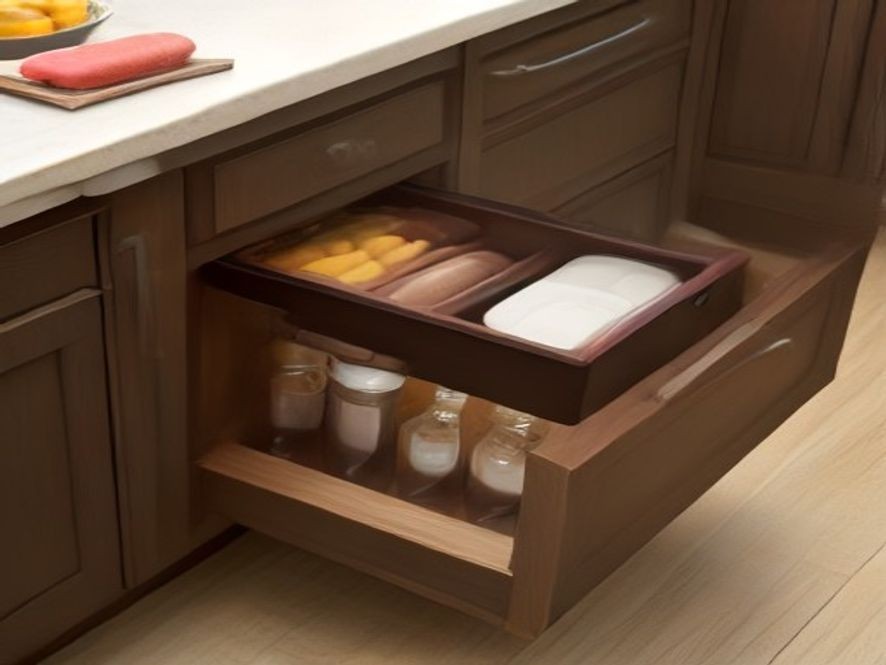
How to Organize a Deep Kitchen Drawer Without Wasting Space: Expert Tips and Solutions
A deep kitchen drawer is one of the most valuable storage areas in your home—but without a system, it can quickly become a black hole where kitchen tools go to disappear.
“I just need the measuring cups, but I have to pull out three mixing bowls and a colander to reach them!”
We have all been there. You open that spacious, deep drawer, ready to grab a specific tool, only to find yourself digging through a jumble of lids, baking sheets, and forgotten gadgets. The problem isn’t the drawer’s depth—it’s the wasted vertical space and lack of organization. This guide offers practical solutions to transform your deep kitchen drawer from a clutter trap into a model of kitchen organization.
TL;DR
Deep kitchen drawers become messy because items are piled on top of each other, making it hard to reach what is at the bottom. The best way to fix this is to use vertical storage, dividers, and stackable organizers to create distinct zones. By sorting items by how you cook, using dividers to create boundaries, and storing lesser-used items below frequently used ones, you can maximize every inch of space and finally find what you need.
Key Takeaways
- Empty and Sort: Take everything out of the drawer, clean it, and sort items by category.
- Stop Stacking: Use vertical dividers for baking sheets and pot lids to prevent clutter.
- Use Stackable Organizers: Double your storage space by using bins that stack vertically.
- Create Zones: Use adjustable dividers to assign a specific job to each section of the drawer.
- Store Strategically: Place heavy or rarely used items at the back or bottom, and daily essentials at the front.
The Real Causes Behind a Chaotic Deep Drawer and How to Fix Them
The main issue with a deep drawer is its depth. It invites you to pile things high, but this creates a “last in, first out” nightmare. “A large drawer basically gives everything permission to move around. Containers slide toward the back. Lids fall over” . This leads to wasted space and the frustration of not being able to find what you need.
Let’s explore the problems and their simple solutions:
The “Everything But the Kitchen Sink” Problem
A deep drawer is an easy target for miscellaneous items. You might throw in a cookbook, some dog treats, or random papers, which takes up valuable real estate meant for kitchen tools .
The Solution: Clear out the drawer completely. Put everything on your counter and sort it into piles: “Keep,” “Relocate,” and “Donate.” Remember, a deep drawer is best for bulky appliances, pots, pans, plates, and tall pantry staples, not random clutter . Give the drawer one main job, whether it’s for cookware or food storage.
The Piling Problem (Layer Upon Layer)
This is the biggest cause of wasted space. When you pile large items like pots and pans directly on top of each other, you have to unstack everything to reach the bottom, which creates a mess .
The Solution: Stop stacking horizontally and start storing vertically! Tension rods and pegboard drawer organizers are excellent for standing up baking sheets, cutting boards, and pot lids “almost like files” . You can simply flip through them to grab the one you need.
Step-by-Step Guide to Organizing Your Deep Kitchen Drawer
Follow these steps for a deep drawer that stays organized:
1. Empty, Clean, and Categorize
Pull everything out of the drawer. Wipe down the interior. Group items by their activity: cookware (pots, pans), food prep (mixing bowls, measuring cups), and food storage (containers, lids) . This helps you see what you actually use.
2. Measure and Plan Your Zones
Measure your drawer’s width, length, and depth. This is crucial if you are buying organizers or dividers. Then, decide how many zones you need . A good test for your system is to ensure you can pull out one item without disturbing everything around it .
3. Use Dividers to Create Grids
Large, open drawers are not useful. Use adjustable drawer dividers to break the space into specific sections. This creates a “grid system” that groups items by category and keeps them from drifting together . This is perfect for separating pot lids from bowls, for example.
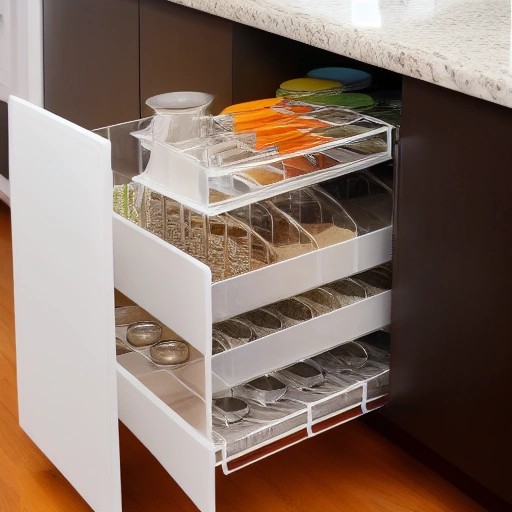
4. Add Stackable Organizers
The best way to utilize the height of a deep drawer is with stackable organizers. You can store items you use less often on the bottom and your daily essentials in a bin on top. These allow you to “store across multiple levels” . Tall, clear bins with airtight lids are also perfect for storing dry goods like flour and pasta, taking full advantage of the drawer’s height .
5. Add Liners and Labels
Place a non-slip liner at the bottom of the drawer to prevent items from sliding around. This also protects the drawer from scratches . Finally, consider labeling the top of bins or the front of dividers so everyone in the household knows where things belong and can return them correctly .
Comparison Table: Best Tools for Deep Drawer Organization
Here is a quick look at the best products to help you conquer the clutter.
| Item/Method | Purpose | Effectiveness | Difficulty Level | Cost |
|---|---|---|---|---|
| Adjustable Dividers | Create sections for towels, cookie sheets, and lids . | High | Easy | Medium |
| Stackable Bins | Utilize vertical height for smaller gadgets and spices . | High | Easy | Medium |
| Tension Rods | Stand flat items like baking sheets and platters upright . | High | Very Easy | Low |
| Pegboard Organizers | Organize dishes and pot lids vertically to prevent scratches . | High | Easy | Medium-High |
| Airtight Tall Containers | Store pantry staples like cereal and pasta . | High | Very Easy | Medium |
Frequently Asked Questions (FAQ)
Why does my deep drawer get messy so fast?
A deep drawer gets messy because it encourages piling, making it hard to reach items at the bottom without disrupting everything on top.
How do I organize deep kitchen drawers without buying expensive organizers?
You can use household items like small boxes, tension rods, or even cut-down cereal boxes as dividers to create free zones in your drawer.
What is the best way to store pot lids in a deep drawer?
The best way is to store pot lids vertically using a pegboard organizer or wire rack, which allows you to flip through them like files .
Should I put pots and pans in a deep drawer?
Yes, a deep drawer is ideal for pots and pans. Just make sure to separate them with dividers or racks to prevent stacking and make them easy to access .
What is the number one rule for organizing deep drawers?
The number one rule is to give each drawer a single purpose, like “cookware” or “food prep,” to prevent it from becoming a random catch-all .
How do I stop my utensil organizer from sliding around?
Use a non-slip drawer liner underneath your organizer to keep it in place and protect the drawer from scratches .
How do I keep my deep drawer organized long-term?
Take a few minutes to declutter periodically and make sure each item is returned to its designated zone. Labels help the whole household maintain the system .
References
Expert Tips for Kitchen Storage and Organization:
- House Digest – Get The Most Out Of Your Deep Kitchen Drawers
- Artfull Houses – How to Organize Deep Kitchen Drawers
- Chowhound – Organizing Tools For Deep Kitchen Drawers
- AnyDrawer – Organize Deep Drawers Like an Expert
Which kitchen problem do you want solved next? Share your thoughts in the comments.