
Best Cooking Tools for Making Sauces and Gravies: Your Essential Guide
Making smooth, flavorful sauces and gravies doesn’t require a kitchen full of fancy gadgets—just a few well-chosen tools that do the job right.
You know that sinking feeling when you’re making a beautiful pan sauce, but it turns out lumpy or greasy? Or maybe your gravy has those unappetizing oil slicks floating on top. The problem isn’t your recipe—it’s usually your tools. The best way to master sauces and gravies is to use equipment designed for the job. The right whisk or fat separator can be the difference between a lumpy mess and a silky, professional result.
TL;DR
- The Problem: Sauces can turn out lumpy, greasy, or scorched without the right tools.
- The Solution: Use a flat whisk for scraping up flavor, a stainless steel saucepan for even heating, and a fat separator for perfectly smooth gravy.
- How to Fix It: Choose a flat whisk for pan sauces, a stainless steel saucepan that won’t react with acidic ingredients, and a bottom-release fat separator for quick, mess-free gravy making.
- Key Takeaway: A few specialized tools—especially the right whisk and a good saucepan—make sauce-making easier and more reliable every time.
Key Takeaways
- Get a Flat Whisk: Unlike a balloon whisk, a flat whisk reaches into pan corners to scrape up fond—those browned bits that add huge flavor to sauces and gravies .
- Use a Stainless Steel Saucepan: It heats evenly, won’t react with acidic ingredients like tomatoes or wine, and has no coating to wear out .
- Fat Separators Are a Game-Changer: A bottom-release separator lets you pour out flavorful stock while leaving the fat behind—no more oily gravy .
- The Kunz Spoon is a Pro Secret: This large, shallow spoon holds 2.5 tablespoons and is perfect for basting, drizzling, and plating sauces neatly .
- Don’t Skip the Fine-Mesh Strainer: Straining removes solids for a refined, silky texture .
Main Topic: The Essential Sauce-Making Toolkit
Sauces and gravies are all about technique, but the right tools make that technique much easier. Let’s break down the must-haves and why they matter.
The Saucepan: Your Foundation
A good saucepan is the workhorse for any simmering sauce. You’ll use it for everything from tomato sauce to béchamel.
What to look for: Choose a fully clad stainless steel saucepan. “Fully clad” means the aluminum core goes all the way up the sides, not just on a disc at the bottom. This gives you even heat, so your sauce won’t scorch in one spot . Stainless steel is also non-reactive, so acidic ingredients like tomatoes and wine won’t pick up a metallic taste .
The size: A 1.5- to 2-quart saucepan is the everyday workhorse for sauces, melted butter, and cooking for one or two. A 3- to 4-quart size handles family portions, rice, and reheating soup .
A great option: The Alva Maestro 5-Ply Stainless Saucepan is a solid pick. It’s fully clad 5-ply stainless from base to rim, heats evenly, and comes with a lifetime warranty .
The Whisks That Actually Work
Not all whisks are created equal. For sauces and gravies, the flat whisk is your best friend.
The Flat Whisk: A flat whisk has wires arranged in a flat, spatula-like shape. This design lets it glide across the bottom of your pan to scrape up the browned bits (fond) that are packed with flavor . This is what transforms a plain liquid into a rich pan sauce. It also reaches into corners of a saucepan that a balloon whisk can’t touch .
The Balloon Whisk: A standard balloon whisk is great for incorporating air into cream or egg whites. But for a sauce, its round shape means it often misses the corners and doesn’t scrape the pan bottom effectively .
A top pick: The All-Clad Specialty Whisk is a premium balloon-style whisk with a compact head that works well for sauces and batters. It’s made from a single piece of 18/10 stainless steel, so there are no seams to trap water or rust .
The Fat Separator: For Perfect Gravy Every Time
If you’ve ever tried to skim fat off a pan of drippings with a spoon, you know the struggle. A fat separator solves this problem.
How it works: You pour your pan drippings or stock into the separator. The fat rises to the top because it’s lighter. The separator has a spout or valve at the bottom, so you can pour out the flavorful liquid from underneath, leaving the fat behind . The result is leaner, more flavorful gravy without the grease .
What to look for: Go for a bottom-release style. It’s safer and more accurate than tilting a pitcher. Models with a squeeze trigger handle are especially easy to use . Look for a built-in strainer on the lid to catch solids, and clear measurement markings .
Top choices: The OXO Good Grips Good Gravy Fat Separator is a popular pick. It has a built-in strainer, a silicone shut-off valve to prevent leaks, and a 4-cup (1L) capacity .
The Pro Tool: Kunz Sauce Spoon
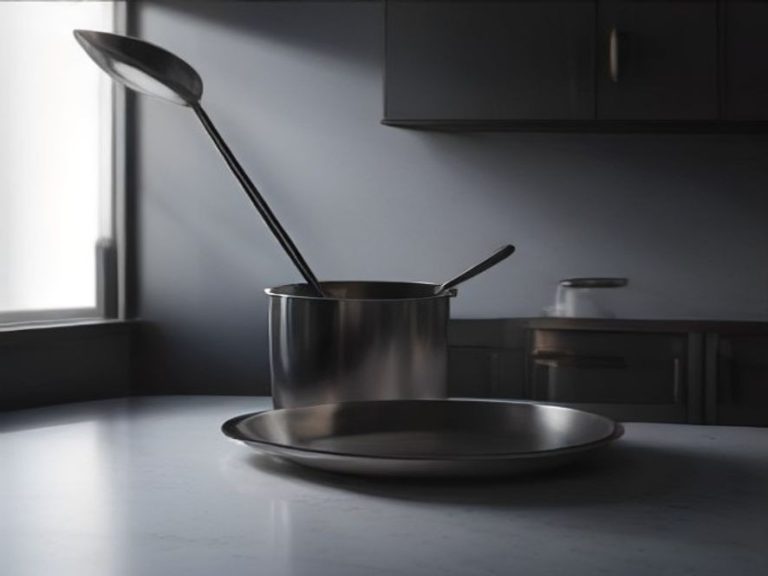
This spoon might look ordinary, but it’s a secret weapon in professional kitchens . The Gray Kunz Sauce Spoon is larger and shallower than a regular spoon, holding 2.5 tablespoons compared to a standard spoon’s 1 tablespoon .
Why it’s great: The shape makes it perfect for drizzling sauces in a steady stream without splattering, and for basting steaks with butter . It also has a tapered end for precise pouring. It’s one of those simple tools that just makes every task easier .
Other Tools That Help
| Tool | Purpose |
|---|---|
| Fine-Mesh Strainer | Removes solids for a smooth, refined sauce texture . |
| Wooden Spoon | Great for stirring sauces without scratching your pan . |
| Ladle | For portioning and serving sauces and gravies without drips . |
| Blender | Creates stable emulsions like mayonnaise in seconds . |
| Squeeze Bottle | Makes it easy to drizzle oil or decorate plates with sauce . |
Frequently Asked Questions
1. What’s the best whisk for making gravy?
A flat whisk is ideal. Its shape reaches the corners of the pan and scrapes up the flavorful browned bits for a richer gravy .
2. What type of saucepan is best for sauces?
A fully clad stainless steel saucepan is the best choice. It heats evenly, doesn’t react with acidic ingredients, and has no coating to wear out .
3. What is a fat separator and do I need one?
A fat separator lets you pour flavorful liquid from underneath the fat that rises to the top. It’s very helpful for making smooth, non-greasy gravy .
4. Can I use a regular spoon for basting?
You can, but a Kunz spoon is larger and holds more liquid, making basting faster and more efficient .
5. Why do I need to strain my sauce?
Straining removes solids like seeds, peppercorns, and bits of herbs, giving your sauce a smoother, more refined texture .
6. Are balloon whisks good for sauces?
Not as good as a flat whisk. Balloon whisks are better for incorporating air into eggs or cream .
7. Is a nonstick saucepan good for sauces?
It’s not the best choice. The coating can wear out under long simmering, and you don’t need a nonstick surface for liquid cooking. Stainless steel lasts much longer .
Conclusion
Making great sauces and gravies is easier when you have the right tools. A flat whisk helps you build flavor by scraping up fond from the pan. A stainless steel saucepan gives you even, reliable heat. And a fat separator ensures your gravy is rich and flavorful, not greasy. Add a pro-level Kunz spoon for basting and drizzling, and you’ll be making sauces that look and taste like they came from a professional kitchen.
Essential Sauce-Making Tools for Home Cooks
- America’s Test Kitchen – Essential Equipment for Sauces
- Alva Cookware – Best Saucepan Guide
- Serious Eats – Best Fat Separators Tested
- Tasting Table – The One Tool You Need for Smooth Sauces
Which sauce problem do you want solved next? Share your thoughts in the comments.