Kitchen Drawer Organization Ideas for Small and Busy Kitchens
You’re racing to get dinner on the table, and the one utensil you need is buried somewhere in that messy drawer.
In a small kitchen, every inch counts. And when you’re busy, you don’t have time to dig through a jumble of spatulas, lost lids, and forgotten gadgets just to find a whisk. The good news is that with the right strategies, even the tiniest kitchen can have drawers that are fast, functional, and frustration-free.
TL;DR
Small kitchens demand smart, space-saving solutions. Key ideas include using vertical dividers for pans and baking sheets, slim drawer organizers for tight spots, double-tier trays to double capacity, and non-slip liners to stop items from sliding. Decluttering and grouping by function are essential first steps. Products like IKEA’s UPPDATERA sliding organizer, dollar-store adjustable bins, and tiered cutlery trays offer budget-friendly ways to maximize every inch.
Key Takeaways
- Go vertical: Store pans, baking sheets, and lids upright like files to save horizontal space and make items easier to grab .
- Use slim drawers: Replace one wide drawer with two or three slim ones to keep spices, cutlery, and tea bags visible and reachable .
- Double your capacity: Tiered cutlery trays add a second layer of storage underneath, perfect for separating everyday silverware from less-used gadgets .
- Non-slip liners prevent chaos: Silicone liners keep utensils from sliding to the back of the drawer .
- Declutter first: Keep only what you actually use—most cooks actively use about 20% of their cookware .
Smart Drawer Organization Ideas for Small Spaces
1. Vertical Dividers for Pans and Baking Sheets
Stacking pans is frustrating. You have to unstack everything to reach the one at the bottom, and they get scratched in the process. The fix is simple: store them vertically.
Professional organizer Cara Palmer recommends using vertical dividers in deep drawers to store pans on their sides, “like files in a cabinet.” This approach makes each piece visible and accessible while dramatically increasing storage capacity.
For baking sheets and cutting boards, the same idea applies. Use sturdy dividers so heavier items don’t topple over.
2. Slim and Narrow Drawers
Those awkward 10–20 cm gaps beside your fridge or oven aren’t wasted space—they’re opportunities. Coohom’s kitchen design expert suggests using narrow vertical pull-outs for bottles, baking trays, and cutting boards.
You can also replace one wide drawer with two or three slim drawers stacked vertically. This keeps things visible and reachable—no more rummaging through a messy drawer. In small kitchens, multiple accessible layers often beat one buried box.
3. Double-Tier Cutlery Trays
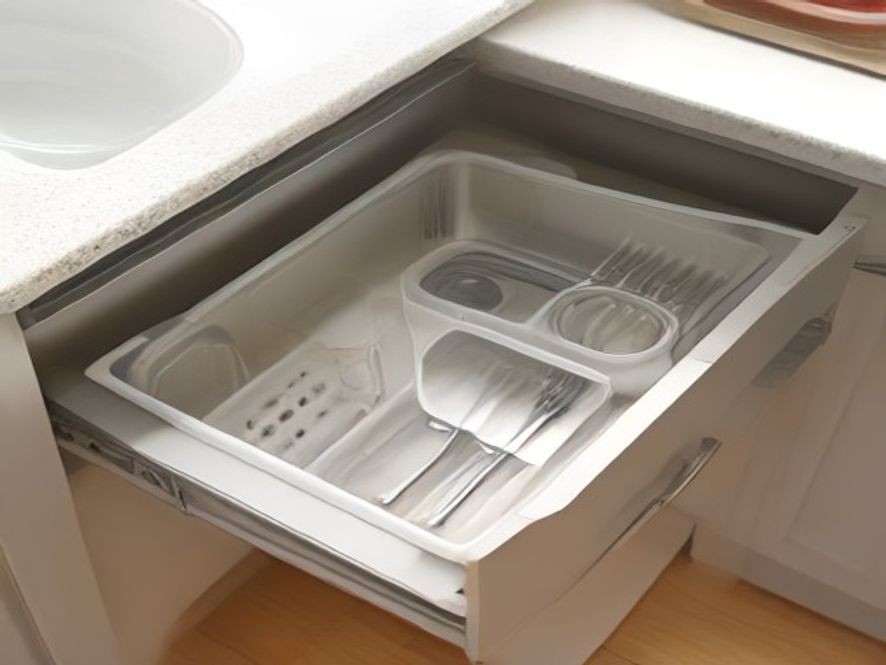
If your drawer isn’t deep enough for two full layers, a double-tier cutlery tray is a clever alternative. The sliding top level glides back to reveal a second layer underneath. This is perfect for separating everyday silverware from larger serving pieces or less-used gadgets. Joseph Joseph offers a compact tiered cutlery organizer specifically designed for small drawers, featuring clear icons to help keep everything sorted.
4. The IKEA UPPDATERA Solution
For deep drawers, the IKEA UPPDATERA sliding organizer is a budget-friendly game-changer. Retailing for about $5, this felt organizer sits on the upper sides of drawers and slides forward and backward, turning dead space into usable storage.
It works well for spice bottles, rolling pins, cling film, aluminum foil, metal skewers, and thin tongs. Just wipe down any items before placing them back—the felt material can get dirty from oily residue.
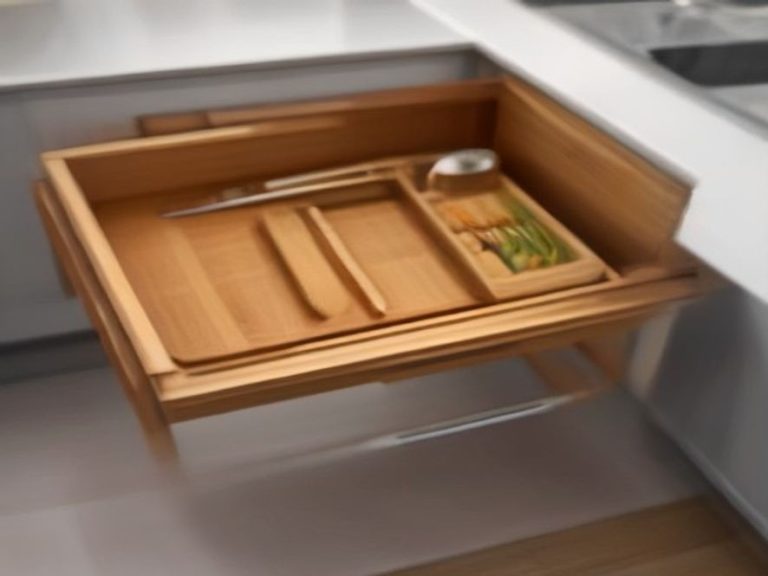
IKEA also recently expanded its UPPDATERA collection with 17 new products, including bamboo utensil trays in various sizes, a tray with a knife rack for safekeeping, and a spice rack with anti-slip material.
5. Budget Adjustable Organizers
You don’t need to spend a lot to get organized. The Dollar Tree Jot flexible organizer costs just $1.25 and stretches a few inches in length—perfect for oddly shaped or narrow spaces. It’s great for organizing small items like seasoning packets, tea bags, peelers, and measuring spoons.
6. Non-Slip Liners
Do your utensils slide to the back of the drawer every time you pull it open? A high-quality silicone liner provides a non-slip surface that keeps everything in place. These liners also protect against scratches and catch stray crumbs for easy cleaning. They can be trimmed to fit any drawer size.
7. Junk Drawer Organizers
Every home has a junk drawer. Instead of letting it become chaos, use a multi-compartment organizer tray to categorize small essentials. Assign a spot for batteries, a spot for the flashlight, and a zone for tape. A well-managed junk drawer ensures you’re not spending twenty minutes searching for a single battery.
8. Specialized Drawers
- Tea Drawer: Use slanted inserts or small acrylic bins to display tea bags by flavor. This creates a tea-room experience and protects leaves from light and heat.
- Kitchen Towel Drawer: Use the “file folding” method to stand towels vertically so you can see every color and pattern at once.
- Bag Organizer: Toss out those bulky boxes of storage bags. A bag organizer holds gallon-, quart-, sandwich-, and snack-sized bags in individual compartments, freeing up cabinet space.
Comparison Table: Best Drawer Organizers for Small Kitchens
| Organizer Type | Best For | Cost | Key Benefit |
|---|---|---|---|
| Vertical Divider System | Pans, baking sheets, cutting boards | $$ | Stores items upright; everything visible and accessible |
| Slim Pull-Out Drawers | Spices, bottles, narrow gaps | $-$$ | Maximizes awkward 10–20 cm spaces |
| Double-Tier Cutlery Tray | Silverware + less-used gadgets | $$ | Doubles capacity without adding another drawer |
| IKEA UPPDATERA Sliding Organizer | Deep drawers, spices, foil, skewers | $ | Turns dead drawer space into storage; slides forward |
| Adjustable Extendable Bins | Oddly shaped spaces, small items | $ | Customizable fit; budget-friendly |
| Silicone Non-Slip Liner | Any drawer | $ | Prevents sliding; protects from scratches |
The “Zones” Approach: How to Set Up Drawers That Actually Work
Why Most Drawer Organization Fails
Precise organizers with a slot for every utensil look beautiful but fail in real kitchens. They demand exact placement, which is impossible when you’re cooking three things at once.
The solution? Use zones, not slots. Group similar items together in broad categories without demanding precise placement. Spatulas go in the spatula zone—anywhere in that zone. Wide compartments that hold multiple tools accommodate tools at various angles and positions.
Step-by-Step Setup
- Declutter ruthlessly. Empty your drawer. Keep only what you actually use. Professional organizer Cara Palmer notes, “Most home cooks actively use only about 20% of their cookware.”
- Group by function. Create broad categories like “stirring tools,” “measuring tools,” “cutting tools,” and “miscellaneous.”
- Use dividers to create zones. Choose expandable dividers or organizers that fit your drawer.
- Place frequently used items at the front. You don’t want to dig past a corkscrew to get your daily tongs.
- Leave some empty space. About 20% empty space gives items room to breathe and prevents the “shove and forget” problem.
Special Tip for Deep Drawers
Deep drawers are organizational traps if you use shallow organizers. That gap underneath invites layering, which destroys organization. Either use organizers that span the full depth, or dedicate deep drawers to large items that actually need the space.
Expert Insights
“The best organization systems are the ones you can easily maintain, even on your busiest days.” – Cara Palmer, professional organizer
“Small kitchens often spark big creativity. Strategic organization can make cooking feel effortless.” – Coohom design expert
FAQ: Small Kitchen Drawer Organization
1. How do I organize a deep drawer in a small kitchen?
Use organizers that fill the full depth, or store large items like pots, pans, and baking sheets vertically with dividers. Avoid shallow organizers that leave a gap for hidden layering.
2. What’s the cheapest way to organize kitchen drawers?
Try adjustable bins from Dollar Tree for $1.25, or use small boxes and DIY dividers. IKEA’s UPPDATERA sliding organizer is also around $5.
3. How do I stop utensils from sliding around in the drawer?
Use silicone non-slip liners or expandable dividers. Both options keep items firmly in place.
4. Should I organize by size or by function?
By function. Group items by how you use them (e.g., “cooking at the stove” versus “prepping ingredients”). This saves time and reduces frustration.
5. How many categories should I have in a drawer?
Stick to three to five broad categories maximum. Too many categories create confusion and make it hard to maintain order.
6. What’s a good solution for storing pot lids?
Use an adjustable lid organizer along the side of a deep drawer. It creates a designated home for each lid.
7. Can I use a drawer to store knives safely?
Yes. Use an in-drawer knife block or a tray with a removable knife rack. This frees up counter space and protects both the knives and your fingers.
A small kitchen doesn’t have to mean a chaotic kitchen. With vertical dividers, slim organizers, and a smart zone system, you can make every drawer work for you—even on your busiest days.
Which drawer in your kitchen is the biggest challenge? Share your experience in the comments!
Practical Kitchen Drawer Organization Ideas and Expert Tips for Small Kitchens: