How to Fix a Black Hole Corner Cabinet: The Best Guide to Using Every Inch of Space
That moment when you open your corner cabinet and a cascade of mismatched lids and forgotten gadgets tumbles out—and you still can’t find the stockpot you need—is exactly what this guide will help you fix.
The corner cabinet. Every kitchen has one, and most people have given up on it. It’s the dark void where kitchen items go to be forgotten, the place where good intentions go to die. But here’s the thing: corner cabinets don’t have to be wasted space. With the right system, that awkward corner can become one of the most useful storage zones in your kitchen. This guide will walk you through practical solutions that actually work, whether you’re a renter or a homeowner ready to renovate.
TL;DR
Corner cabinets become useless because they’re deep and dark—items get pushed to the back and forgotten. The fix is improving access with organizers. Lazy Susans are the simplest, most affordable option and work well for everyday items . Pull-out or swing-out systems cost more but use space more efficiently and handle heavy cookware better . For blind corners, sliding pull-out organizers bring hidden items forward . The key is storing the right items—bulky cookware works best, not small items that get lost .
Key Takeaways
- Lazy Susans are the simplest fix—affordable, easy to install, and instantly improve access
- Pull-out systems win on storage capacity—they use rectangular shelves that match the cabinet shape, wasting less space than circular trays
- Blind corners need sliding organizers—these bring hidden items forward so you can actually see what you have
- Store bulky items in corners—pots, mixing bowls, and small appliances. Small items get lost in deep spaces
- Measure before you buy—cabinet interiors vary, and organizers need precise dimensions to work properly
The Real Problem Behind Wasted Corner Space and How to Fix It
Corner cabinets look generous on paper, but without the right strategy they waste surprising amounts of space . The problem isn’t the cabinet itself—it’s access. When items are stored two feet behind a door opening, people simply stop using the space . Items get pushed to the back and become invisible, leading to duplicate purchases and a general sense of clutter.
I once designed a kitchen where the homeowner proudly said, “We have tons of cabinets.” Two weeks after moving in, she called me laughing—she couldn’t find anything in the corner cabinet . That moment taught me how deceptive kitchen corners can be.
The good news is there are multiple solutions, and the best one depends on your budget, cabinet size, and how you cook. Let’s break them down.
The Main Solutions: Lazy Susan vs. Pull-Out Systems
When it comes to corner cabinets, two solutions dominate: the classic Lazy Susan and modern pull-out systems. Both aim to solve the same problem—making awkward corner space usable—but they work very differently .
The Lazy Susan: Simple, Affordable, and Effective
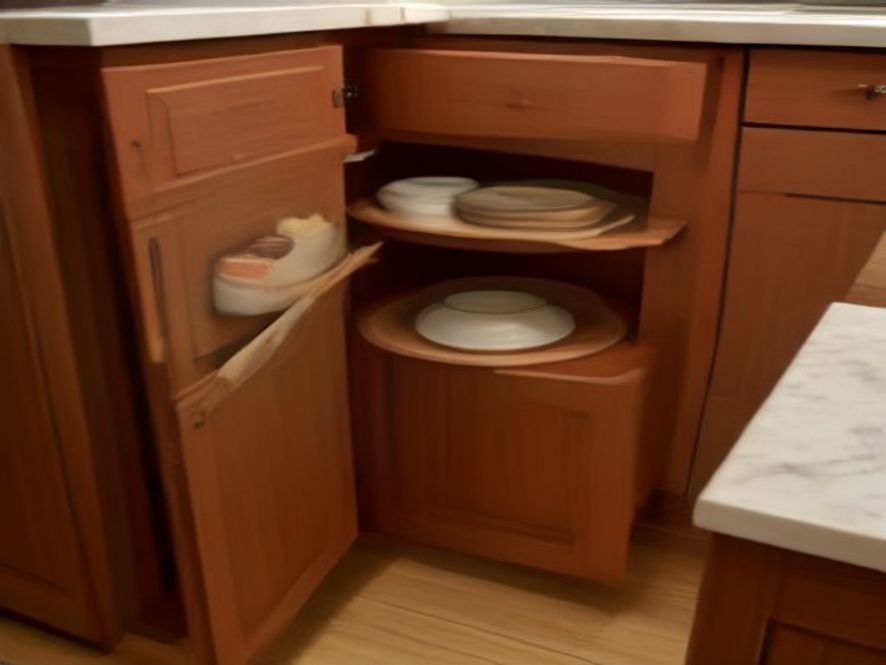
The Lazy Susan is the classic solution most people recognize. Inside the cabinet, circular shelves rotate around a central pole, letting you spin items toward you instead of digging into the back corner .
Martha Stewart swears by this approach. In a video on her YouTube channel, the cookbook author calls a Lazy Susan “something [she] just loves and cannot live without.” She fits large, spinning Lazy Susans into her corner cabinets, allowing her to access ramekins and baking dishes that would otherwise be impossible to reach .
The advantages are clear:
- Low installation cost and minimal cabinet modification required
- Easy to retrofit into existing cabinets—you can even place one on top of existing shelving
- Simple to clean—just rotate and wipe
- Works well in standard corner cabinet frames
The downside? Lazy Susans waste some corner volume because the shelves are circular, leaving the square corners unused . Also, tall items and heavy cookware can feel unstable on spinning shelves if the system isn’t high quality . Choose a high-quality bearing system to avoid wobble and ensure smooth rotation .
Best for: Everyday items like spices, oils, canned goods, and smaller cookware. Not ideal for very heavy cast iron or oversized pots .
Pull-Out Systems: More Space, Better Access
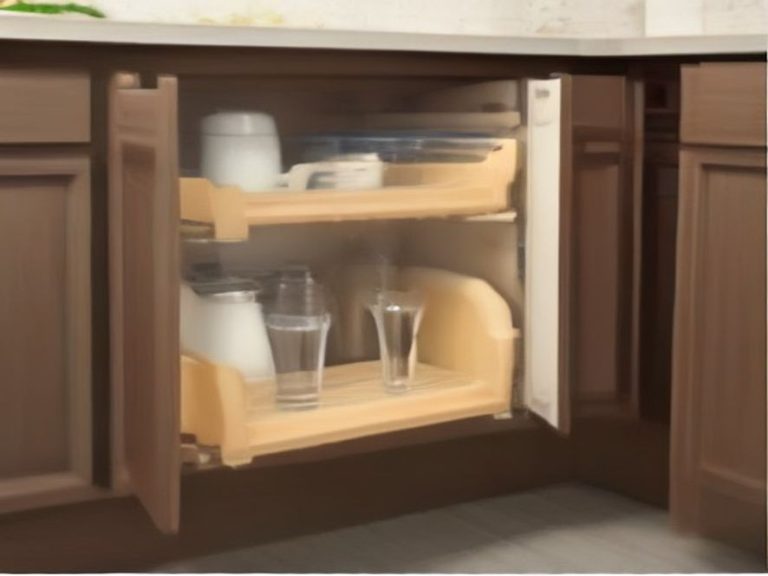
Pull-out corner systems—sometimes called magic corner or blind corner pull-outs—are designed to eliminate the main frustration of traditional corner cabinets: reaching into the back . Instead of rotating shelves, the mechanism pulls shelves outward when the cabinet door opens .
Types of pull-out systems include:
Blind corner pull-outs: These slide shelves out from the hidden corner space, using rectangular shelves that match the cabinet shape. They waste less space than circular Lazy Susan trays . They’re often the system experts end up recommending for practical storage .
Magic corner systems: When you open the cabinet door, a set of baskets slides out, pulling the hidden rear baskets forward automatically. These impress homeowners the first time they see them, offering fantastic visibility . They are the premium option—more expensive and requiring precise installation .
LeMans swing-out trays: These kidney-shaped shelves pivot into the room for instant visibility. One homeowner joked that after installing a LeMans system, they found their long-lost casserole dishes . They turn the dead corner into highly efficient storage .
Advantages of pull-out systems:
- Better storage efficiency—rectangular shelves use more of the cabinet space
- No center pole blocking item placement
- Handles heavy cookware much better than rotating trays
- Full visibility—you see everything at once when shelves slide out
Disadvantages:
- Higher cost—often two to three times more than a Lazy Susan
- More complex installation—often requires a professional
- Precise measurements needed—must fit your specific cabinet dimensions
Best for: Pots, pans, heavy cookware, and any kitchen where the corner cabinet needs to function as primary storage .
Comparison Table: Corner Cabinet Organizing Solutions
| Solution | Best For | Effectiveness | Difficulty | Cost |
|---|---|---|---|---|
| Lazy Susan (Standard) | Everyday items, spices, oils | Medium—Good access but wastes corner space | Low—DIY friendly | $ |
| Lazy Susan (Pie-cut/Kidney) | Tight corners, small openings | Medium—Fits awkward shapes | Low—DIY friendly | $ |
| Blind Corner Pull-Out | Heavy cookware, practical storage | High—Uses space efficiently | Medium—May need pro install | $$ |
| Magic Corner System | Maximum accessibility, daily cooking | High—Fantastic visibility | High—Needs precise install | $$$ |
| LeMans Swing-Out | Pots, pans, visible storage | High—Efficient and smooth | High—Requires proper cabinet | $$$ |
| Open Shelving + Baskets | Budget option, aesthetic display | Medium—Requires regular tidying | Low—DIY friendly | $ |
Source: Expert comparisons on corner cabinet mechanisms
Step-by-Step Guide to Organizing Your Corner Cabinet
Step 1: Empty It Completely
Pull everything out of the cabinet . This is the only way to see what you actually have and what’s been hiding in the back. Check expiration dates on pantry items and be honest about what you really use .
Step 2: Clean the Space
Wipe down the shelves thoroughly. Corners collect crumbs and spills that are hard to reach . If the cabinet is particularly dirty, a handheld steamer can help loosen stubborn grime .
Step 3: Decide on Your Organizing System
This is where you choose between a Lazy Susan, pull-out system, or other solution. Measure your cabinet interior before buying anything . Include:
- Width, depth, and height of the cabinet interior
- Door opening size and swing direction
- Any obstructions like center posts or hinges
Step 4: Choose What to Store
The best way to maximize corner cabinet space is storing the right items. Reserve corner cabinets for bulky items: stock pots, mixing bowls, slow cookers, or small appliances . Avoid storing tiny items that get lost in deep spaces . Extra supplies, canned goods, and less-used appliances also work well .
Step 5: Organize by Use
Place frequently used items in the most accessible spots. Store less-used items toward the back. If using a Lazy Susan, group like items together—all baking supplies on one tier, canned goods on another . Add non-slip liners to prevent items from sliding around when you rotate .
Step 6: Maintain the System
Adopt a “one in, one out” rule to prevent clutter from creeping back . Do a quick check every few months to remove items you no longer use.
Expert Insight
“Most corner cabinets fail because they’re deep and dark. When items are stored two feet behind a door opening, people simply stop using the space. A thoughtful system changes everything.”
“The more organized your kitchen is, the more you will enjoy everything you do there.” — Martha Stewart
Frequently Asked Questions
What is the best solution for a corner kitchen cabinet?
It depends on your needs. Lazy Susans are the simplest and most affordable . Pull-out systems provide better storage efficiency and handle heavy cookware better . For blind corners, sliding pull-out organizers are most effective .
Can I retrofit a corner organizer into an existing cabinet?
Yes, many organizers are designed for retrofit . Lazy Susans are the easiest to install. Pull-out systems require more precise measurements and may need professional installation .
Are Lazy Susans outdated?
Not at all—newer models have smooth bearings and better weight distribution, making them more durable than older versions . Martha Stewart still uses and recommends them .
What should I store in a corner cabinet?
Bulky cookware works best—large pots, mixing bowls, and small appliances . Extra supplies, canned goods, and less-used items are also good choices .
How do I organize a blind corner cabinet?
Install sliding pull-out baskets or corner swing trays. These mechanisms move stored items into reach rather than forcing you to dig into the back .
How much does a corner cabinet organizer cost?
Lazy Susans start around $20-$50. Pull-out systems range from $100-$500 depending on the mechanism and size . Magic corner systems are the most expensive .
References
Expert Sources on Corner Cabinet Organization:
- Coohom – 5 Corner Cabinet Organization Ideas
- Coohom – Lazy Susan vs Pull-Out Corner Cabinet Comparison
- Daily Meal – Martha Stewart Lazy Susan Tips
- Coohom – Maximizing Corner Cabinet Storage
- Homedit – Pull-Out Kitchen Cabinet Organizers
Which kitchen problem do you want solved next? Share your thoughts in the comments.