Best Cooking Tools That Don’t Trap Food and Grease: A Guide to Hygienic, Easy-Clean Cookware
That feeling of scrubbing a spatula for the fifth time, only to find a speck of dried food still lodged in a seam, is the kind of kitchen frustration that can make anyone dread cleanup. The best way to avoid this isn’t just better soap—it’s choosing tools designed to prevent food and grease from getting trapped in the first place. Here’s what to look for.
TL;DR
This guide covers the best tools for kitchens where hygiene and easy cleanup matter. You’ll learn why seamless silicone, smooth stainless steel, and flat-surfaced cookware are top picks. We’ll also review lab findings on bacteria buildup in different materials, so you can choose tools that are truly easy to keep clean.
Key Takeaways
- Seamless, one-piece designs without joints or crevices prevent food and grease from hiding .
- Stainless steel has a smooth, non-porous surface that resists bacteria and is easy to clean .
- High-quality silicone is non-stick and stain-resistant, but avoid tools with plastic handles where heads meet the handle .
- Non-stick cookware releases food easily, meaning less scrubbing and fewer residues to wash away .
- Polished iron cookware combines the benefits of cast iron with a smooth, low-stick surface .
Cookware That Cleans Up Easily
The cookware you choose plays a huge role in how much grease and food residue you have to deal with. Smooth, non-porous surfaces are the key to easy cleaning.
Smooth and Seamless Cookware
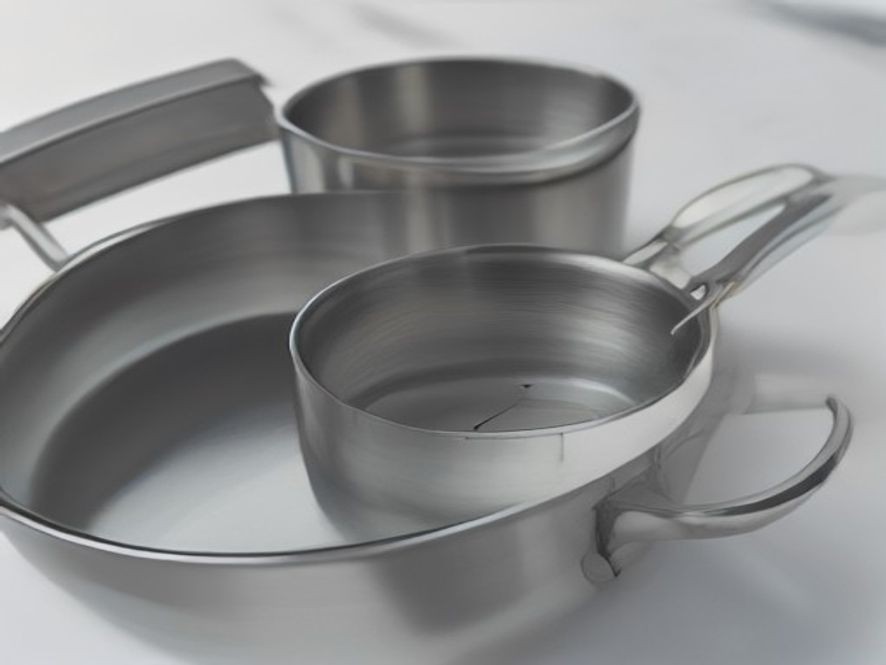
One of the biggest culprits for trapped food is rivets and joins on cookware handles. If you’ve ever scrubbed around the rivets inside a pan and found old grease, you know the struggle. Some brands are tackling this directly. Solidteknics, for example, makes its pans from a single solid sheet of 3mm-thick iron with no joins or rivets . This creates a seamless surface with nowhere for food to hide. Their polished iron pans also have a smooth, low-stick finish that makes cooking easier and cleaning quicker .
Non-Stick Cookware
Non-stick pans are a classic solution for a reason. Food slides right off, and stuck-on messes are rare. A panini grill with non-stick plates and a built-in drip tray, for example, lets grease drain away while cooking, keeping the cooking surface clean and food healthier . This makes cleanup as simple as a quick wipe after the pan cools.
Stainless Steel
Stainless steel has a smooth, non-porous surface that resists bacteria and is straightforward to clean . It’s no wonder this material is a favorite in professional kitchens. As one Food & Wine editor noted after testing Quince’s stainless steel set, the pans are “easy to clean” and have yet to need any special polishing . When properly preheated, stainless steel can even give non-stick results, making cleanup even easier .
Utensils That Don’t Trap Food and Grease
Your tools matter just as much as your cookware. Here are the easiest-to-clean utensils to keep in your kitchen drawer.
Seamless Silicone Utensils
Silicone is non-porous, stain-resistant, and easy to clean—often dishwasher-safe . However, the design matters enormously. Cheap silicone utensils often have a plastic handle glued to a silicone head, and the joint where they meet can become a breeding ground for mold and bacteria .
The best choice is a seamless, one-piece design. Brands like GIR mold their entire utensil from a single piece of platinum-cured silicone, with no joints, gaps, or seams . This means food, grease, and bacteria have nowhere to hide. The set is fully dishwasher-safe and comes out looking like new, making it a solid choice for any home cook . Umite Chef’s set also uses a seamless one-piece design, with a stainless steel core wrapped in silicone that eliminates gaps where food can get trapped .
Wooden Utensils with Care
Wooden utensils can be a good option, but they require maintenance. To prevent wood from absorbing liquids and germs, regular oiling is crucial . A well-sealed wooden spoon is easier to clean and less likely to trap food particles. However, if the wood is cracked or dry, it can harbor bacteria.
The Hygiene Comparison: What the Lab Found
A Spanish lab test put silicone, wood, and stainless steel utensils head-to-head under real-world conditions. All utensils were washed in a dishwasher and then incubated to measure bacteria growth . The results were surprising:
- Stainless steel showed the lowest bacteria growth, thanks to its smooth surface .
- Wood came in second, proving that it doesn’t automatically trap the most bacteria .
- Silicone showed the highest bacteria growth in this test .
However, the lab stressed that these results are not absolute. A silicone utensil’s condition (scratches, age) and design (seams vs. seamless) heavily influence how well it can be cleaned . A seamless, well-maintained silicone tool is likely to be much cleaner than a scratched, cheaply made one.
Comparison of Easy-Clean Utensil Features
| Tool Type | Key Feature for Easy Cleaning | Why It Helps | Best For |
|---|---|---|---|
| Seamless Silicone | One-piece construction with no joints | Prevents food and moisture from getting trapped in crevices | Everyday cooking, scraping bowls, non-stick pans |
| Solid Stainless Steel | Smooth, non-porous surface | Resists bacteria and wipes clean easily; dishwasher safe | Searing, stirring, high-heat cooking |
| Wood (Well-Maintained) | Sealed with oil to prevent absorption | Prevents liquids and bacteria from soaking in | Stirring, serving, table presentation |
| Two-Part Silicone | Avoid this design | The joint between head and handle traps food and moisture | Not recommended for hygiene |
Simple Solutions to Common Questions
Why do my silicone spatulas seem harder to clean over time?
Cheaper silicone can develop tiny scratches and lose its smooth surface, making it harder to clean . Choosing high-quality, food-grade silicone from a reputable brand can help.
Can I put wooden utensils in the dishwasher?
No. Dishwashers strip wood’s natural oils and cause warping and cracking. Always hand wash wooden utensils .
What cookware is easiest to clean if food gets burnt on?
Stainless steel can handle heavy scrubbing with baking soda or a non-abrasive cleanser . Non-stick pans are easier in daily use but are more delicate and can be damaged by high heat or metal utensils.
How do I know if a silicone utensil is high-quality?
Look for “100% food-grade” or “platinum-cured” silicone and a seamless, unibody design with no plastic parts . If it’s cheap and has a visible seam, it’s probably low-quality.
FAQ
How do I fix a greasy kitchen hood?
Regular cleaning is key. Use a degreaser or a baking soda paste to cut through the sticky grease film on your range hood and backsplash.
What is the best way to clean a microwave?
Steam a bowl of water with lemon slices for a few minutes, then wipe away the loosened food splatters easily.
How do I reduce my kitchen electricity bill?
Using smaller appliances like air fryers or toaster ovens for smaller meals uses less energy than heating a large oven and also keeps your kitchen cooler.
What are the first steps to improving kitchen organization?
Declutter your counters first, then organize drawers with frequently used tools at your fingertips. A utensil crock for your most-used spoons and spatulas can keep them accessible and neat.
Which type of utensil do you find hardest to clean? Share your thoughts in the comments.
Trusted Resources for Kitchen Tools and Hygiene: