Best Cooking Tools for Cooking With Nonstick Pans
You carefully season your dinner, slide it into your shiny nonstick pan, and then watch in horror as a metal spatula accidentally scrapes a deep scratch right through the coating.
Nonstick pans are kitchen heroes for eggs, pancakes, and fish—but their delicate surfaces need the right tools and a little TLC. This guide covers the best cooking tools for nonstick pans, plus the cleaning supplies and habits that keep them working perfectly.
TL;DR: The golden rule for nonstick pans is simple: never use metal utensils. The best tools are made of silicone, wood, or heat-safe nylon. A silicone fish spatula is a game-changer for flipping eggs and fish without scratching. For cleaning, use only soft sponges, mild dish soap, and warm water—avoid steel wool and the dishwasher.
Key Takeaways:
- Metal utensils scratch and ruin nonstick coatings—use silicone, wood, or nylon instead
- A silicone fish spatula is the most versatile tool for flipping delicate foods without damage
- Silicone tools are heat-resistant up to 425–480°F and won’t melt on the pan edge
- Hand wash with a soft sponge and mild soap; the dishwasher is too harsh
- Store pans with protection between them to avoid scratches
The Most Important Rule for Nonstick Tools
The single biggest mistake people make with nonstick pans is using metal utensils. Metal spatulas, spoons, tongs, and whisks can scratch the delicate nonstick coating—and once the coating is damaged, food starts sticking, cleanup gets harder, and the pan’s lifespan shortens dramatically .
Even small scratches weaken the surface over time, eventually causing the coating to flake, peel, or lose its slickness entirely . Some manufacturers specifically state that using metal utensils voids the warranty .
The good news? The swap is simple. Instead of metal, reach for tools made from :
- Silicone — flexible, heat-resistant, and gentle on surfaces
- Wood — classic and sturdy, completely nonstick-safe
- Heat-safe nylon or plastic — lightweight and won’t scratch
The Best Tool: Silicone Fish Spatula
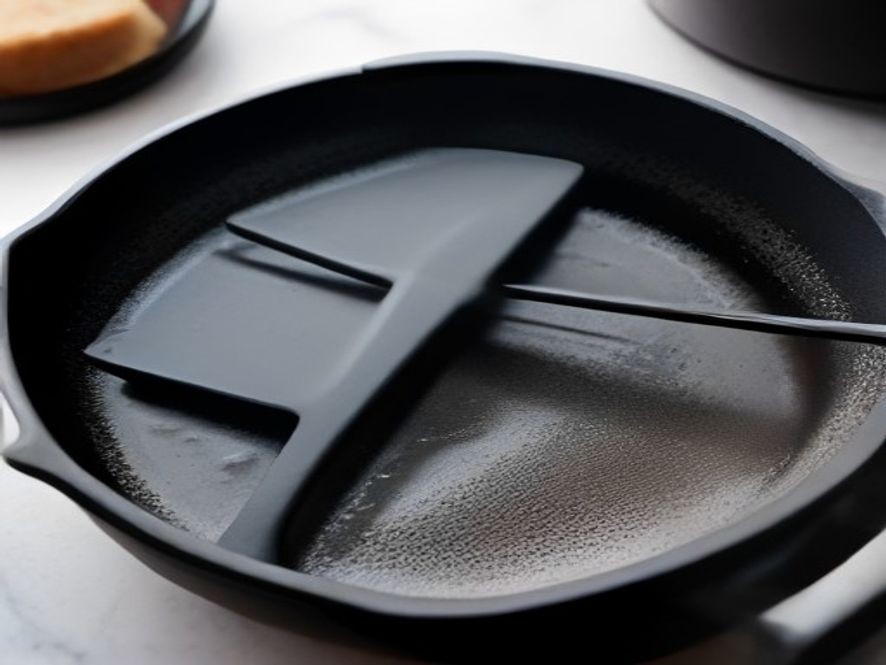
If you buy one tool specifically for your nonstick pans, make it a silicone fish spatula. It’s flexible enough to slide under delicate foods like eggs and fish, but gentle enough that it won’t scratch the coating .
Why It Works
The Misen silicone fish spatula has an angled, flexible head with a silicone edge that smoothly glides under food without damaging the pan. It’s especially good for flipping eggs—one shopper reported “no more broken over-easy eggs or torn omelets” and wished they had bought one sooner .
The handle is coated with the same heat-resistant silicone (up to 450°F), so it won’t melt if you accidentally leave it resting on the edge of a hot pan—a common problem with nylon-handled tools .
What Chefs and Shoppers Say
- It “slips under the thinnest fish fillets, or easily gets under and flips a frying egg”
- One shopper bought a second one “for convenience” because it works so well
- It’s durable and can lift heavier items without buckling
At about $19, it’s a worthwhile investment that immediately upgrades your kitchen workflow .
Other Essential Nonstick-Safe Tools
Silicone Spatulas and Spoons
Silicone spatulas are a must-have for nonstick cooking. They’re flexible enough to scrape every last bit of batter from a bowl and heat-resistant enough to cook with—food-grade silicone can withstand temperatures over 480°F .
Look for one-piece silicone spatulas where the head and handle are all one piece. They’re easier to clean and don’t break as easily .
Silicone-Lined Tongs
Using metal tongs on a nonstick pan is asking for scratches. Instead, choose tongs with silicone tips. They’re heat-resistant up to 484°F and won’t scratch your cookware, even when flipping heavier items like chicken breasts .
Wooden Spatulas and Spoons
A wooden spatula is a kitchen workhorse. It’s not the tool for scooping, but it safely stirs sauces and scrapes the bottom of any pan—nonstick included. Quality wooden tools can hold up for years, even with regular use and occasional soaking .
Comparison Table: Best Nonstick-Safe Tools
| Tool Type | Best For | Heat Resistance | Typical Cost |
|---|---|---|---|
| Silicone Fish Spatula | Flipping eggs, fish, pancakes | 450°F+ | $15–$25 |
| Silicone Spatula | Scraping bowls, stirring, folding | 425–480°F | $8–$15 |
| Silicone-Lined Tongs | Flipping and serving | 450–484°F | $10–$20 |
| Wooden Spatula | Stirring sauces, scraping fond | Very high (won’t melt) | $10–$20 |
| Heat-Safe Nylon Utensils | Everyday cooking | Up to 400°F | $5–$15 |
Cleaning Tools: What to Use (and What to Avoid)
Taking care of nonstick pans is just as important as using the right cooking tools.
Safe Cleaning Tools
- Soft sponge (non-abrasive)
- Microfiber cloth or soft towel
- Mild dish soap
- Baking soda (for stubborn residue—use gently)
What to Never Use
- Steel wool or abrasive scrubbers — they scratch and ruin the surface
- The dishwasher — heat and harsh detergents weaken the coating over time
Cleaning Tips
For burnt-on food: Fill the pan with warm soapy water and let it soak for 30 minutes. If residue remains, make a paste with baking soda and water, apply gently, and rinse . Never use sharp knives or metal scrapers to remove burnt food .
For sticky residue: Mix one part white vinegar with two parts water in the pan, bring to a gentle simmer for a few minutes, cool, and hand wash. This restores the nonstick properties without damaging the coating .
Always hand wash: Even if the label says dishwasher-safe, repeated dishwasher cycles are tough on the coating. Hand washing is the gentler option—and usually quicker too .
Heat and Storage: Small Habits That Make a Big Difference
Heat Matters
Nonstick pans are not made for high heat. Stick to low or medium heat for everyday cooking . High heat can damage the coating and shorten the pan’s lifespan. Also, always add a little oil or butter before turning on the heat—heating a dry nonstick pan can cause the surface to overheat and break down faster .
Storage Tip
If you stack pans, place a dish towel, paper plate, or pan protector between them. Sliding one pan inside another can cause scratches that ruin the surface .
Frequently Asked Questions
What utensils are safe for nonstick pans?
Silicone, wood, and heat-safe nylon are all safe. Metal utensils—including spatulas, tongs, spoons, and whisks—are not .
Can I use a metal whisk in a nonstick pan?
No. Metal whisks scratch the coating. Use a silicone or nylon whisk instead.
Is silicone cookware safe?
Yes, as long as it’s food-grade silicone, which is regulated by the FDA and free of harmful chemicals like BPA .
Can I put nonstick pans in the dishwasher?
It’s not recommended. Even if the label says dishwasher-safe, hand washing is much gentler and extends the life of the pan .
What’s the best spatula for nonstick pans?
A silicone fish spatula is widely recommended. It’s flexible enough for delicate foods and gentle on the surface .
How do I know when to replace a nonstick pan?
If the coating is chipped, peeling, or deeply scratched, it’s time to replace it. Once the coating starts failing, performance drops .
Which nonstick cooking challenge do you need help with next? Share your questions in the comments.
References and Resources for Nonstick Pan Care: