Kitchen Cabinet Space Not Enough Ideas: Practical Kitchen Storage Solutions That Work
You stand in your kitchen with a bag of groceries, open a cabinet, and just stare — because there is absolutely nowhere to put that new bag of rice.
TL;DR: Running out of cabinet space is rarely about having too much stuff. Most kitchens waste 30 to 50 percent of their existing cabinet space due to poor organization. The best ideas are adding shelf risers to double vertical space, using cabinet door racks, installing pull-out drawers inside deep cabinets, hanging pots on wall racks, and storing off-season items elsewhere. You can gain a full cabinet of space without remodeling for under 50 dollars.
🔵 Key Takeaways
- Shelf risers instantly double the usable space on any shelf for less than 10 dollars.
- Cabinet doors can hold spices, lids, cutting boards, and measuring cups without taking interior space.
- Deep lower cabinets become dead zones without pull-out shelves or sliding bins.
- Pots and pans take up too much space — move them to a wall rack or ceiling rack.
- Off-season and rarely used items belong outside your kitchen cabinets.
The Real Causes of Cabinet Space Shortages and How to Fix Them
Your kitchen cabinets are probably bigger than you think. The problem is not the size of the boxes. The problem is that you are using them wrong. You stack things horizontally when they should be vertical. You leave empty air above short items. You stuff deep cabinets without any way to reach the back.
Most kitchens waste 30 to 50 percent of their cabinet space. That is like having three cabinets but only using two of them. The fixes in this guide recover that wasted space. No renovation needed. No new cabinets required.
Look at your upper cabinet right now. Look at the space between the top of your coffee mugs and the shelf above them. That empty air is wasted space that shelf risers can fix in five minutes.
Why Deep Cabinets Fail and What to Do Instead
Deep lower cabinets are the biggest space wasters in most kitchens. You put things in the front. You put other things behind them. Soon, the back of the cabinet becomes a dark hole where food expires and utensils get forgotten.
The solution is to stop using deep cabinets as one big empty box. Turn them into a set of drawers instead. Pull-out shelves, stackable bins, and sliding drawers bring the back of the cabinet to the front. Everything becomes reachable. Nothing gets forgotten.
“The average kitchen wastes about 40 percent of its cabinet space due to poor organization. Shelf risers and pull-out racks recover most of that waste in one afternoon.”
Step-by-Step Ideas for More Cabinet Space
Try these ideas one at a time. Start with the ones that cost the least and take the least time.
Idea 1: Add Shelf Risers to Every Shelf
Shelf risers are simple metal or plastic platforms with legs. They sit on your shelf and create a second level underneath them. Short items go on top of the riser. Tall items go underneath.
Use shelf risers for:
- Spice jars
- Small cans (tuna, tomato paste)
- Ramekins and small bowls
- Shot glasses and espresso cups
- Jars of sauces and condiments
Measure your shelf height before buying. You need enough clearance above the riser for whatever you put on top. A good rule: shelf height minus 4 inches equals maximum riser height.
For cabinets with very tall ceilings, use two shelf risers stacked. This works perfectly for storing mugs, small bowls, and measuring cups.
Buy adjustable width risers so they fit any cabinet. Most cost 8 to 15 dollars each.
Idea 2: Use Cabinet Door Racks for Everything
The inside of your cabinet doors is free storage space. You are already paying for that space. Use it.
Spice rack. A clear acrylic rack mounts with adhesive strips. Holds 12 to 18 spice jars. Keeps spices visible and accessible. Frees up an entire shelf.
Lid rack. A simple wire rack holds pot lids vertically. Mount it inside a lower cabinet door near your pots. No more digging through a pile of lids.
Measuring cup and spoon rack. Small adhesive hooks hold measuring spoons. A magnetic strip holds metal measuring cups. Both mount on the inside of an upper cabinet door.
Cutting board storage. A narrow vertical rack holds two to three cutting boards. Mount on the inside of a lower cabinet door.
Trash bag and wrap dispenser. A spring-loaded rack holds rolled trash bags, foil, wax paper, and plastic wrap. Mount inside an under-sink cabinet door.
Safety reminder: Do not overload door racks. Heavy items can pull screws out of thin cabinet wood or cause door hinges to sag. Stick to lightweight items.
Idea 3: Install Pull-Out Shelves in Deep Lower Cabinets
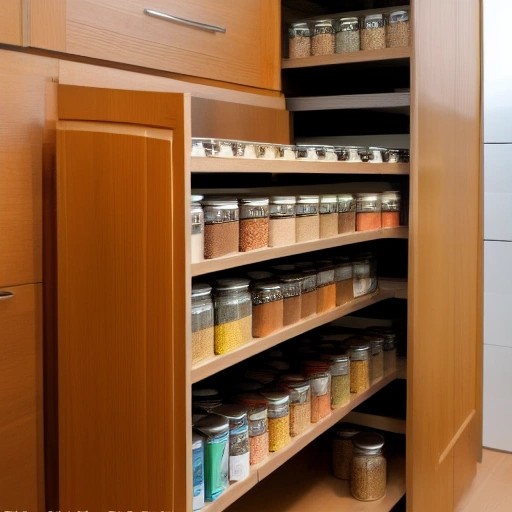
Deep lower cabinets are useless without pull-out shelves. You cannot reach the back, so the back becomes dead space. Pull-out shelves change that completely.
You can buy pre-made pull-out shelves or make your own. Pre-made options cost 30 to 80 dollars per cabinet. They come with metal slides and a wooden shelf. You screw the slides to the cabinet floor and sides. The shelf slides in and out like a drawer.
For a cheaper option, use stackable wire bins that slide forward. Pull a bin out like a drawer. Stack a second bin on top. Fill with canned goods, snack bags, or potatoes.
Measure your cabinet width and depth before buying anything. Pull-out shelves only work if they fit exactly.
Idea 4: Hang Pots and Pans on a Wall or Ceiling Rack
Pots and pans take up enormous amounts of cabinet space. A single stack of three saucepans uses an entire lower cabinet shelf. A set of four frying pans uses another shelf.
Move them out of your cabinets entirely.
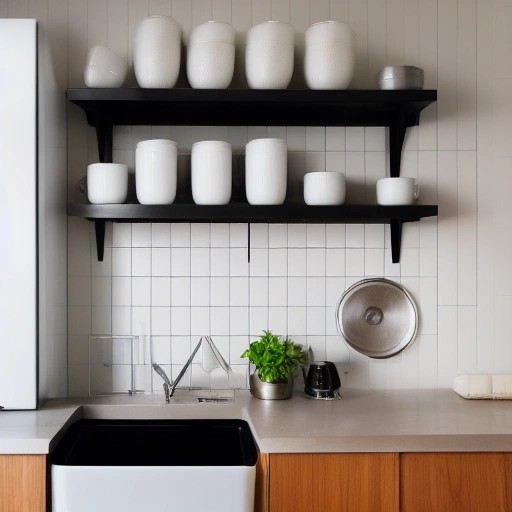
Wall-mounted pot rack. A metal bar with S-hooks mounts to the wall. Hang pots, pans, and even pot lids. Frees up two full lower cabinet shelves.
Ceiling-mounted pot rack. Hangs from the ceiling above an island or peninsula. Classic look. Keeps pots within reach while cooking.
Pegboard with hooks. Mount a pegboard on an empty wall. Use heavy-duty hooks to hang pots and pans. Paint the pegboard to match your wall.
For renters, use a freestanding pot rack that leans against the wall. No drilling required.
Idea 5: Store Off-Season Items Outside the Kitchen
Your kitchen cabinets should hold what you use weekly or monthly. Off-season items do not belong in prime cabinet real estate.
Move these out of your kitchen cabinets:
- Turkey roasting pan (use once or twice a year)
- Ice cream maker (summer only)
- Cookie press and holiday cookie cutters (December only)
- Large punch bowl (entertaining only)
- Backyard grilling tools (keep outside with the grill)
- Secondary slow cooker (keep one in the cabinet, store the other elsewhere)
Store these items in a basement closet, garage shelf, high bedroom closet, or under-bed storage box. Label the box clearly with a marker. When the season comes, swap them back in.
If you have not used an item in a year, consider donating it instead of storing it elsewhere.
Idea 6: Use Tension Rods Inside Cabinets
Tension rods are not just for showers. They cost 3 to 5 dollars and create instant storage inside cabinets.
Inside a narrow cabinet. Stretch two tension rods vertically. Slide baking sheets, cutting boards, or cooling racks between the rods. Store them on their edges like records in a crate. You can fit five times more than stacking them flat.
Inside a lower cabinet. Stretch a tension rod horizontally at the back of the cabinet. Hang spray bottles or small cleaning tools from S-hooks.
Inside a corner cabinet. Use a tension rod to create a divider. Separate baking sheets from cutting boards or pot lids.
Clean the cabinet walls with rubbing alcohol before installing so the rod grips better and does not slip.
Idea 7: Decant Food into Matching Stackable Containers
Mismatched boxes and bags waste enormous amounts of space. That cereal box is half air. That chip bag is mostly empty space. That pasta box does not stack with anything.
Decant everything into matching, clear, rectangular containers. Use the same brand and size range so everything stacks perfectly.
Transfer these items into containers:
- Cereal, oatmeal, pancake mix
- Flour, sugar, rice, pasta
- Chips, crackers, pretzels
- Coffee, tea, hot chocolate mix
- Baking mixes, dried beans, lentils
Throw away all mismatched containers with missing lids. Keep only one complete matching set. You will be shocked how much space you gain.
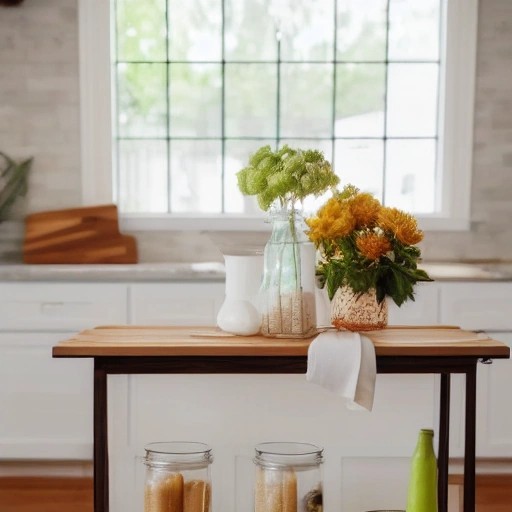
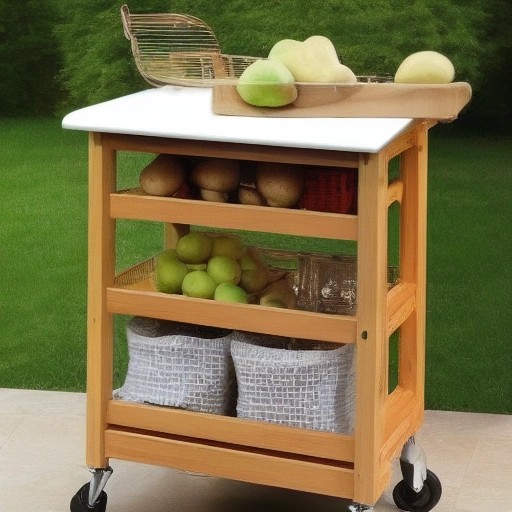
Idea 8: Add a Rolling Cart for Overflow
Sometimes you genuinely need more storage than your cabinets can provide. A rolling cart is the answer.
A rolling cart adds:
- A counter surface for food prep
- Two or three shelves for storage
- Wheels to move it anywhere
- A place for your microwave or toaster oven
Use a rolling cart for:
- Storing potatoes, onions, and garlic
- Holding cookbooks or recipe binders
- A coffee or tea station
- Extra prep space when cooking big meals
When not in use, roll the cart into a corner, against a wall, or even into a dining room or hallway.
Look for a cart with locking wheels, a butcher block top, and at least two shelves. Most cost 40 to 80 dollars.
Comparison Table: Cabinet Space Ideas
| Idea | Best For | Space Gained | Time to Install | Cost |
|---|---|---|---|---|
| Shelf risers | Upper cabinets, short items | 50-100% more shelf levels | 2 minutes | Low |
| Cabinet door racks | Spices, lids, measuring cups | 15-25% of cabinet volume | 10 minutes | Low |
| Pull-out shelves | Deep lower cabinets | 60-80% of dead back space | 1-2 hours | Medium |
| Pot rack | Pots, pans, lids | One full lower cabinet | 1 hour | Medium |
| Off-season storage | Rarely used items | 20-30% of total space | 30 minutes | Free |
| Tension rods | Narrow cabinets, baking sheets | 30-50% more vertical storage | 5 minutes | Very Low |
| Stackable containers | Dry food storage | 30-50% less wasted air space | 30 minutes | Low-Medium |
| Rolling cart | Overflow and appliances | 5-10 sq ft usable space | 5 minutes (assembly) | Medium |
Cabinet Space Wasted by Cabinet Type
How to Organize Specific Problem Cabinets
Different cabinets need different solutions. Here is how to fix the worst offenders.
Under-Sink Cabinet
This space is awkward because of pipes. Use stackable slide-out bins on the floor. Install a tension rod high up for spray bottles. Mount a door rack for scrub brushes and gloves. Do not store food or paper products here — one small leak ruins everything.
Corner Cabinet
Corner cabinets are the biggest space wasters. Install a lazy susan turntable. Or use pull-out swing shelves. Or install a magic corner system with two pull-out drawers that connect. For a cheap fix, use stackable bins and accept that the back corner is dead space.
Above-Fridge Cabinet
This space is hard to reach. Store things you use less than once a month: holiday platters, roasting pans, bulk paper towels, party supplies. Use sturdy bins with handles so you can pull the whole bin down without climbing. Label each bin clearly. Do not store heavy glass items here — lifting them down is dangerous.
Narrow Cabinet (Next to Stove or Fridge)
Narrow cabinets are perfect for baking sheets, cutting boards, and cooling racks. Store them vertically using a divider or tension rods. Slide them in like records in a crate. You can fit five times more than stacking them flat.
Renter-Friendly Cabinet Ideas
If you cannot drill holes or make permanent changes, use these no-damage options.
- Adhesive shelf risers: Some risers come with adhesive feet. No drilling.
- Tension rods: No screws, no adhesive. Hold cutting boards and baking sheets.
- Over-the-cabinet racks: Hook over the top of lower cabinet doors. Hang dish towels or trash bags.
- Command hooks: Hold up to 5 pounds. Use for measuring cups and small utensils.
- Stackable bins: Sit on shelves. No installation required.
- Rolling cart: Requires no installation. Adds storage without touching cabinets.
Take photos of your rental kitchen before installing anything. Keep all original parts. Remove everything carefully when you move out. Fill small nail holes with spackle.
FAQ: Quick Answers to Cabinet Space Problems
How can I get more cabinet space without remodeling?
Add shelf risers to double vertical space. Use cabinet door racks. Install pull-out shelves in deep cabinets. Hang pots on a wall rack. Store off-season items elsewhere.
What is the best solution for deep lower cabinets?
Pull-out sliding shelves or stackable wire bins that slide forward. Both bring the back of the cabinet to the front.
Can I store pots and pans somewhere other than cabinets?
Yes. Wall-mounted pot racks, ceiling pot racks, pegboards with hooks, or a rolling cart with a pot rack attachment.
How do I organize a corner cabinet?
Install a lazy susan turntable. Or use pull-out swing shelves. For a cheap fix, use stackable bins and only use the front half.
Should I remove cabinet doors for more space?
Removing doors makes the space feel larger but does not add actual storage. Only remove doors if you want open shelving for display items.
What is the one product that saves the most cabinet space?
Shelf risers. For 10 dollars, you double the usable space on any shelf. Nothing else gives that much gain for that little money.
How do I know if I have too much stuff versus not enough space?
If you declutter and add risers and door racks but still cannot fit your daily items, you genuinely need more storage. Add a rolling cart or freestanding pantry.
When to Let Go Instead of Store
Sometimes the best storage solution is getting rid of something. Ask yourself these questions for every item in your cabinets.
- Do I use this at least once a month?
- Do I have a duplicate of this?
- Would I buy this again today?
- Is this broken, chipped, or missing a part?
If you answer no to the first question and yes to the second or third, donate or toss the item.
Give duplicates to a friend starting their first apartment. Donate to a thrift store. Recycle broken items guilt-free. You will not miss them.
Which kitchen problem do you want solved next? Share your thoughts in the comments.
References: