Why Do Things Get Lost in My Deep Kitchen Cabinets? The Real Causes and Smart Solutions
You know that pan is in there somewhere. You bought it last year. But after five minutes of digging, you’re still empty-handed and frustrated.
It happens to everyone with deep kitchen cabinets. You open the door, stick your arm in up to your elbow, and fish around like you’re searching for treasure in a dark cave. You end up pulling out three things you don’t need just to find the one you do. Sometimes you give up entirely and buy a replacement—only to find the original months later when you’re looking for something else.
This isn’t just annoying. It’s expensive, wasteful, and makes cooking feel like a chore. But the problem isn’t your memory or your organizational skills. It’s the way deep cabinets work—or rather, don’t work—for how we actually use kitchens.
TL;DR
Things get lost in deep kitchen cabinets because you can’t see what’s in the back, items get pushed further back over time, and the dark “cave” effect makes everything invisible. Fixed shelves trap items at the rear, and without a system, forgotten items become duplicates you rebuy. The fix is simple: add pull-out shelves to bring the back forward, install motion-sensor lights to eliminate darkness, use clear bins with handles for visibility and easy grabbing, and create a “first in, first out” rotation system. A quick monthly “sweep” also helps you remember what’s back there.
Key Takeaways
- Visibility is the core problem: If you can’t see it, you forget you own it. This leads to buying duplicates.
- The “push-back” effect: Every time you reach in, you unconsciously push items further back.
- Pull-out shelves are the #1 fix: They bring the back of the cabinet to you, eliminating blind reaching.
- Lighting makes a huge difference: Stick-on motion-sensor lights instantly eliminate the dark “cave.”
- Clear bins with handles let you pull out entire categories of items at once.
The Real Reasons Your Stuff Disappears in Deep Cabinets
Reason 1: The “Out of Sight, Out of Mind” Effect
This is the most basic reason. Human memory is tied to visual cues. If you can’t see something, your brain doesn’t register that you own it. It’s not a character flaw—it’s how our brains are wired.
When you can’t see the back of your cabinet, those items effectively cease to exist in your daily awareness. You buy a new bottle of soy sauce because you think you’re out. You buy a second mandoline slicer because you forgot you already had one. This visual blind spot is the leading cause of duplicate purchases in the kitchen.
Reason 2: The “Push-Back” Cycle
Think about how you reach into a deep cabinet. You reach in, your hand contacts the first item, and you push it aside to reach further back. Over time, every reach pushes items just a little bit further into the darkness.
This creates a cycle: the back items get pushed even further back. They become harder to reach, so you push more. Eventually, they’re completely inaccessible without emptying the entire cabinet. One professional organizer calls this “the cabinet abyss”—a place where perfectly good items go to be forgotten.
Reason 3: Poor Lighting
Deep cabinets are inherently dark. Even with the kitchen lights on, the back of a 24-inch-deep cabinet is in shadow. You can’t see what’s there, so you can’t identify it. You’re literally reaching blindly.
“Darkness hides clutter. Hidden clutter leads to overbuying,” says one organization expert. The solution is simple: add light.
Reason 4: Fixed Shelves That Trap Items
Fixed shelves in deep cabinets are a design flaw. Items at the back have no way to come forward unless you physically drag them. And if there’s a heavy item in front, you’re not going to move it just to check what’s behind it.
Pull-out shelves solve this by bringing the entire shelf to you. Suddenly, everything is visible and accessible.
Reason 5: No Clear Categories
Without categories, everything gets mixed together. Your baking pans are next to your mixing bowls, which are stacked with your food storage containers. Finding anything means rummaging through unrelated items, which disrupts everything else.
Grouping by function—such as a “baking zone” near the oven or a “cooking zone” near the stove—makes it easier to find what you need because you know where to look.
Step-by-Step Fix Guide: How to Stop Losing Things in Deep Cabinets
Step 1: Empty Everything Out
You can’t organize what you can’t see. Take everything out and put it on your counter. This is your chance to see exactly what you actually own.
- Sort items by category: baking sheets, pots and pans, mixing bowls, food storage, small appliances, etc.
- Declutter ruthlessly. If you haven’t used it in a year, let it go.
- Clean the empty cabinet thoroughly.
Step 2: Install Pull-Out Shelves or Drawers
This is the single most effective solution for deep cabinets. Pull-out shelves bring the back of the cabinet to you. No more blind reaching.
- Drop-in versions: These require no tools. You just place them on your existing shelf.
- Installed versions: These attach to the cabinet frame and slide on metal glides. They’re more durable and smooth.
One kitchen design expert notes, “Pull-out drawers can completely transform the flow of your kitchen by turning deep, hard-to-reach cabinets into highly functional storage spaces.”
Step 3: Add Motion-Sensor Lighting
Stick-on, battery-powered motion-sensor lights are a game-changer. They turn on automatically when you open the door and illuminate the entire space.
- Place them at the back of the shelf or under the cabinet above.
- Motion-sensor lights are cheap, easy to install, and instantly make everything visible.
Step 4: Use Clear Bins with Handles
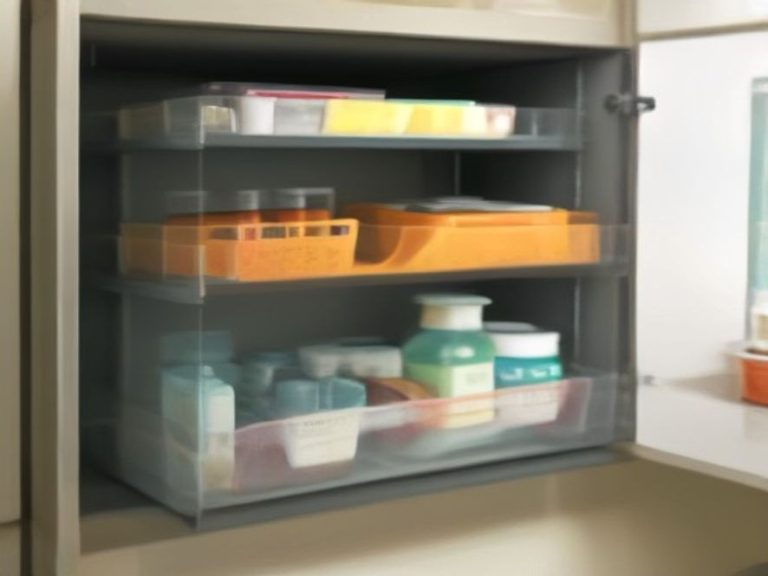
Group similar items in clear bins with handles. The transparency lets you see what’s inside. The handles make it easy to pull the bin forward.
- Examples: snacks, baking supplies, pasta, canned goods.
- Clear bins prevent the “where did I put that?” moment.
Step 5: Create a “First In, First Out” System
When you buy new items, place them at the back. Move older items to the front. This ensures you use the oldest items first and prevents food waste.
- This is especially useful for pantry items, spices, and oils.
- Label your bins with purchase dates or use small date stickers.
Step 6: Do a Monthly “Sweep”
Once a month, do a quick check of your deep cabinets. Pull out each bin, check what’s inside, and rotate items as needed.
- This prevents buildup of forgotten items.
- It also gives you a chance to wipe down shelves.
Comparison Table: Solutions for Deep Cabinets
| Solution | How It Helps | Cost | Ease of Installation |
|---|---|---|---|
| Pull-Out Shelves (Drop-In) | Brings back items to the front. No blind reaching. | $$ | Very Easy |
| Pull-Out Shelves (Installed) | Smooth glide, permanent fix. Best for heavy items. | $$$ | Medium (DIY or hire) |
| Motion-Sensor Lights | Illuminates the dark “cave” instantly. | $ | Very Easy |
| Clear Bins with Handles | Group items, see contents, grab and pull forward. | $ | Very Easy |
| Tiered Risers | Doubles shelf space; makes back row visible. | $ | Very Easy |
| Lazy Susan Turntable | Spin to access items in deep corner cabinets. | $$ | Very Easy |
Expert Insight
“Most kitchen problems come from small maintenance habits that are often ignored. The difference between a frustrating kitchen and a functional one is usually just a few simple fixes.”
FAQ: Your Deep Cabinet Questions Answered
1. Why can’t I remember what’s in my deep cabinets?
Your brain relies on visual cues for memory. If you can’t see something, you’re likely to forget you own it. This is called the “out of sight, out of mind” effect.
2. What’s the cheapest way to fix a deep cabinet?
Use clear bins with handles and a stick-on motion-sensor light. This costs under $30 and dramatically improves visibility and accessibility.
3. Are pull-out shelves worth the investment?
Yes. If you’re frustrated by your deep cabinets, pull-out shelves are the single most effective solution. They turn a problem area into a functional storage zone.
4. How do I install pull-out shelves in existing cabinets?
You can buy drop-in versions that just sit on your existing shelf. Or you can install gliding versions that attach to the cabinet frame. Instructions are usually included with the product.
5. Where should I place motion-sensor lights in a deep cabinet?
At the back of the shelf or underneath the cabinet shelf above. This illuminates the darkest area.
6. What should I store in the back of a deep cabinet?
Reserve the deepest, hardest-to-reach spots for light, rarely used items. For example: a turkey roasting pan used once a year, or party platters.
7. How often should I reorganize my deep cabinets?
Do a major declutter and reorganize twice a year. Do a quick monthly “sweep” to rotate items and wipe down shelves.
The deep cabinet problem is real, but it’s also fixable. With pull-out shelves, motion-sensor lights, and clear bins, you can say goodbye to lost items and duplicate purchases forever.
Which deep cabinet in your kitchen is the biggest problem? Share your story in the comments!
Practical Kitchen Cabinet Organization Tips and Expert Advice for Deep Storage Solutions: