The Best Way to Conquer a Kitchen With Few Cabinets: A Complete Guide to Maximizing Every Inch
You open your cabinets and they are already full. You look around and realize you have only two or three cabinets to store everything—pots, pans, plates, food, and cleaning supplies all fighting for the same tiny space.
This is a common frustration for renters and homeowners with small kitchens. The good news is that you do not need a renovation or a full cabinet addition to solve this problem. With some strategic thinking and the right tools, you can turn a cramped kitchen into an efficient, enjoyable cooking space. The experts agree: “The best part of a small kitchen is that everything is within reach. With just a few drawers and cabinets, you don’t have to wander around looking for anything” .
TL;DR: This guide covers practical strategies for kitchens with limited cabinet space. It highlights smart organization techniques, space-saving essentials like shelf risers and vertical storage, and multi-functional tools that help you get more from your cabinets. With a few adjustments, you can cook comfortably even with minimal storage.
Key Takeaways
- Divide and Conquer: Group items by use frequency—daily items get prime cabinet space; weekly and backup items can live elsewhere .
- Think Vertical: Shelf risers can double your cabinet space by taking advantage of vertical height .
- Be Ruthless with Tools: Skip single-use gadgets and bulky matching sets; choose multi-functional tools instead .
- Look Beyond Cabinets: Walls, rolling carts, and over-the-sink racks create valuable storage that does not require cabinets .
- Smaller Plates, More Space: Switching to 9-inch dinner plates can save significant cabinet space .
The Real Causes Behind Cabinet Overwhelm and How to Fix It
When you have only two or three cabinets, every item feels like it is competing for space. The biggest mistake? Treating everything as “kitchen stuff” and spreading it across every available shelf . Food ends up behind mixing bowls. Spices get lost in the back. Cleaning supplies compete with canned goods. The fix is not about finding more space—it is about smarter sorting.
“Most kitchen problems come from small maintenance habits that are often ignored.”
Start by Sorting by Use, Not by Category
Stop trying to store everything in the kitchen. Organize your items based on how often you use them :
- Daily Items: Coffee, breakfast food, cooking oil, salt, pepper, the pans you use most, two to three plates per person, and frequently used snacks.
- Weekly Items: Extra canned goods, baking ingredients, backup grains, less-used spices, lunch containers, and serving pieces.
- Backup Items: Bulk paper goods, unopened duplicates, seasonal tools, party dishes, and appliances you rarely use.
Daily items deserve the best cabinet space. Weekly items can move to a higher shelf, a rolling cart, or a nearby closet. Backup items should leave the kitchen entirely if space is too tight .
Turn One Cabinet into a Mini Pantry
Instead of tucking food wherever it fits, choose one cabinet to be your dedicated food zone . This prevents the common problem of oatmeal behind mixing bowls and pasta above coffee mugs.
Shelf Risers Are Your Best Friend
The most effective hack for a cabinet with limited space is adding shelf risers . These simple inserts create a second layer, instantly doubling your usable shelf space . You can find affordable options at stores like Dollar Tree .
Clear Bins and Turntables
Add clear bins to group items by category like “breakfast,” “pasta night,” or “baking.” This keeps like items together and makes them easy to find. For deep cabinets, turntables allow you to easily access items in the back .
Decant Strategically
Do not decant everything just because it looks nice online. Only decant staples you constantly open: rice, oats, cereal, coffee, sugar, flour, and snacks. Keep awkward or occasional items in their original packaging and group them in bins .
Pro Tip: For small items like tea bags, spice packets, and small utensils, stackable mini-drawers inside your cabinet create extra layers without taking up much space .
Essential Tools and Strategies That Free Up Cabinet Space
What you choose to keep (and what you skip) matters as much as how you organize it. A small kitchen “forces you to consider more carefully what tools you really need” .
Skip the Matching Sets
Full knife sets and matching pot and pan sets are a trap. Experts recommend skipping these bulky sets and investing in a few high-quality pieces . A chef’s knife, a paring knife, a cast iron skillet, and a couple of small pots cover most cooking tasks without filling your cabinets .
Smaller Plates, More Space
Switching to 9-inch dinner plates instead of bulky 11-inch ones can free up significant cabinet space .
Ditch Single-Use Gadgets
In a small kitchen, every tool must earn its space. Skip items like garlic presses, citrus juicers, and egg slicers . Experts recommend choosing a few high-quality, multi-functional pieces instead of a drawer full of gadgets you rarely use .
Choose Multi-Functional Appliances
A toaster is nice, but it is a single-use appliance . An air fryer or toaster oven, on the other hand, can toast, bake, roast, and reheat . The same goes for a slow cooker—an Instant Pot can handle slow-cooking, pressure-cooking, sautéing, and rice-making in one appliance .
Look Beyond Cabinets: Alternative Storage Solutions
When cabinet space is limited, walls, carts, and other creative solutions step in.
Wall-Mounted Rails and Hooks
A simple rail system mounted on a wall can hold utensils, mugs, and lightweight pots, freeing up valuable drawer space . For knives, a magnetic strip is a safe and compact alternative to a bulky knife block .
Rolling Carts Add Versatile Storage
A rolling cart is one of the most useful alternatives to cabinets . It can serve as a snack pantry, coffee bar, baking station, or appliance garage. The IKEA Förhöja kitchen cart is a popular option—it provides extra prep space, deep shelves, and drawers that open from both sides .
Pegboards and Open Shelving
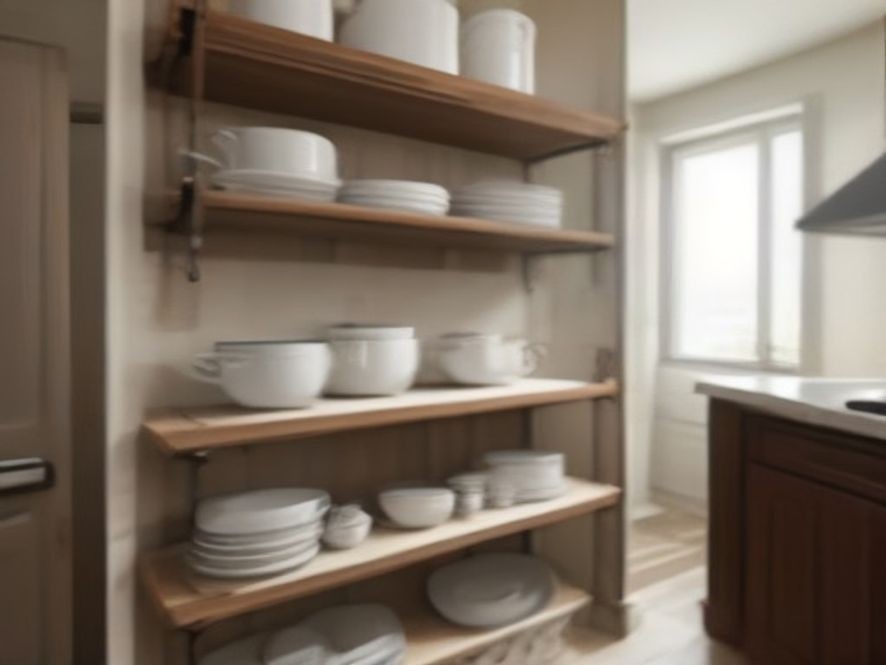
Pegboards are incredibly versatile. Mount one on a wall and use hooks and baskets to hold everything from pots and pans to utensils and mugs . For a more classic look, open shelving can store dishes, cookbooks, and aesthetically pleasing pantry items .
Pro Tip: Some experts recommend placing pegboards closer to the ground rather than high on the wall. This keeps storage accessible while feeling visually out of sight .
Over-the-Sink Racks
An over-the-sink drying rack or cutting board creates a temporary prep area without consuming counter space . These are renter-friendly and versatile.
Comparison Table: Cabinet Storage Solutions
| Solution | Best For | Cost | Difficulty |
|---|---|---|---|
| Shelf Risers | Doubling vertical space in cabinets | $10–$30 | Very Easy |
| Stackable Mini-Drawers | Small items like tea bags and spice packets | $2–$10 | Very Easy |
| Turntable/Lazy Susan | Accessing items in deep cabinets | $10–$25 | Very Easy |
| Wall-Mounted Rails | Hanging utensils and mugs | $15–$40 | Medium |
| Rolling Cart | Mobile pantry, prep space, or coffee station | $30–$100 | Easy |
| Pegboard | Customizable pot, pan, and tool storage | $20–$60 | Medium |
| Open Shelving | Displaying everyday dishes and pantry items | $30–$150 | Medium |
Chart: Where to Store What in a Cabinet-Limited Kitchen
Storage Distribution with Minimal Cabinets
Note: This chart represents estimated space created by each solution based on typical small kitchen layouts.
FAQ Section
1. How do I organize a kitchen with only two or three cabinets?
Sort items by daily, weekly, and backup use. Give daily items the best cabinet space. Store weekly items on higher shelves or a cart, and move backup items out of the kitchen entirely .
2. How can I maximize vertical space in my cabinets?
Use shelf risers to create a second layer, stackable mini-drawers for small items, and turntables for deep cabinets .
3. What kitchen tools should I keep in a small kitchen?
Stick to multi-functional, high-quality pieces: a chef’s knife, a cast iron skillet, a couple of small pots, and tongs . Skip single-use gadgets and bulky matching sets .
4. What are the best alternatives to cabinets?
Wall-mounted rails, rolling carts, pegboards, magnetic knife strips, and over-the-sink racks all add valuable storage without taking up cabinet space .
5. Are rolling carts a good solution for a cabinet-limited kitchen?
Yes. A rolling cart can serve as a mobile pantry, coffee station, or extra prep space. The IKEA Förhöja cart is a popular choice with deep shelves and versatile drawers .
6. How can I create a pantry without cabinet space?
Choose one cabinet to be a dedicated food zone. Use shelf risers, clear bins, and turntables to maximize its capacity. Use a rolling cart or wall shelves for additional food storage .
7. Are smaller dinner plates worth it?
Yes. Switching from 11-inch to 9-inch plates can save significant cabinet space while still being practical for most meals .
References
Trusted Sources for Small Kitchen Organization:
- Lumo – Expert Tips for Cooking in a Compact Kitchen
- Chowhound – Dollar Tree Cabinet Organizing Hack
- Food52 – 16 Kitchen “Essentials” to Skip in a Small Space
- Coohom – 5 Small Kitchen Storage Ideas Without Cabinets
- Tasting Table – 11 Clever IKEA Finds for Small Kitchens
- BambRise – Small Kitchen Ideas for Renters With No Pantry
Which small kitchen problem do you want solved next? Share your thoughts in the comments.