Slice and Dice: The Best Guide to Kitchen Tools and Gadgets for Cutting and Slicing
That moment you’re staring at a pile of vegetables, a whole chicken, or a crusty loaf of bread, and you realize your one dull knife isn’t going to cut it—literally—can make the start of any meal feel like a chore.
The good news is that a few well-chosen tools can turn any prep work from frustrating to fast. You don’t need a drawer full of fancy gadgets to get the job done. This guide will help you solve the problem of slow, uneven, or difficult slicing by showing you the best way to choose tools for cutting—saving you time, effort, and kitchen clutter.
TL;DR
- You only need three essential knives: A chef’s knife, a paring knife, and a serrated knife are the foundation of a well-equipped kitchen .
- Mandolines are the speed champions for uniform slices: They create perfectly even cuts in seconds, which is essential for dishes like salads and gratins .
- Specialty tools shine for specific tasks: A manual slicer is a game-changer for charcuterie boards, and a vegetable chopper makes light work of dicing large quantities.
- Sharpness is the real secret: A sharp knife is safer and more efficient than a dull one .
The Three Knives You Actually Need
While kitchen stores sell blocks with over a dozen knives, experts agree that a home cook only needs a few high-quality tools that do most of the work. Dull knives are dangerous, and owning fewer knives makes them easier to maintain .
1. The Chef’s Knife: Your Kitchen Workhorse
This is the most important tool in your kitchen . With its wide blade and curved edge, it can handle 80-90% of your daily tasks, from chopping vegetables to slicing meat . Look for an 8-inch blade; it’s the most versatile size for most cooks .
2. The Paring Knife: For Delicate Tasks
This small, short-bladed knife is essential for peeling fruit, deveining shrimp, or trimming meat . It offers the precision that a bulky chef’s knife can’t .
3. The Serrated (Bread) Knife: For Crusty and Delicate Foods
The long, serrated blade of this knife is perfect for slicing bread without crushing it . Its “teeth” are also ideal for cutting through tough-skinned foods like tomatoes and for slicing cakes without tearing them .
The Gadgets That Make Slicing Even Faster
For speed, consistency, and specific tasks, these tools are worth their space.
Mandolines: For Perfectly Uniform Slices
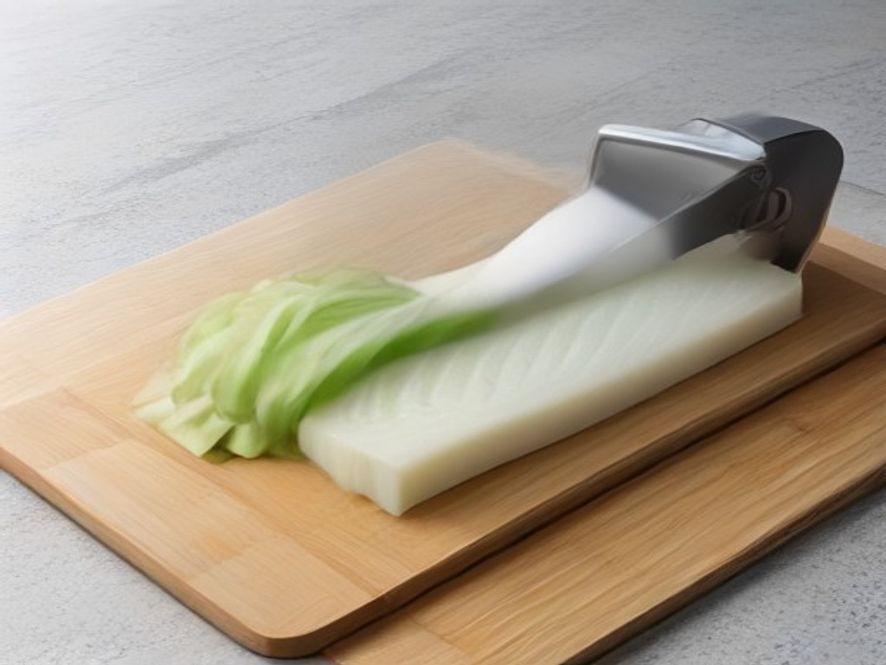
A mandoline slicer is a flat, framed tool with a sharp blade that lets you glide ingredients across it to create even slices in a single motion. This consistency is crucial for dishes where even cooking is key . With adjustable settings, you can switch between paper-thin slices and thicker cuts .
What to Look For: Models like the OXO Good Grips V-Blade Mandoline feature both straight and julienne blades, and a food holder protects your fingers . At around $15, the Hobby Lobby Multi Slicer is a great budget-friendly option for home cooks .
Vegetable Choppers and Dicers: For Volume Prep
Manual choppers use a grid of sharp blades to dice vegetables with a single press. This is especially useful if you cook large batches and want to save time on repetitive tasks .
What to Look For: The Fullstar Vegetable Chopper is a versatile 6-in-1 tool that can slice, dice, julienne, and grate. It uses a 1.2-liter container to catch food and is dishwasher-safe, making for easy cleanup .
Manual Deli Slicers: For Charcuterie and Roasts
A hand-cranked deli slicer gives you control over the thickness of your cuts, from prosciutto-thin slices to thick-cut roast beef. It’s a popular choice for making charcuterie boards or slicing large cuts of meat at home . The Starfrit model is praised for its strong suction base, which keeps it secure on the counter .
Specialty Slicers: When You Need a Specific Cut
For specialized tasks, these niche tools can be very helpful.
- Tomato and Egg Slicers: A simple press-action slicer with stainless steel wires can cut through tomatoes, eggs, and mushrooms . However, user reviews suggest that durability can be an issue, with reports of wires snapping .
- Electric Knives: For slicing large roasts, bread, or dense foods with very little effort, an electric knife is a great option. The powered, dual serrated blades move back and forth to create smooth, even slices and help reduce hand strain .
Comparison Table: Finding Your Perfect Cutting Tool
| Tool | Best For | Key Feature | Price Range |
|---|---|---|---|
| Chef’s Knife | Most daily prep (chopping, slicing, mincing) | Versatile, curved edge | $$ – $$$ |
| Paring Knife | Small, precise tasks (peeling, trimming) | Short, pointed blade | $ – $$ |
| Serrated Knife | Bread, tomatoes, cakes | Long, saw-like teeth | $ – $$ |
| Mandoline Slicer | Uniform, even slices (potatoes, cucumber) | Adjustable thickness, speed | $ – $$ |
| Vegetable Chopper | Dicing large quantities of vegetables | Press-action, interchangeable blades | $$ |
| Manual Deli Slicer | Charcuterie, roast beef, cold cuts | Hand-cranked, adjustable thickness | $$ |
“The right slicing tools remove friction from the process. They reduce strain on your hands, improve consistency in your cuts, and save valuable time without sacrificing accuracy.”
FAQ: Solving Your Cutting and Slicing Problems
What is the safest way to use a mandoline?
Always use the food holder (hand guard) that comes with the mandoline. Never try to slice items freehand . The blades are incredibly sharp, so rushing or being careless is a recipe for a nasty cut .
Is a knife block a good investment?
Typically, no. While they look nice, you’ll likely only use a few of the knives. It’s better to invest in a few high-quality, versatile knives that you’ll actually maintain .
How can I tell if my knives need sharpening?
If your knife is crushing tomatoes or slipping on onions instead of slicing cleanly, it’s time for a sharpening. A dull knife is actually more dangerous because it requires more force and is more likely to slip .
What’s the difference between a santoku and a chef’s knife?
While they serve similar purposes, santoku knives are typically smaller and have a straighter blade angle, making them excellent for an up-and-down chopping motion . Chef’s knives generally have a curved blade better suited for a rocking motion .
Should I get an electric knife?
If you frequently slice large roasts, poultry, or dense bread and find it physically challenging or time-consuming, an electric knife is a great investment to reduce hand strain and ensure even results .
Which cutting and slicing problem do you want solved next? Share your thoughts in the comments.
References
Essential Guide to Cutting and Slicing Tools: Expert-Recommended Knives, Gadgets, and Slicers
- The Kitchn: A Home Cook’s Guide to Kitchen Knives
- The Takeout: Why Your Kitchen Truly Does Not Need 16 Different Knives
- Yahoo: 3 Must-Have Kitchen Knives Every Home Cook Needs
- Just Dip Recipes: 10 Slicing Tools That Make Cutting Faster and Easier
- Men’s Journal: Hobby Lobby’s $15 Multi Slicer Mandoline Review