Kitchen Gadgets With Sensors That Solve Real Cooking Problems: Your Guide to Stress-Free Meals
That sinking feeling when you smell something burning on the stove—the panic of a pot boiling over or a sauce scorching because you stepped away for just a moment—is a kitchen frustration almost every home cook has experienced.
Sensor-powered kitchen gadgets are changing the game by actively preventing these everyday cooking disasters. Instead of just telling time or measuring temperature, they use real-time feedback to intervene before problems happen. This guide explores the kitchen gadgets with sensors that solve real cooking problems, helping you cook smarter and worry less.
TL;DR
- Smart cookware with sensors can detect temperature spikes and automatically adjust heat to prevent burning and boil-overs .
- AI-powered kitchen assistants use computer vision and thermal sensing to monitor pans and provide voice guidance for stovetop cooking .
- Smart thermometers with multiple sensors deliver precise temperature readings and wireless monitoring from anywhere in your home .
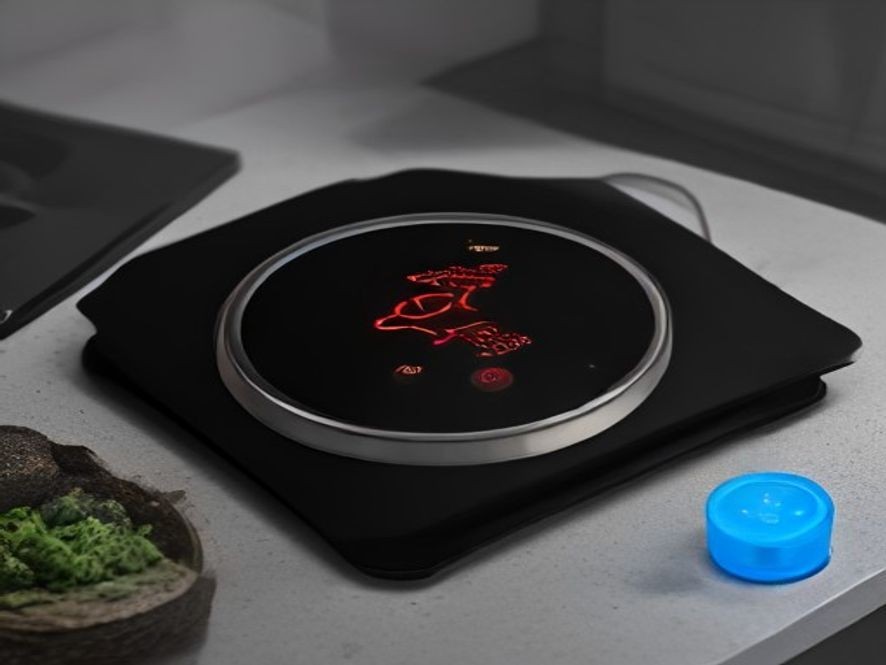
- Intelligent cooktops feature built-in scales and contact sensors that maintain perfect pan temperature and can shut off automatically if food burns .
- Smart containers with sensors can detect spoiled food and alert you before you use it .
Real Kitchen Problems Solved by Sensor Gadgets
Problem #1: Food Burning or Boiling Over
Solution: Smart Cookware That Talks to Your Cooktop
Miele’s new M-Sense system integrates sensors directly into pots and pans, creating a live feedback loop between the cookware and the induction hob. When the vessel detects the telltale temperature spikes that precede a boil-over or localized hot spots that lead to scorching, it signals the hob to regulate power automatically .
This technology targets problems almost every home cook has experienced firsthand. Caramel can move from amber to acrid in seconds. Milk rises fast, stocks foam unpredictably, and sauces have a habit of catching at the base just when your focus shifts elsewhere . The system makes the cookware itself the sensing layer, so power adjustments happen before smoke or overflow enters the picture.
The Miele app extends the system beyond the counter, enabling remote monitoring and direct program transfer to the hob, so cookware can arrive on the induction surface already configured for the task at hand .
Problem #2: Guessing When Food is Cooked Perfectly
Solution: Multi-Sensor Meat Probes
The Bosch PerfectRoast wireless meat probe features four sensors inside an extra-thin needle that measure core temperature. With Bluetooth connectivity to the Home Connect app, you can monitor cooking progress from anywhere in your home and receive notifications when your desired doneness level is reached .
The water-resistant needle is easy to clean, dishwasher-safe, and can be used in the oven, on the hob, or even on an outdoor grill. A single charge provides up to 16 hours of operating time, making it ideal for long smokes or roasts .
The CHEF iQ Sense thermometer takes this further with five sensors per probe and WiFi connectivity for unlimited range. The app asks you to measure the thickness of your meat, select your cook surface, and choose your desired doneness level. It even shows a visual graphic of doneness, making it perfect for visual learners .
The app can alert you if your grill, oven, or air fryer drops below or exceeds a certain temperature, and it can warn you if you’re about to burn your meat .
Problem #3: Inconsistent Cooking Temperatures
Solution: Smart Cooktops with Built-In Sensors
The Semi Smart Cooktop combines an 1800W induction coil with a direct-contact temperature sensor that keeps your pan at the perfect temperature between 30°C and 285°C. It also features integrated scales for weighing ingredients directly on the cooktop, eliminating the need for separate gadgets .
The Semi App provides real-time feedback on when to add ingredients, tracks the cooking process, and includes a timer that automatically shuts down the cooktop if it senses food burning . It even includes a sous vide mode with a special attachment, making professional-level cooking accessible at home.
Problem #4: Multitasking While Cooking
Solution: AI-Powered Kitchen Assistants
The Gambit AI-Powered Kitchen Assistant mounts under your range hood and uses computer vision, thermal sensing, and on-device AI to monitor what’s happening in your pan. It tracks temperature, doneness, and timing, then delivers step-by-step voice guidance through a built-in speaker .
Designed primarily for stovetop cooking like sautéing, searing, and frying, Gambit can also guide you through prep and oven steps. It learns your preferences over time—including how well-done you like your steak or your preferred cooking pace—and adjusts accordingly .
Basic features like timers and temperature monitoring work without a subscription, making this an accessible entry point into smart cooking .
The SPOT smart cookware set offers another approach, measuring cooking time, surface temperature, and even CO2 levels to provide guidance and alerts when thresholds are exceeded. After one-time calibration, it ensures precise temperature control for worry-free cooking .
Problem #5: Spoiled Ingredients
Solution: Smart Containers with Quality Sensors
Some smart containers now include sensors that detect food quality. One patent describes containers with level sensors and quality sensors that can determine if milk has gone sour using MEMS-based resistivity sensors or an electronic nose. For leafy vegetables, cameras can detect wilting or mildew and generate alerts .
These containers can even send requests to adjust refrigerator temperature if frost is detected on vegetables .
Comparison Table: Sensor Gadgets That Solve Real Problems
| Gadget | Sensor Type | Problem Solved | Key Feature | Cost Range |
|---|---|---|---|---|
| Miele M-Sense Cookware | Temperature sensors in cookware | Burning, boil-overs | Auto-adjusts induction hob power | $$$ |
| Bosch PerfectRoast Probe | 4 internal temperature sensors | Guessing meat doneness | Wireless, dishwasher-safe | $$ |
| CHEF iQ Sense | 5 sensors per probe | Inconsistent meat results | WiFi, visual doneness guides | $$ |
| Semi Smart Cooktop | Contact temp sensor + scale | Inconsistent pan temps | Built-in scale, auto shut-off | $$–$$$ |
| Gambit AI Assistant | Computer vision + thermal | Multitasking struggles | Voice guidance, learns preferences | $$$ |
| SPOT Cookware | Temp + CO2 sensors | Overcooking, food waste | CO2 alerts | $$–$$$ |
| Smart Containers | Level + quality sensors | Spoiled ingredients | Spoilage alerts | $–$$ |
Frequently Asked Questions (FAQ)
How do sensor kitchen gadgets prevent burning? They detect temperature spikes and hot spots early, then automatically adjust heat or alert you before food scorches .
Do I need a smart cooktop to use sensor cookware? Most sensor cookware systems require compatible induction hobs to communicate and adjust power automatically .
How accurate are smart meat thermometers? Models with multiple sensors provide very accurate readings. The Bosch PerfectRoast uses four sensors in one needle, while CHEF iQ Sense uses five .
Can sensor gadgets help me become a better cook? Yes. They provide real-time feedback and guidance, helping you learn timing, temperature control, and techniques that become intuitive over time .
Are these gadgets worth the investment? If you frequently struggle with burnt food, inconsistent results, or multitasking while cooking, the convenience and food savings can make them worthwhile investments.
Conclusion: Start Small and Cook with Confidence
Sensor-powered kitchen gadgets transform cooking from guesswork into precision. Whether you start with a smart meat thermometer, an AI assistant that watches your pan, or a cooktop that adjusts heat automatically, each tool solves a real cooking problem. No more burned sauces, overcooked meats, or spoiled ingredients. With these gadgets, you can step away from the stove, focus on what matters, and trust that sensors have your back.
Which kitchen problem do you want solved next? Share your thoughts in the comments.
Learn more about sensor-powered kitchen gadgets from trusted sources here: