Why Does Food Stick to My Cast Iron Pan? Causes and Easy Solutions
That perfect sear you were hoping for turned into a sticky, frustrating mess—but fixing the problem is simpler than you might think.
You’ve heard the hype: cast iron pans are supposed to be naturally non-stick. So why did your beautiful fried egg weld itself to the surface like it was glued on? You’re not alone. This is one of the most common frustrations for home cooks. The good news? Your pan isn’t ruined. Food sticks for a few specific reasons, and once you understand them, you’ll be cooking like a pro in no time.
TL;DR (Too Long; Didn’t Read)
- Main Causes: Food sticks when the pan isn’t hot enough, you don’t use enough cooking oil, the seasoning is damaged, or the pan is too hot .
- The Science: Cast iron is porous with tiny microscopic crevices. Food can get trapped in these pores and bond to the metal .
- Prevention: Preheat your pan properly over medium heat, use enough oil to fill the pores, and maintain a good layer of seasoning.
- Easy Fix: If food is stuck, scrub it off, then re-season your pan to restore its non-stick surface.
Key Takeaways
- Heat Your Pan First: Always let your cast iron pan heat up before adding oil or food. A properly preheated pan expands the metal, closing up some of those microscopic pores where food gets trapped .
- Don’t Skimp on Oil: Even a well-seasoned pan needs cooking fat. The oil fills in the tiny crevices, creating a slick barrier between the food and the metal .
- Monitor Your Heat: Cast iron holds heat incredibly well. High heat is usually unnecessary and will cause food to burn and stick. Medium is often the new high with these pans .
- Seasoning is Key: A good layer of seasoning is your pan’s non-stick coating. If food is sticking, it might be time to re-season .
The Real Causes Behind Sticking and How to Fix Them
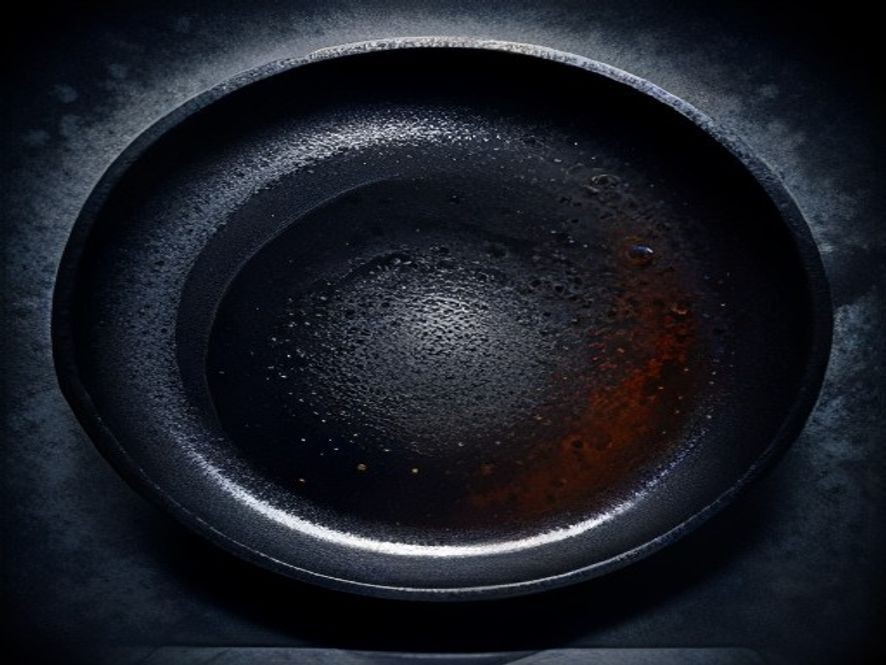
Think of your cast iron pan like a sponge. If you zoom in on the surface, you’ll see it’s full of tiny bumps, ridges, and divots . Seasoning fills these in, but it’s rarely 100% perfect. When your pan isn’t preheated, or you don’t use enough oil, food seeps into these pockets and gets stuck.
Why Food Bonds to the Pan
Here are the most common reasons your food is sticking:
- Not Enough Heat: This is a classic mistake. You need to preheat your pan over medium heat for several minutes. If the pan isn’t hot enough, food will latch onto the metal before a protective crust forms .
- Too Much Heat: On the flip side, a pan that’s too hot will instantly burn the outside of your food, causing it to carbonize and fuse to the surface .
- Insufficient Oil: You might think a “seasoned” pan means you don’t need oil. This is a myth. The oil you add while cooking fills in the gaps in the seasoning, acting as a necessary buffer. You usually only need a thin layer, about ⅛ of a teaspoon for a well-seasoned pan, but it makes a world of difference .
- Cooking Sticky Foods Too Early: New or freshly stripped pans haven’t built up enough of that slick polymerized layer. Foods like eggs, sticky rice, and fish are notorious for bonding to a pan that isn’t well-seasoned . Wait until your pan has that beautiful, smooth, black patina before trying to make an omelet.
Step-by-Step Guide: How to Prevent Sticking
Mastering these steps will transform your cast iron cooking experience.
Step 1: Preheat Your Pan Properly
Place your cast iron pan on the stove over medium heat. Let it sit for 5 to 15 minutes. A heavy cast iron pan needs time to heat evenly. A good way to check if it’s ready is to flick a few drops of water into the pan—if they sizzle and evaporate immediately, you’re good to go .
Step 2: Add Your Cooking Oil
Once the pan is hot, add your cooking oil. Use an oil with a high smoke point, like canola, vegetable, or grapeseed oil. Swirl it to coat the bottom of the pan .
Step 3: Add Your Food and Don’t Touch It
Place your food in the pan and leave it alone. If you try to flip or move it too soon, it will stick. Wait for it to naturally release from the pan. A proper sear will form, and the food will release when it’s ready.
Step-by-Step Guide: How to Fix a Sticky Pan
If your pan is already sticky or has stuck-on food, you need to address the issue.
Step 1: Remove Stuck Food
Scrub the pan with a stiff brush or some coarse kosher salt and a little water. A small amount of mild dish soap is okay to use if the pan is really greasy . For stubborn bits, you can use a chainmail scrubber . Rinse and dry the pan thoroughly.
Step 2: Apply a Very Thin Layer of Oil
Pour about ½ teaspoon of your preferred seasoning oil (like canola or vegetable) into the pan. Using a paper towel, rub it all over the entire cooking surface—and don’t forget the outside and the handle .
Step 3: The “Wipe It Off” Rule
This is the most important step. Take a clean, dry paper towel and “wipe off” all the oil. It should look like you’ve removed it all. If the pan looks wet or shiny, there is too much oil. You want a layer so thin that the pan looks dry and matte .
Step 4: Bake It
Place the pan upside down on the top rack of an oven preheated to 450°F–500°F. Put a piece of foil on the bottom rack to catch any drips . Bake for one hour. The high heat will polymerize the oil, turning it into a non-stick layer.
Step 5: Let It Cool Completely
Turn off the oven and let the pan cool down inside. When you pull it out, it should feel smooth and dry, not tacky or sticky.
Comparison Table: Fixing a Sticky Cast Iron Pan
| Method | Purpose | Effectiveness | Difficulty Level | Cost |
|---|---|---|---|---|
| Bake at 450-500°F | Re-polymerize excess oil to finish seasoning. | High for mild stickiness. | Easy | Free |
| Scrub & Re-Season | Remove gummy oil and start the seasoning layer fresh. | Very High for all types. | Medium | Low (oil cost) |
| Heat & Wipe | Heat pan on stove until smoking to burn off tacky oil. | Medium for mild stickiness. | Easy | Free |
Frequently Asked Questions (FAQ)
Why does food stick to my cast iron pan even after seasoning?
This happens if the pan wasn’t hot enough before you added food, you didn’t use enough cooking oil, or the pan was too hot .
How do I prevent eggs from sticking to my cast iron?
Preheat your pan on medium heat for several minutes, add a generous amount of butter or oil, and don’t try to flip the eggs too soon. A well-seasoned pan is also critical .
Can I use soap to clean my cast iron pan?
Yes, you can use a small amount of mild dish soap occasionally. However, for regular cleaning, hot water and a stiff brush or salt scrub are usually all you need .
What does “seasoning” mean for a cast iron pan?
Seasoning is the process of baking a thin layer of oil into the surface of the pan. This creates a polymerized, non-stick, and rust-resistant coating .
Why is my cast iron pan sticky after I seasoned it?
Your pan is sticky because you used too much oil during the seasoning process. The excess oil didn’t polymerize and turned into a gummy residue .
How do I fix a sticky pan after seasoning?
Simply put the pan back in the oven at 450°F–500°F for an hour, upside down, to finish the polymerization. For severe stickiness, scrub it off and start the seasoning process again with a very thin layer of oil .
References
Expert Advice on Cast Iron Care and Troubleshooting
- Lodge Cast Iron: How to Keep Food From Sticking to Cast Iron
- The Kitchn: What’s the Sticky Residue on My Cast Iron?
- Daily Meal: The Reason Your Cast-Iron Skillet Is So Annoyingly Sticky
- Tasting Table: Why Oil Is Necessary in a Seasoned Cast Iron Pan
Which kitchen problem do you want solved next? Share your thoughts in the comments.