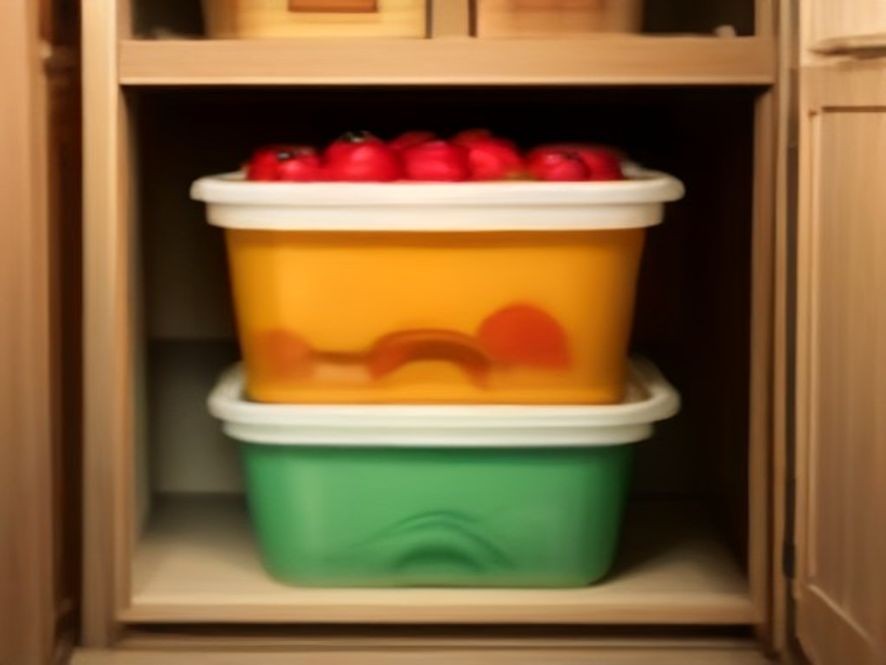
Kitchen Essentials for Better Food Storage in Small Kitchens
That moment when you open a cabinet and a avalanche of mismatched containers comes tumbling out—it feels like your tiny kitchen is fighting back.
Small kitchens force us to get creative. When every inch of cabinet and counter space matters, food storage becomes a puzzle that needs smart solutions rather than simply buying more containers. The right approach helps you store more food, reduce waste, and actually find what you’re looking for without knocking over three other items in the process.
TL;DR
Smart food storage in a small kitchen starts with choosing uniform, stackable containers that maximize vertical space. Square and rectangular shapes fit together better than round ones, eliminating wasted gaps. Decanting dry goods into airtight containers reduces clutter and keeps food fresh longer. Use cabinet doors, magnetic surfaces, and rolling carts to create storage where none existed before.
Key Takeaways
- Switch to square or rectangular containers – They fit together without wasting corner space, unlike round containers that leave gaps
- Decant pantry items – Transferring pasta, rice, and snacks into clear, uniform containers reduces clutter and saves space
- Think vertically – Shelf risers, stacking containers, and door-mounted organizers add storage without using more floor space
- Use stackable and nesting containers – Look for containers that fit inside each other when empty
- Consider non-toxic materials – Glass, stainless steel, and silicone offer safer storage than plastic alternatives
The Real Problem With Food Storage in Small Kitchens
The biggest challenge isn’t having too much food—it’s having the wrong storage system. Mismatched containers of different shapes and sizes create chaos that wastes precious space. Round containers leave gaps in corners that could otherwise hold more food. Deep cabinets become black holes where items get lost and forgotten. The secret to better food storage lies in changing how you organize, not buying more cabinets.
Why Shape Matters More Than You Think
Look at your current collection of food storage containers. If they’re mostly round, those curved edges are stealing your space. When you place round containers next to each other, gaps form in the corners. In a small kitchen, those little gaps add up to significant wasted space .
Switching to square or rectangular containers changes everything. They fit snugly side by side on shelves and in the fridge, maximizing every inch . This simple shift alone can increase your storage capacity without buying anything else.
Smart Container Choices for Small Kitchens
The Stackable Advantage
Containers that nest inside each other when empty are a game-changer for small kitchens. IKEA’s glass food containers stack neatly together, and sets like their 365+ line allow the containers to fit inside one another for compact storage . One senior editor noted that after years of using another major brand, she now reaches for these stackable containers even more because they save so much cabinet space.
For those who want to avoid plastic, stainless steel containers offer a lightweight, durable alternative. The IKEA 365+ stainless steel containers nest neatly inside one another, saving valuable cabinet space and avoiding stacks of glassware that could topple every time you open a cabinet . They’re safe for the oven, fridge, and freezer—though not microwave safe, which is a trade-off for their durability and space-saving design.
Collapsible Solutions
Silicone collapsible storage containers take space-saving to another level. When folded down, they take up less than a quarter of the space of glass containers . These BPA-free containers are leakproof and dishwasher, microwave, fridge, and freezer safe. They fold into neat packages with lids still attached, making them ideal for small kitchens where every drawer counts.
Glass vs. Plastic vs. Stainless Steel
| Container Type | Best For | Space-Saving Feature | Durability | Non-Toxic |
|---|---|---|---|---|
| Glass | Leftovers, meal prep, oven use | Stackable designs available | Breakable but long-lasting | Yes |
| Stainless Steel | Oven use, on-the-go meals | Nest into each other | Nearly indestructible | Yes |
| Silicone | Flexible storage, freezing | Collapsible to small size | Durable but can stain | Yes |
| Plastic | Lightweight, budget-friendly | Stackable options | Prone to staining and odors | Varies |
Organizing Your Fridge Like a Filing Cabinet
The refrigerator is often the biggest victim of what experts call “horizontal sprawl”—laying everything flat because it seems easy. But treating your fridge like a filing cabinet changes everything .
Instead of stacking leftovers precariously, use uniform, rectangular containers that lock securely on top of each other. For smaller items like cut vegetables or cheese, use taller, narrower containers standing upright on door shelves. You can even file bags of frozen veggies vertically in the freezer instead of piling them horizontally .
Pantry Storage That Actually Works
Decant Everything
Open your cabinets. How many half-empty cereal boxes, bags of rice clipped shut, and bulky pasta boxes do you see? Packaging is designed to grab attention at the grocery store, not to fit efficiently in a small cupboard .
The fix is simple: buy a set of matching, clear, stackable airtight containers and decant your dry goods. Pour flour, sugar, pasta, snacks—everything into them. Suddenly, that chaotic shelf of mismatched packaging becomes neat and streamlined. You can stack three containers of pasta in the footprint of one half-empty box. Because they’re clear, you also know exactly when you’re running low .
Pull-Out Solutions
Slim pull-out pantry units can fit in spaces as narrow as 6 to 12 inches beside the refrigerator. These slide out to expose several shallow shelves, keeping everything visible and reducing rummaging . The trade-off is less shelf depth, so avoid bulk items and think vertically instead.
Rolling Utility Carts
When you don’t have a pantry at all, a rolling utility cart can create one. IKEA’s NISSAFORS cart measures just 7.5 inches wide, designed to tuck under a countertop or into narrow gaps . With three shelves, it’s ideal for canned goods, jars, and packets. The wheels let you move it where needed and tuck it away when you’re done cooking.
Maximizing Hidden Spaces
Cabinet Doors
Inside-door storage is one of the most underutilized spaces in small kitchens. Mounted racks for lids, cutting boards, and spices turn wasted air into practical storage. Magnetic strips and small baskets on the inside of cabinet doors create instant organization .
Magnetic Solutions
Magnetic shelves on the side of your refrigerator create instant storage zones. One set of magnetic spice racks provides space for spices, condiments, or even utensils and mugs . The fridge side becomes functional storage that takes up no counter or cabinet space.
Under-Sink Areas
An oversized lazy Susan turntable works well for deep but short under-sink spaces. The turntable lets you store items in the very back while keeping them easy to grab . A tiered pull-out organizer under the sink with clear bins lets you actually see what you have and reach items without pulling everything out .
Drawers That Work Harder
Drawer organizers make every drawer more functional. A compact knife drawer organizer fits snugly even in shallow drawers and safely stores up to nine blades, freeing counter space that a knife block would occupy . Adjustable deep drawer organizers create a second tier inside deep drawers, making use of empty vertical space .
Vertical Storage Solutions
Stacking organizers vertically is the ultimate space-saving technique. IKEA’s pine food storage boxes stack neatly and can be used side by side or stacked in a pantry, drawer, or on your countertop . These compact organizers are great for root vegetables, fruits, or even utensils and spices.
Shelf risers double your usable surface area instantly. Use a metal shelf riser to create two tiers where you had one—daily dishes underneath, meal-prep containers on top . Under-shelf baskets slide onto existing shelves and provide perfect spots for storing flat containers holding sandwich supplies or snacks.
Budget-Friendly Options
You don’t need expensive containers to get organized. Dollar Tree’s Stack Them Up bins cost just $1.50 each and stack neatly on top of each other . They hold everything from tea packages to small utensils and make a neat storage tower in any corner.
Pyrex glass containers are classic for a reason. A tinted set with lids costs around $13 and can double as baking dishes, making them versatile for small kitchens . They’re dishwasher, refrigerator, freezer, microwave, and oven safe, which is hard to beat.
FAQ
What is the best way to organize a small kitchen with limited cabinet space?
Focus on stackable, nesting containers and use vertical storage like shelf risers and door-mounted organizers. Decant dry goods into uniform containers to maximize shelf efficiency.
Why should I switch to square or rectangular food containers?
They fit together without wasting corner space. Round containers leave gaps when placed side by side, which adds up to significant wasted storage.
What are the best non-toxic food storage options for small kitchens?
Glass, stainless steel, and silicone containers are better alternatives to plastic. Glass won’t stain or absorb odors, stainless steel is durable and oven-safe, and silicone is lightweight and collapsible.
How do I store food in a kitchen without a pantry?
Use rolling utility carts, wall-mounted shelves, and cabinet door organizers to create pantry space. A narrow cart can fit in gaps beside the refrigerator or under a countertop.
What containers save the most space?
Collapsible silicone containers fold to less than a quarter of their full size. Stackable glass and stainless steel containers also nest together for compact storage.
How can I keep my fridge organized in a small kitchen?
Treat it like a filing cabinet—use uniform rectangular containers that lock together when stacked. Store items vertically when possible and use rolling caddies to prevent items from getting lost in the back.
Are plastic containers safe for food storage?
Many plastics contain BPA, phthalates, or PFAS chemicals that can leach into food. Glass, stainless steel, and silicone are safer options for long-term food storage.
“The secret to unlocking massive storage in a tiny kitchen isn’t knocking down a wall. It’s changing your perspective.”
Which food storage challenge bothers you most in your small kitchen? Share your thoughts in the comments.
Kitchen Organization Resources and Expert Advice: