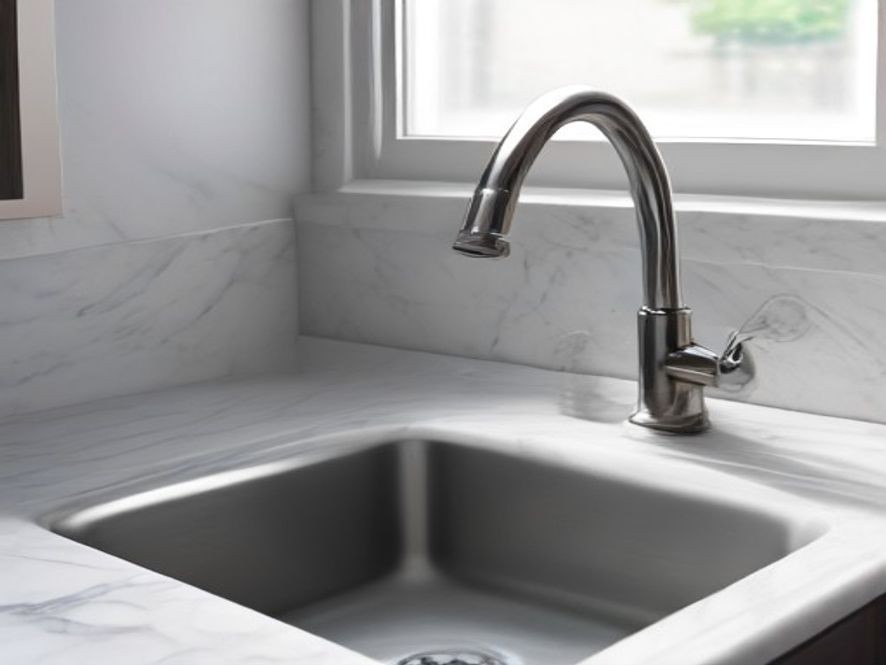
Why Is My Kitchen Faucet Pressure Low on One Side? A Complete Guide to Causes, Solutions, and How to Fix It
You’re at the kitchen sink, ready to rinse some vegetables, and you turn the handle toward the cold side—but instead of a strong stream, you get a weak trickle. Then you move it to the hot side, and the pressure is perfectly normal.
TL;DR
Low pressure on just one side of your kitchen faucet is almost always caused by a blockage in the cartridge, a clogged aerator or sprayhead, a kinked or clogged supply line, or debris in the shut-off valve itself. Most fixes are DIY: start by cleaning the aerator, then try cleaning or replacing the cartridge for your faucet type. If only one side is affected, focus on the supply line and valve for that specific side. This guide walks you through step-by-step troubleshooting to get your full pressure back.
Key Takeaways
- One-sided low pressure points to a localized blockage in the specific hot or cold water path, not a whole-home pressure issue .
- Start with the easiest fix—clean the aerator or pull-out sprayhead, as these are the most common sites for debris buildup .
- For single-handle faucets, a faulty or clogged cartridge is often the culprit when one side has poor flow .
- Check the supply lines under the sink—kinks, debris, or partially closed shut-off valves can restrict flow to just one side .
- A temporary fix that involves opening and closing the shut-off valve often points to debris lodged in the valve itself .
The Real Causes Behind Uneven Faucet Pressure and How to Fix Them
Having good pressure on one side and poor pressure on the other is a frustrating problem, but it’s usually straightforward to fix. Let’s break down where to look and what to do.
Why One Side of Your Kitchen Faucet Has Low Pressure: The Most Common Culprits
Clogged Aerator or Pull-Out Sprayhead
The aerator is the small screen at the very tip of the faucet spout. Over time, it catches sediment, sand, and mineral deposits. When it’s blocked, the flow slows down significantly on all sides, but sometimes the effect is more noticeable on one side due to internal water routing .
For pull-out or pull-down faucets, the sprayhead itself has a screen that can clog. Removing and rinsing this screen often restores full pressure immediately .
Dirty or Faulty Faucet Cartridge
The cartridge is the heart of a single-handle faucet. It mixes hot and cold water and controls the flow. If it becomes clogged with debris or if the internal seals wear out, it can restrict flow to just one side—the cold or the hot—even though the other side works fine .
This is a leading cause of one-sided low pressure. Replacing the cartridge often solves the issue if cleaning doesn’t work .
Blocked or Kinked Water Supply Lines
The flexible hoses that connect your shut-off valves to the faucet can become kinked if they’re pushed too far back under the sink. A kink restricts water flow, starving that side of the faucet .
Debris can also get lodged in the supply line itself, particularly after plumbing work. A small piece of debris can act like a dam, blocking one line completely .
Partially Closed or Faulty Shut-Off Valve
Check under the sink. Are the shut-off valves for the hot and cold water fully open? Sometimes a valve is accidentally left partially closed, which reduces pressure to just that side .
In some cases, debris can get lodged behind the valve itself. A temporary fix for this is to open and close the valve a few times while water is running to flush the debris out .
Step-by-Step Guide: How to Fix Low Pressure on One Side of Your Kitchen Faucet
Follow these steps in order, from simplest to most involved.
Step 1: Clean the Aerator or Sprayhead Screen
- For non-pullout faucets: Unscrew the aerator from the end of the spout. Rinse it under water and use a toothbrush to remove any visible debris. If you see mineral buildup, soak it in a 50/50 solution of white vinegar and warm water for 15-30 minutes before rinsing and reinstalling .
- For pull-out/pull-down faucets: Remove the sprayhead from the hose. Inspect the small screen and rinse it clean. With the sprayhead removed, hold the hose in the sink and turn on the water. If the water pressure from the hose is strong, the screen was the problem .
Step 2: Check the Shut-Off Valves and Supply Lines
- Open the valves: Make sure both the hot and cold shut-off valves under the sink are fully open (turned counterclockwise as far as they’ll go) .
- Check for kinks: Look at the flexible supply lines. If any are sharply bent or kinked, straighten them out.
- Inspect and flush the supply lines: If the previous steps didn’t help, the blockage might be in the supply line itself. Turn off both shut-off valves. Disconnect the supply line for the side with low pressure and hold it over a bucket. Turn the valve back on briefly to see if the flow is strong. If it’s weak, debris is likely in the valve or the line .
Step 3: Clean or Replace the Faucet Cartridge
If the problem is in the faucet body itself, the cartridge is the next suspect.
- Turn off the water supply to the sink.
- Open the faucet to relieve any pressure.
- Remove the handle (there’s usually a small set screw under a cap) .
- Use pliers to unscrew the retaining nut and pull out the old cartridge .
- Inspect the cartridge for cracks, mineral buildup, or worn O-rings.
- Soak the cartridge in white vinegar to dissolve deposits, or replace it with a new one that matches your faucet model.
- Reassemble everything and test the pressure.
“Most kitchen problems come from small maintenance habits that are often ignored.”
Step 4: When to Call a Professional
Call a plumber if:
- You’ve tried all these steps and the low pressure persists.
- You’re not comfortable disassembling the faucet cartridge.
- You find a cracked pipe or a valve that won’t stop leaking.
- The problem is happening at multiple faucets (this suggests a whole-home issue).
Comparison Table: Common Causes of One-Sided Low Pressure
| Cause | Where to Look | Best Solution | DIY Difficulty |
|---|---|---|---|
| Clogged Aerator/Sprayhead | Spout tip or sprayhead screen | Remove and clean the screen/aerator | Very Easy |
| Clogged/Dirty Cartridge | Inside the handle assembly | Clean or replace the faucet cartridge | Moderate |
| Kinked Supply Line | Under the sink, check flexible hoses | Straighten the hose; replace if cracked | Easy |
| Partially Closed Valve | Under-sink shut-off valve | Fully open the valve | Very Easy |
| Debris in Supply Line/Valve | Shut-off valve or supply line | Flush the line; replace valve if needed | Moderate |
Chart: Likelihood of Fix by First Action
FAQ: Your Common Questions Answered
Why is my cold water pressure weak but hot water is fine?
This usually indicates a blockage in the cold water supply path—this could be in the shut-off valve, the supply line, or the cold side of the faucet cartridge .
Do I need to replace the entire faucet for low pressure on one side?
Usually not. In most cases, a simple fix like cleaning the aerator or replacing the cartridge restores the pressure .
Why does my pull-out faucet have low pressure only when using the sprayhead?
The screen inside the sprayhead is likely clogged with debris. Remove the sprayhead and clean the screen thoroughly .
Can a kinked hose cause low pressure on one side?
Yes. A kink in the hot or cold supply line restricts water flow to that specific side, just like stepping on a garden hose .
How do I know if my cartridge is the problem?
If you’ve cleaned the aerator and checked the supply lines, but one side still has low pressure, the cartridge is the most likely cause .
Final Thoughts
Low pressure on one side of your kitchen faucet can feel baffling—but it’s often a simple fix. Start with the easy things: clean that aerator, and make sure the valves are all the way open. A quick check under the sink can save you a lot of time.
If those simple steps don’t work, remember that the faucet cartridge is the most common culprit for one-sided problems. Replacing one isn’t as hard as it sounds, and it’s much cheaper than a new faucet.
Which kitchen problem do you want solved next? Share your thoughts in the comments.
How to fix low water pressure on one side of a kitchen faucet: A complete guide to causes, solutions, and DIY troubleshooting for hot or cold water flow problems.