Kitchen Essentials Buying Mistakes That Waste Money (And How to Avoid Them)
You walk out of the kitchenware store with a bag full of “essential” gadgets, but three months later, half of them are gathering dust while your bank account feels lighter.
We’ve all been there. That first apartment kitchen setup. The shiny cookware sets that look like a bargain. The gadgets that promise to change your cooking life. The bulk purchases that seemed smart at the time. Years later, you’re still using the same three pans while that expensive 12-piece set collects dust in the back of a cabinet. Kitchen buying mistakes are expensive, but they’re also completely avoidable.
TL;DR
Most kitchen buying mistakes come from impulse purchases, falling for marketing hype, and not understanding what you actually need. The biggest money wasters include buying full cookware sets with pieces you’ll never use, overspending on trendy gadgets that end up in drawers, purchasing cheap tools that break quickly, and stocking up on specialty ingredients that go bad. Instead, start with quality essentials, buy versatile tools, and add pieces gradually as you discover what you actually need.
Key Takeaways
- Cookware sets are rarely worth it — they include pieces you’ll never use and often compromise quality
- Trendy gadgets are a trap — most end up unused after the novelty wears off
- Cheap tools are expensive in the long run — they break quickly and need replacing
- Buying in bulk wastes money — you end up with expired ingredients and cluttered cabinets
- Build your kitchen gradually — buy what you need as you need it, not all at once
The Biggest Money-Wasting Mistakes
1. Buying Full Cookware Sets
Those matching 12-piece cookware sets look beautiful in the store. They promise everything you need in one convenient box. But professional chefs and kitchen experts consistently warn against them.
The problem? “They often come with an odd collection of cookware pieces, with one too many small pots, large stockpots, frying pans with less-than-ideal capacity, and duplicate items,” explains Sarah Daniele, a professional chef. “If you buy a bargain-priced set, you’ll likely get inferior quality cookware with thin, warped bottoms, loose handles, and non-stick coatings that flake.”
The smarter approach: Buy individual pieces from open stock. Purchase just the pieces you actually need — a skillet, a saucepan, a stockpot, and maybe a Dutch oven. You’ll get better quality and only pay for what you’ll use.
2. Falling for Trendy Appliances
Instant Pots, air fryers, bread makers, and spiralizers all have their moment of hype. Marketing makes them look indispensable. Then the trend fades, and the appliance collects dust.
“Many people buy them and end up using only one or two functions, or stop using them altogether because they feel complicated,” says chef David Davidov. The novelty wears off, and the bulky appliance takes up precious counter and cabinet space.
The smarter approach: Before buying any trendy appliance, ask yourself three questions:
- Will I use this at least once a week?
- Does a tool I already own do the same job?
- Am I buying this because I actually need it, or because it looks cool?
If you’re honest about the answers, you’ll save yourself hundreds of dollars.
3. Buying Cheap Tools That Break
It’s tempting to buy budget kitchen tools when you’re starting out. But that cheap knife will go dull in weeks. That inexpensive nonstick pan will scratch and flake within months. That budget can opener will break the third time you use it.
As one expert puts it: “If a bargain is too good to be true, it’s probably because the pot or pan is constructed from cheap materials.” You end up spending more money replacing cheap tools than if you’d bought quality items from the start.
The smarter approach: Invest in quality for the tools you use most. A good chef’s knife, a durable skillet, and a reliable saucepan will last for years if you take care of them. Cut corners on less essential items where quality matters less.
4. Buying Gadgets That Duplicate Your Knife
The drawer full of gadgets is the classic sign of wasted kitchen money. Garlic presses, avocado slicers, herb scissors, onion dicers, and apple corers all do jobs that a chef’s knife does better and faster.
Every single-purpose gadget in your drawer represents wasted money. The garlic press is hard to clean and wastes garlic. The herb scissors crush delicate herbs and are impossible to clean between the blades. The avocado slicer struggles with real-world avocados that aren’t perfect.
The smarter approach: Invest in one quality chef’s knife and learn how to use it properly. It replaces a dozen gadgets, takes up less space, and actually works better.
5. Stocking Up on Specialty Ingredients
“You find a new recipe that calls for a certain spice or sauce, buy it, use a teaspoon, and then it sits in your pantry for years,” says one kitchen expert. By the time you want to use it again, it’s likely expired or lost its flavor.
The same goes for buying groceries in bulk without a plan. You save money per unit, but end up throwing away half of what you bought because it went bad.
The smarter approach: Buy small amounts of new ingredients for your first attempt at a recipe. If you love the dish and plan to make it often, then buy more. For spices, consider buying from bulk bins where you can get just a teaspoon or two. For groceries, plan your meals and shop specifically for what you need.
6. Not Understanding Your Cooking Style
This is the root of most kitchen buying mistakes. You buy tools and appliances for the cook you want to be, not the cook you actually are.
That bread maker seems essential if you’re going to become a regular bread baker. That espresso machine is worth it if you’re going to become a home barista. But if you’re not that person (yet), the money is wasted.
The smarter approach: Be honest with yourself about how you actually cook. If you rarely bake, you don’t need a stand mixer. If you mostly make quick weeknight meals, skip the sous vide machine. Buy for the kitchen you have, not the kitchen you dream of.
Comparison: Smart Buys vs. Money Wasters
| Category | Smart Buy | Money Waster |
|---|---|---|
| Cookware | Individual pieces you’ll actually use | Full sets with unnecessary pieces |
| Knives | Quality chef’s knife + 2 others | 15-piece knife blocks with tiny useless knives |
| Small appliances | Microwave, coffee maker, immersion blender | Trendy gadgets you’ll use once |
| Utensils | Wooden spoon, tongs, spatula | Single-use gadgets (garlic press, avocado slicer) |
| Storage | Basic containers you’ll fill | Matching sets of everything |
| Ingredients | What you need for planned meals | Bulk purchases of “good deals” that expire |
| Bakeware | Baking sheet, mixing bowls | Elaborate sets for baking you’ll do rarely |
How to Avoid Common Buying Mistakes
1. Shop Your Kitchen First
Before buying anything new, check what you already own. Many people buy duplicates because they don’t remember what’s in the back of their cabinets.
2. Use the 30-Day Rule
“Before buying a new kitchen item, wait 30 days. If you still want it after that time and have a clear use for it, consider the purchase.”
3. Borrow Before You Buy
If you want to try a new appliance or tool, see if you can borrow one from a friend or family member first. If you use it regularly and love it, then buy your own.
4. Prioritize Quality Over Quantity
It’s better to have one good chef’s knife than a drawer full of cheap ones. It’s better to have three good pans than a set of twelve that don’t perform well.
5. Build Gradually
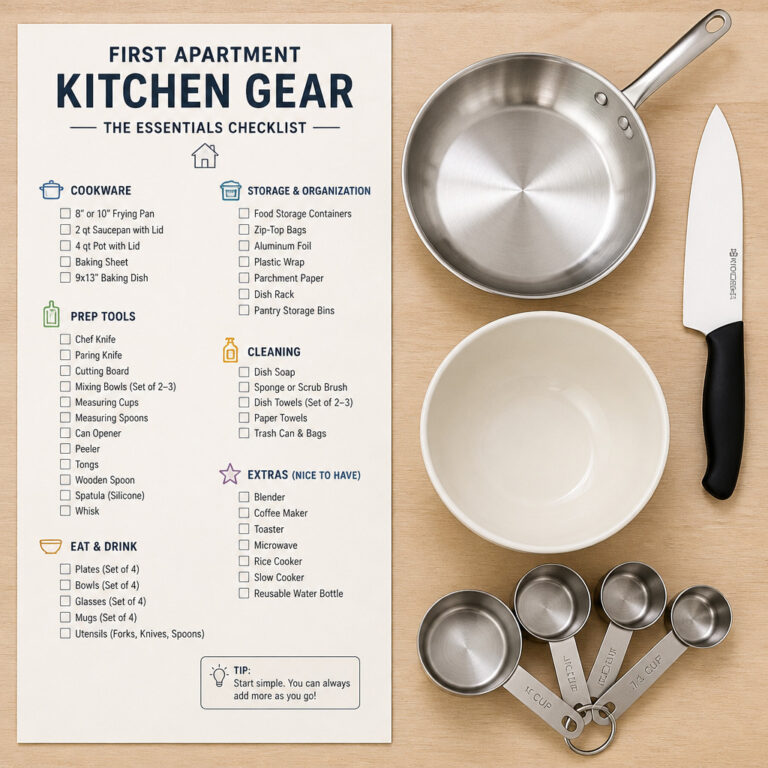
“The best first-apartment kitchens are built slowly and strategically with hardworking tools that earn their keep.” Start with the basics. Add pieces as you discover what you actually need.
Frequently Asked Questions
What’s the worst kitchen buying mistake?
Buying a full cookware set. They include pieces you’ll never use and often compromise quality to keep the price low.
Should I buy an Instant Pot?
Only if you genuinely plan to use multiple functions regularly. Many owners stop using them because they feel complicated.
Is it worth buying an expensive chef’s knife?
Yes. A quality chef’s knife will last for years with proper care and handles most of your cutting tasks. It’s worth the investment.
How do I avoid buying gadgets I’ll never use?
Ask yourself: “Does a tool I already own do this job? Will I use this at least weekly?” If the answer is no, skip it.
Should I buy kitchen tools in bulk?
No. You’ll likely end up with items you don’t need and ingredients that expire before you use them.
The Bottom Line
Kitchen buying mistakes are expensive, but they’re also avoidable. The smart approach is simple:
- Buy individual pieces instead of sets
- Invest in quality for the tools you use most
- Skip trendy gadgets that duplicate your knife
- Build gradually as you discover what you need
- Be honest about how you actually cook
A kitchen that works is built on quality essentials, not quantity. You’ll cook better, enjoy the process more, and save money in the long run.
Smart Kitchen Shopping and Essential Setup Resources:
- Consumer Reports Kitchen Appliance Ratings
- ENERGY STAR Appliance Guide
- The Kitchn’s Kitchen Essentials Guide
What’s the worst kitchen buying mistake you’ve made? Or the smartest purchase that saved you money? Share your experience in the comments.