Perfect Every Time: The Best Guide to Kitchen Tools and Gadgets for Measuring Ingredients
That moment you’re halfway through a recipe and realize you’ve been using the wrong measuring cup—or worse, that your brownies are going to turn out like hockey pucks because you packed the flour instead of spooning it—can turn a fun baking session into a deflating disappointment.
You want to cook and bake with confidence, but the difference between a success and a disaster often comes down to something as simple as measuring accurately. The good news is that you don’t need a drawer full of fancy tools to get it right. This guide will help you solve the problem of inconsistent results by showing you the best way to choose measuring tools for different ingredients—saving you wasted ingredients, ruined recipes, and kitchen frustration.
TL;DR
- You need three basic tools: dry measuring cups, liquid measuring cups, and measuring spoons. Each is designed for a specific job, and using them correctly is the key to recipe success .
- A digital kitchen scale is a game-changer: Weighing ingredients is the most accurate method possible, especially for baking where precision is everything .
- The shape of your measuring spoons matters: Narrow, rectangular spoons fit into spice jars, while round ones are better for liquids .
- How you fill the cup matters as much as the tool itself: Spoon flour into the cup and level it off; never scoop directly from the bag, as this compacts the flour and adds too much .
The Three Essential Measuring Tools
Many home cooks reach for the nearest cup or spoon, but using the wrong tool for the job is a common pitfall. Here’s what each tool does and when to use it.
1. Dry Measuring Cups: For Flour, Sugar, and Grains
Dry measuring cups are straight-sided cups with flat tops. They are designed to be filled to the brim and leveled off for an exact measurement . Trying to measure dry ingredients in a liquid measuring cup is frustrating because you can’t level off the surface properly .
What to look for: A set of durable stainless steel cups with long handles and rims that are flush with the handle, making leveling off easy . Look for a set that includes 1/4, 1/3, 1/2, and 1 cup sizes—these four will cover most recipes .
Pro tip: Plastic dry measuring cups can stain and lose their markings over time . Stainless steel is more durable and easier to clean.
2. Liquid Measuring Cups: For Water, Milk, and Oils
Liquid measuring cups have a spout and graduated markings on the side. You fill them to the desired line, and the spout makes pouring mess-free .
What to look for: A transparent glass or plastic cup with clear markings. Glass is sturdier, stackable, and safe for hot liquids, while some plastic versions feature an angled design that lets you read the measurement from above while pouring .
Pro tip: The OXO Good Grips Angled Measuring Cup is a fan favorite because you can read the measurements from above without bending down to eye level .
3. Measuring Spoons: For Small Amounts of Everything
Measuring spoons are vital for measuring spices, baking powder, salt, and small amounts of liquid . Having two sets is a smart move—many recipes call for a mix of dry and wet ingredients, and you won’t want to wash a spoon mid-recipe .
What to look for: A stainless steel set with at least these sizes: 1 tablespoon, 1/2 tablespoon, 1 teaspoon, 3/4 teaspoon, 1/2 teaspoon, 1/4 teaspoon, and 1/8 teaspoon . Narrow, rectangular spoons fit nicely into spice jars .
The Game-Changer: A Digital Kitchen Scale
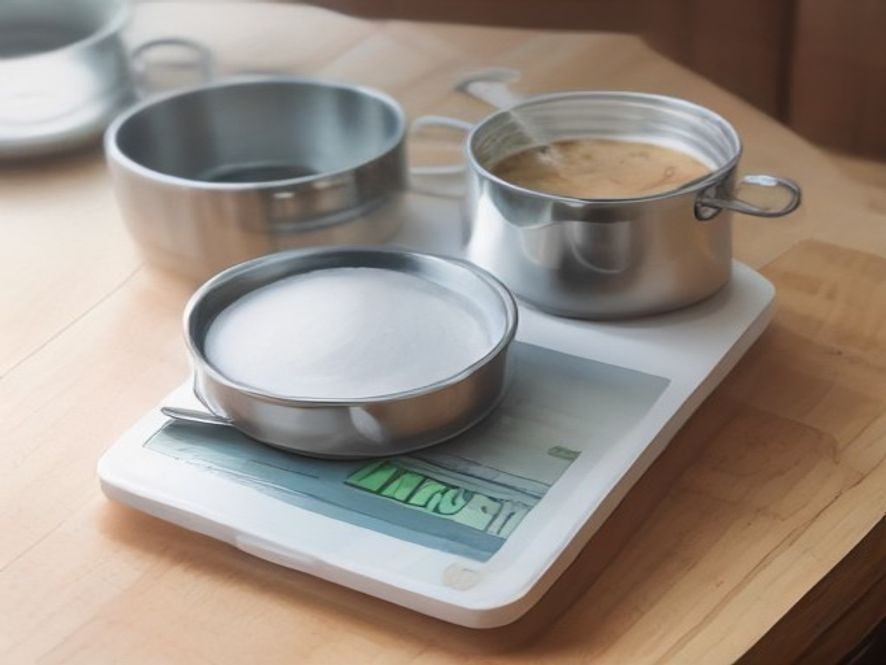
America’s Test Kitchen, a trusted authority in cooking equipment, strongly recommends a digital kitchen scale for anyone who wants consistent results . When you’re baking, weighing your ingredients is the most accurate method possible .
Why it matters: A cup of flour can weigh anywhere from 120g to 170g depending on how you scoop it. That variation can ruin a delicate cake or make bread dough too dry. A scale eliminates the guesswork . Beyond baking, you can use it to portion ground meat, figure out how many apples are in a bag, and weigh outgoing packages .
What to look for: A digital scale with a large, easy-to-read display and a “tare” function that lets you zero out the weight of your bowl .
How to Measure Correctly
Having the right tools is only half the battle. How you use them matters just as much.
Dry Ingredients (Flour, Sugar, Spices)
- Flour: Never scoop the measuring cup directly into the bag. This compacts the flour and you’ll end up with too much. Instead, use a spoon to scoop the flour into the cup, then level it off with the back of a knife .
- White Sugar: You can dip the cup right into the sugar because it’s already compacted. Just level the top .
- Brown Sugar: Brown sugar is moist and clumpy, so it must be packed firmly into the measuring cup to get an accurate reading. It should hold its shape when you turn the cup upside down .
- Spices and Baking Powder: Dip the measuring spoon into the container and level it off .
Liquid Ingredients
Place the liquid measuring cup on a level counter. Bend down so your eyes are at the same level as the markings, and pour until the bottom of the curved surface (known as the meniscus) reaches the desired line .
Sticky Ingredients (Honey, Molasses, Peanut Butter)
Lightly spray your measuring cup with cooking spray before adding the sticky ingredient. The oil makes it pour out much more easily . For thicker ingredients like yogurt, spoon them into a dry measuring cup and level the top .
Comparison Table: Measuring Tools at a Glance
| Tool | Best For | Key Feature | What to Avoid |
|---|---|---|---|
| Dry Measuring Cups | Flour, sugar, grains, yogurt | Straight sides, flat top for leveling | Liquid measuring cups (can’t level off dry ingredients) |
| Liquid Measuring Cups | Water, milk, oil, broth | Spout for pouring, clear markings | Dry measuring cups (spilling risk) |
| Measuring Spoons | Spices, baking powder, vanilla | Narrow shape for spice jars | Using a kitchen spoon (not accurate) |
| Digital Scale | All ingredients in baking | Most accurate method, tare function | Skip this if you don’t bake often |
| Kitchen Ruler | Measuring baking dish sizes, thickness of cuts | Portable, easy to store | Eyeballing measurements |
“When you’re baking, weighing your ingredients is the most accurate method possible. Once you buy a scale, you’ll find it useful in many other applications.” – America’s Test Kitchen
FAQ: Solving Your Measuring Problems
What is the difference between dry and liquid measuring cups?
Dry measuring cups are meant to be filled to the brim and leveled off. Liquid measuring cups have a spout and markings on the side. They aren’t interchangeable—it’s nearly impossible to get an accurate flour measurement in a liquid cup .
Do I really need a kitchen scale?
Not for simple recipes like salads or soups, where amounts don’t need to be exact. For baking and sauces, a scale is a huge upgrade. It’s the single best way to get consistent results .
How can I measure sticky ingredients like honey without making a mess?
Lightly spray the inside of your measuring cup with cooking spray before adding the honey. It will slide right out .
What is the most versatile measuring spoon shape?
Rectangular spoons are more versatile than round ones because they fit into narrow spice jars. If you often measure liquids from bottles, a round spoon works well too .
How do I know if my measuring tools are accurate?
Fill a 1-cup dry measuring cup with water and pour it into a liquid measuring cup. If the water doesn’t come right to the 1-cup line, your cup may be inaccurate. For spoons, check for a “calibrated” label .
Which measuring problem do you want solved next? Share your thoughts in the comments.
References
Essential Guide to Measuring Ingredients: Expert-Recommended Tools and Techniques
- America’s Test Kitchen: The Right Way to Measure Ingredients
- America’s Test Kitchen: The Right Measuring Tools
- America’s Test Kitchen: Must-Have Measuring Tools
- Canada’s Food Guide: Measure Ingredients Like a Pro
- taste.com.au: Best Measuring Cups and Spoons to Help Cook Recipes to a Tee
- DIY Joy: How to Measure Ingredients – The Right Way