How to Organize Kitchen Tools and Gadgets in a Small Kitchen: Best Tips and Solutions
A messy kitchen counter can make even simple cooking feel stressful, but with the right strategies, you can transform your cramped cooking space into an organized, functional area.
TL;DR
Organizing a small kitchen isn’t about buying expensive storage solutions—it’s about making smart choices. Start by editing down your tools to what you actually use. Use vertical space with wall rails and magnetic strips. Group similar items together in labeled bins. Keep your most-used tools within easy reach and store infrequently used items in harder-to-access spots. The best solution for small kitchens is a mix of creative storage and honest decluttering.
Key Takeaways
- Declutter first—remove items you haven’t used in three months to a year
- Use vertical storage like wall rails and magnetic strips to free up valuable counter space
- Group tools by category in labeled bins for quick identification
- Store what you use most in easily accessible spots; keep rarely used gadgets in back
- Take advantage of inside-cabinet doors with hooks or slim organizers
- Consider a pegboard or wire shelving to maximize wall space
The Real Causes Behind Kitchen Clutter and How to Fix Them
Small kitchens face a unique challenge: they need to house the same tools and gadgets as large kitchens but in a fraction of the space. The problem isn’t your kitchen—it’s how you’re using the space you have.
Most people keep every kitchen tool they’ve ever acquired, even if they haven’t used it in years. That bread maker from 2019, the spiralizer that seemed fun, and those three extra spatulas are taking up space that could be used for things you actually reach for every day. According to minimalist organization experts, in a small kitchen, “organizing a full set of rarely-used tools is slower and less satisfying than organizing a lean set of things you reach for every week.”
The solution isn’t buying more organizers—it’s being honest about what you actually use.
Why Kitchen Tools and Gadgets Take Over Your Small Kitchen
Before you can solve the organization problem, you need to understand why it exists:
Too many single-purpose gadgets. Avocado slicers, egg cookers, and garlic presses might seem useful, but they take up space and only serve one function. Most home cooks can accomplish the same tasks with a chef’s knife and a cutting board.
Duplicate tools. Do you really need four wooden spoons, three peelers, and two sets of tongs? Probably not. Keeping duplicates wastes precious drawer and cabinet space.
Countertop appliance overload. Each appliance you keep on the counter occupies about one to two square feet of your most valuable surface. If you’re not using an appliance at least weekly, it belongs in a cabinet or pantry.
No designated “home” for each item. When every tool doesn’t have a specific place, they end up wherever you last used them, creating clutter that builds up over time.
Step-by-Step Guide to Organizing Your Small Kitchen
Step 1: Edit Before You Organize
The most effective small kitchen organizing trick is to have fewer things. Start by pulling everything out of your cabinets and drawers and putting it on the counter. See everything you own at once.
Ask these questions about each item:
- Have I used this in the past three months? (For seasonal items, stretch to a year)
- Do I have a duplicate of this?
- Is this a single-purpose tool that I could replace with a multi-purpose one?
Anything that fails the test should be donated, sold, or thrown away. Most small kitchens clear an entire shelf just by removing duplicates and single-purpose gadgets.
Step 2: Group Items by Category
Once you’ve edited down your collection, group similar items together. This makes them easier to find and makes it clear how much space each category needs.
Group examples:
- Baking tools (measuring cups, spoons, whisk, spatula)
- Cooking tools (spatulas, tongs, ladles, wooden spoons)
- Prep tools (peelers, graters, garlic press, knives)
- Small appliance accessories (food processor blades, mixer attachments, blender parts)
“Grab small containers for as many appliances or categories as you need—one for your stand mixer attachments, another for your grilling tools, and so on.”
Step 3: Choose Your Storage Solutions
For Drawers
Adjustable drawer dividers are a game-changer for small kitchens. “Without dividers, drawers quickly become the Bermuda Triangle of kitchens. Adjustable bamboo inserts keep everything visible and neat.”
For cutlery, consider slanted organizers that take up less space in a long drawer and won’t slide around.
For Cabinets
- Inside-cabinet hooks: Adhesive hooks inside cabinet doors work great for measuring cups, small strainers, and pot lids. This is renter-friendly and cheap.
- Wire storage racks: Turn cabinets from cluttered to organized by storing pots, pans, and baking sheets vertically or horizontally.
- Lid organizers: A simple lid organizer can save your sanity. “One of the first things I’ve ever bought was this simple solution… I acquired a ton of Tupperware and takeout containers of various shapes and sizes and never had a great way to keep all of their lids organized.”
For Walls
- Magnetic strips: These aren’t just for knives—mount one inside a pantry door for metal whisks and tongs. “Super satisfying click every time you put something back.” They keep tools off the counter and out of drawers.
- Pegboards: If you have enough wall space, a pegboard can hang a lot of equipment while freeing up cabinets. “It makes it so much easier to find what I need and saves me from digging through stacks of cookware in a dark cupboard.”
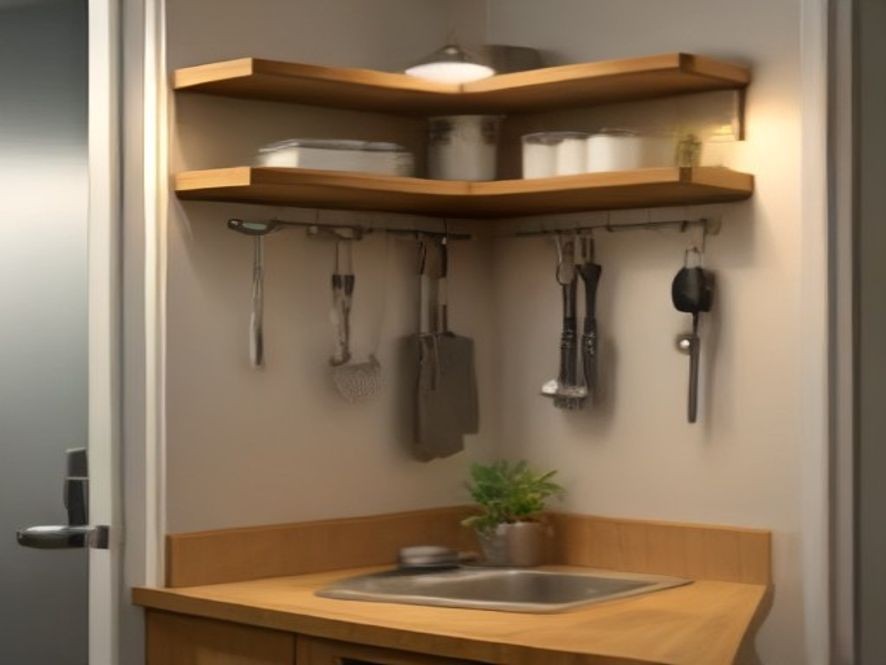
- Vertical wall rails: Mounting a sturdy metal rail on your backsplash “is like hanging an art gallery—except the art is your favorite spatula and ladle.”
For Counters
- Lazy Susans: A spinning turntable near your stove can keep frequently used tools within reach. Wirecutter experts recommend ones with high, clear plastic sides to keep jars and bottles contained.
- Roll-up dish racks: These free up sink space and can also be used for rinsing and drying vegetables.
- Tiered countertop organizers: Similar to spice racks but for scoops and spatulas, they give height to your storage so you can fit more in tight corners.
For Under-Sink or Pantry
- Matching labeled bins: “Buy super cheap, identical bins at a dollar store, so you’ll be able to stack them if needed. Label each container using masking tape and a permanent marker so you can see what’s inside at a glance.”
- Locker bins with handles: These are great for storing appliance accessories. “Before going shopping, take the time to determine how many items you need to stash away and where you have the space to keep them. You may want to measure your countertop appliances first.”
- Cable ties: Wind cords around your appliances and keep them in a tidy bundle with Velcro reusable cable ties.
Step 4: Zone Your Kitchen
Organize your kitchen around how you actually work. Create zones for different activities:
- Prep zone: Keep your chef’s knife, cutting board, mixing bowls, and prep tools together
- Cooking zone: Store your spatula, tongs, wooden spoon, and spoon rest near the stove
- Cleaning zone: Keep dish brush, soap, and cleaning cloths by the sink
- Baking zone: Group measuring cups, scale, whisk, and spatula together
“By anchoring the caddy just outside the splash zone, you avoid cross-over reaches that can increase burn risk.”
Comparison Table: Small Kitchen Storage Methods
| Storage Method | Purpose | Effectiveness | Difficulty | Cost |
|---|---|---|---|---|
| Drawer Dividers | Organize utensils and tools in drawers | High—keeps items visible and accessible | Easy | Low |
| Wall Rail/Hooks | Free up drawer space, display tools | High—puts items within reach | Easy | Low |
| Magnetic Strips | Store metal tools on walls or inside cabinets | Medium—good for knives and metal tools | Easy | Low |
| Pegboard | Store multiple items on walls | High—customizable and accessible | Medium | Low |
| Labeled Bins | Group accessories and small gadgets | High—makes items easy to find | Easy | Very Low |
| Lazy Susan | Store spices or tools in corners | High—makes corners accessible | Easy | Low |
| Wire Shelving | Store bulky equipment | High—uses vertical space | Medium | Medium |
| Cabinet Door Hooks | Use otherwise wasted space | Medium—good for small items | Easy | Very Low |
| Lid Organizers | Manage container lids | High—saves cabinet space | Easy | Low |
FAQ Section
Why does my kitchen always feel cluttered even after I clean it?
You probably have too many items for your space. Try the three-month rule: if you haven’t used it in three months, it’s time to let it go.
What is the best way to store utensils in a small kitchen?
Use vertical storage like wall rails, magnetic strips, or inside-cabinet hooks to free up drawers and counters.
How do I keep kitchen tools organized long-term?
Assign a “home” for every item and do a quick weekly tidy-up. This habit is more important than any organizer.
How do I organize appliance accessories I don’t use often?
Store them in labeled bins or baskets in a pantry or cabinet—”one for your stand mixer attachments, another for your grilling tools, and so on.”
What should I do with small appliances I use only occasionally?
Store them in a cabinet or pantry, not on the counter. Counter space should be reserved for appliances you use daily or weekly.
How can I organize my refrigerator in a small kitchen?
Use labeled bins for loose produce, small jars, condiments, and even sticks of butter. This makes items easier to find and aids with food safety.
Are magnetic strips safe for knives?
Yes, as long as the magnet is strong enough and you place knives carefully. Mount them on a wall or inside a cabinet door.
“Most kitchen problems come from small maintenance habits that are often ignored.” The same is true for organization. A few minutes of daily upkeep and a weekly reset can keep your kitchen functional and clutter-free.
Regularly reassess your tools. Every few months, go through your kitchen and repeat the editing process. You’ll likely find new items that have crept in and old ones you no longer use. Decluttering is not a one-time project—it’s a habit.
Use your walls. If your counter is cluttered and your drawers are full, look up. Walls, cabinet doors, and even the side of cabinets offer valuable storage real estate. A magnetic strip, a few hooks, or a pegboard can free up significant drawer and counter space.
Make it easy to put things away. “The harder the utensils are to see, the less you will use them.” This old wisdom from Julia Child also applies to putting things away. If it’s easy to see where something belongs and easy to return it, you’re more likely to keep your kitchen organized.
References
Expert-Approved Small Kitchen Organization Methods and Solutions
- Wirecutter (NYT) – Expert Small Kitchen Organization Tips
- Tasting Table – Small Appliance Organization Guide
- MinimalistRig – Tiny Apartment Kitchen Organization
- TODAY.com – Small Kitchen Organization Products and Tips
Which kitchen problem do you want solved next? Share your thoughts in the comments.