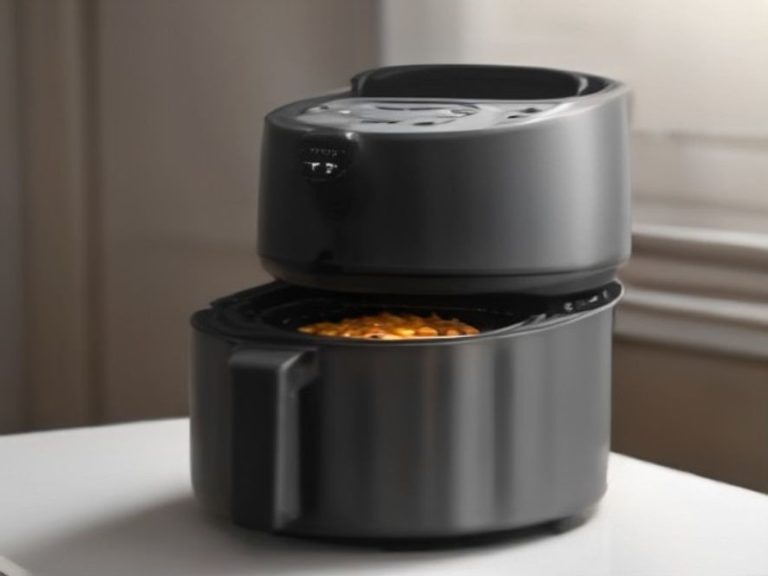

How to Keep Air Fryer Food Crispy Without Overcooking It: A Complete Guide
You pull out the basket expecting golden, crunchy perfection, only to find pale, floppy food—or worse, burnt-on-the-outside, raw-on-the-inside disasters.
It’s the ultimate air fryer balancing act. Too little care and your food turns soggy. Too much and it’s overdone. But here’s the good news: getting that perfect crispy texture without ruining your meal is absolutely achievable. You just need to understand a few simple principles and follow a reliable system.
The Science of Air Frying: Why Crispy and Overcooked Are Connected
Understanding how your air fryer works is the first step to mastering it. An air fryer is essentially a compact convection oven. It uses a powerful fan to blast hot air around your food at speeds of roughly 40 mph . This rapid air circulation is what sets it apart.
In a regular oven, moisture released from food creates a thin layer of steam around it, insulating the surface and slowing down browning and crisping . An air fryer’s fan constantly strips this insulating layer away. This allows the food’s surface to dry out, heat up, and brown much faster . This is how it achieves that satisfying crunch without a pool of oil.
This speed is both the air fryer’s superpower and its biggest risk. Because it cooks so quickly, the difference between perfectly crispy and burnt or dry can be a matter of minutes .
Why Your Air Fryer Food Gets Soggy or Overcooked
Mistake #1: The Crowded Basket
This is the most common cause of air fryer failure . If you pack the basket too full, the hot air can’t circulate properly. Instead of crisping, your food steams in its own trapped moisture. The result? Soggy, pale food that’s not nearly as good as it should be . Even worse, you might try to fix this by cooking it longer, which then dries it out and leads to overcooking .
Mistake #2: Uncontrolled Moisture
Moisture is the enemy of crispiness . If your food has water on its surface, the air fryer has to spend precious time evaporating that water before it can start browning and crisping . This leaves you with pale, soft results, or forces you to overcook the inside while waiting for the outside to brown.
Mistake #3: Using Oven Temperatures
One of the biggest adjustments is temperature. You can’t just use the same temperature you would in a conventional oven. Because of the intense heat and powerful fan, your air fryer will run hotter than you think . Cooking at oven temperatures is a surefire way to burn the outside of your food before the inside is cooked.
Mistake #4: Setting and Forgetting
It’s easy to trust the timer and walk away, but that’s a recipe for disappointment. Foods can burn on top, especially baked goods or breaded items . Checking your food regularly is essential. And remember, if your food is soggy because of overcrowding or moisture, adding more time won’t fix it—it’ll just overcook it .
Mistake #5: Using the Wrong Coating
Wet batters, like those used for deep-fried fish or onion rings, don’t work well in an air fryer . The batter can drip off or get blown around by the high-speed fan before it has a chance to set and crisp.
Your Step-by-Step Guide to Perfect Crispiness
1. Prepare Your Food Correctly
Start Dry.
This is the most important step for achieving a crispy exterior. Always pat your food completely dry with paper towels before you do anything else . For foods like chicken with skin, this is critical for getting that crackling texture . Removing surface moisture allows the hot air to immediately start browning.
Oil Lightly.
Air fryers can make food crispy with a fraction of the oil used in deep frying, but they still need some. A thin layer of oil helps conduct the hot air’s heat more efficiently, promoting browning and crispiness . Use a high-smoke-point oil like avocado, light olive oil, or vegetable oil . One teaspoon is often enough for a batch. Use a refillable oil sprayer for an even coat; avoid aerosol cooking sprays which can damage the non-stick coating over time .
2. Adapt Your Temperature and Time
The Conversion Rule:
A good rule of thumb for adapting an oven recipe is to lower the temperature by 20–25°C (25–50°F) and reduce the cooking time by 20–30% .
If an oven recipe says 200°C for 30 minutes, start by setting your air fryer to 180°C for about 20-25 minutes.
Check Early and Often.
Don’t just set the timer and walk away . Because air fryers vary, always check your food at the lower end of the time estimate. You can always add a few more minutes, but you can’t un-burn something . If the top is browning too fast, cover it loosely with a piece of foil .
3. Maximize Airflow
Give It Space.
The golden rule: do not overcrowd the basket. Arrange food in a single layer with a little space between each piece . If pieces are touching, the air can’t reach those contact points, and they’ll stay soft and steamed . If you have a lot of food, it’s better to cook it in multiple batches .
Shake, Flip, and Rotate.
Small items like fries and vegetables benefit from a good shake halfway through . For larger items, use tongs to flip them over to ensure all sides get evenly browned and crispy .
4. Use the Right Coating
Skip the runny batters. For a crispy coating, use a thicker breading like panko breadcrumbs . For an extra-crispy crust, try the classic flour-egg-breadcrumb method . A secret weapon for proteins? A light dusting of cornstarch on your meat before cooking can create a wonderfully crispy exterior .
Quick Comparison Table: Avoiding Soggy vs. Overcooked
| Problem | Likely Cause | What to Do |
|---|---|---|
| Soggy, Pale Food | Too much food in the basket. | Cook in a single layer. Do multiple batches. |
| Soggy, Steamed Food | Food is wet. | Pat dry with paper towels before cooking. |
| Soggy, Soft Food | Not enough oil. | Lightly coat food with a high-smoke-point oil. |
| Overcooked, Dry Food | Temperature is too high. | Lower it by 20–25°C for most recipes. |
| Burnt Outside, Raw Inside | Temperature is too high. | Lower the temperature and increase time slightly. |
| Overcooked Food | Leaving it in too long. | Check at the earliest recommended time. Don’t just trust the timer. |
Frequently Asked Questions
Why does my food get burnt on the outside but stay raw inside?
The temperature is likely too high. The outside cooks too fast before heat can reach the center. Lower the temperature by 20–25°C.
Do I really need to shake the basket?
Yes. Most models require you to shake or flip food halfway through to promote even browning . The heating element is on top, so the bottom surfaces need to be turned toward the heat.
How much oil should I use?
You need some oil for crisping and browning, but very little. Aim for about 1 teaspoon per batch or a light, even mist from a sprayer .
Can I use a wet batter in an air fryer?
It’s not recommended. Runny batters will drip off before they crisp. Use thicker coatings like panko breadcrumbs or dry rubs instead .
References
Trusted sources for air fryer tips and kitchen solutions:
- Lifehacker – Secret to Perfectly Crisping Air Fryer Food
- America’s Test Kitchen – What is Air Frying?
- BBC Food – Air Fryer Mistakes
- CNET – Adapting Recipes for the Air Fryer
Which kitchen problem do you want solved next? Share your thoughts in the comments.