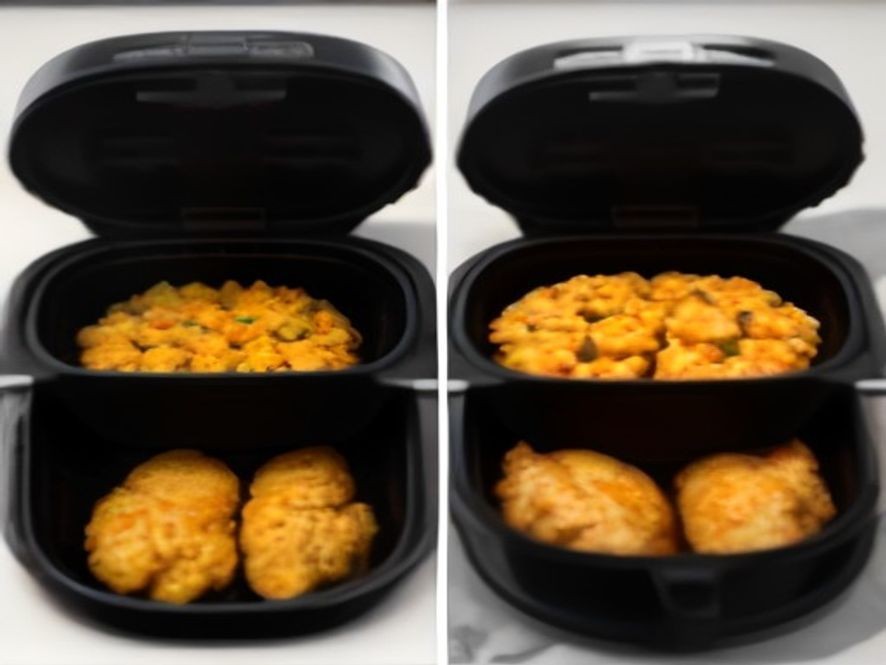
Air Fryer Roast vs Air Fry: When to Use Each Setting
You’re staring at your air fryer, trying to decide between the “Air Fry” and “Roast” buttons, wondering if it even makes a difference.
It does. These two settings may sound interchangeable, but they’re actually designed for different cooking goals. Picking the wrong one can mean the difference between crispy wings and a dried-out chicken breast. Here’s exactly when to use each.
TL;DR
- “Air Fry” uses intense heat and maximum fan speed to crisp food fast—perfect for frozen snacks, wings, and breaded items .
- “Roast” uses balanced, gentler heat for even cooking through thick foods—ideal for meats, whole chicken, and vegetables you want caramelized but not dried out .
- Think of it this way: air fry is a sprint (surface crisp is the goal), roast is a steady jog (the inside matters just as much as the outside) .
- Air Fry temperatures often run 370–420°F, while Roast typically works in the 325–400°F range with longer cooking times .
- When in doubt, treat your air fryer like an oven—choose based on the food’s thickness, not just the name of the setting .
What Each Setting Actually Does
Air Fry Setting
The air fry setting uses intense heat and a powerful fan to rapidly circulate hot air around the food . The goal is to remove surface moisture quickly, creating that golden-brown, crispy finish with little to no oil .
On many models, the fan runs at maximum speed, and the temperature often ranges from 370°F to 420°F . It’s aggressive, fast, and designed to mimic deep-fried texture without the oil bath.
Roast Setting
The roast setting uses a high-speed fan with more balanced, consistent heat . It’s designed for deeper, more thorough cooking rather than rapid surface crisping. Breville describes it as keeping foods “tender inside and crisp outside” , while Sage notes it’s “ideal for cooking a variety of vegetables and meats” .
The temperature is generally a bit lower and gentler than Air Fry, with longer cooking times . It’s built for foods that need time to cook through without burning on the outside.
When to Use Each Setting
Use Air Fry For:
Frozen Foods and Snacks
Fries, chicken nuggets, onion rings, mozzarella sticks—anything that comes frozen and needs to get crispy benefits from the intense heat of the Air Fry setting . The rapid air circulation mimics deep frying without the oil.
Breaded or Coated Items
Chicken tenders, breaded fish fillets, and anything with a panko or breadcrumb coating crisp up best with air fry. The high fan speed sets the crust quickly before moisture can soften it .
Foods Where Surface Crisp Is the Goal
Wings, potato wedges, and anything you want that “snap” texture. Air fry is perfect for achieving a crunchy exterior while keeping the inside cooked .
Reheating Leftovers
If you want pizza or fried chicken to taste fresh again, air fry mode can restore that crispy texture without drying out the interior .
Use Roast For:
Thicker Cuts of Meat
Chicken breasts, bone-in thighs, pork chops, and salmon fillets are better off with the roast setting. The gentler, balanced heat cooks them through evenly while still browning the outside .
Whole Chicken
A whole bird needs time for the inside to cook without the outside burning. The roast setting is designed for this—it uses lower, more consistent heat over a longer time .
Tray Meals and Mixed Vegetables
If you’re cooking Brussels sprouts, broccoli, or cauliflower alongside protein, roast mode gives everything even heat without scorching the smaller pieces . It’s great for caramelizing vegetables while keeping them tender.
Anything Over ¾ Inch Thick
A quick rule of thumb: if your food is thicker than about ¾ inch, lean toward roast . Thin foods love air fry; thick foods need the steady heat of roast.
Comparison Table
| Feature | Air Fry Setting | Roast Setting |
|---|---|---|
| Fan intensity | High, aggressive airflow aimed at surface drying | Steady, balanced convection |
| Typical temperature | 370–420°F | 325–400°F |
| Cooking style | Sprint—fast, crispy finish | Steady jog—even cooking through |
| Best for | Frozen foods, wings, fries, breaded items | Meats, whole chicken, vegetables |
| Texture result | Crispy edges, crackly skins | Roasted finish, tender centers |
| Common pitfall | Overcrowding causes steaming | Low heat can leave skin soft |
Can You Switch Mid-Cooking?
Yes—and it’s actually a great technique. Start on roast to cook thick foods through, then switch to air fry for the last few minutes to crisp the outside . This works especially well for bone-in chicken thighs or pork chops where you want the inside tender and the outside crispy.
FAQ Section
1. Can I roast in an air fryer?
Yes—most air fryers have a dedicated roast setting. It’s designed for thicker foods and meats that need even, thorough cooking .
2. What’s the difference between air fry and roast?
Air fry uses maximum heat and fan speed for quick surface crisping. Roast uses more balanced heat for even cooking through thicker foods .
3. Which setting is better for chicken wings?
Air fry—it gives you that crispy, crackly skin without drying out the meat. Wings are thin enough that they cook through quickly .
4. Which setting is better for vegetables?
Roast—the gentler heat caramelizes vegetables without drying them out. Broccoli, Brussels sprouts, and cauliflower all benefit from roast .
5. Can I bake in an air fryer?
Yes, many models have a dedicated bake setting for cakes, brownies, and breads. If yours doesn’t, use roast at a lower temperature with a heat-safe pan .
References
Learn More About Air Fryer Settings and Cooking Techniques:
- Tasting Table: The Difference Between Roast and Air Fry
- Whirlpool: Air Fry vs Air Roast Guide
- KitchPrep: Air Fryer vs Air Roast Comparison
- Ninja: Cooking Functions Explained
Which setting do you use most often? Share your experience—or ask about a specific food—in the comments below!