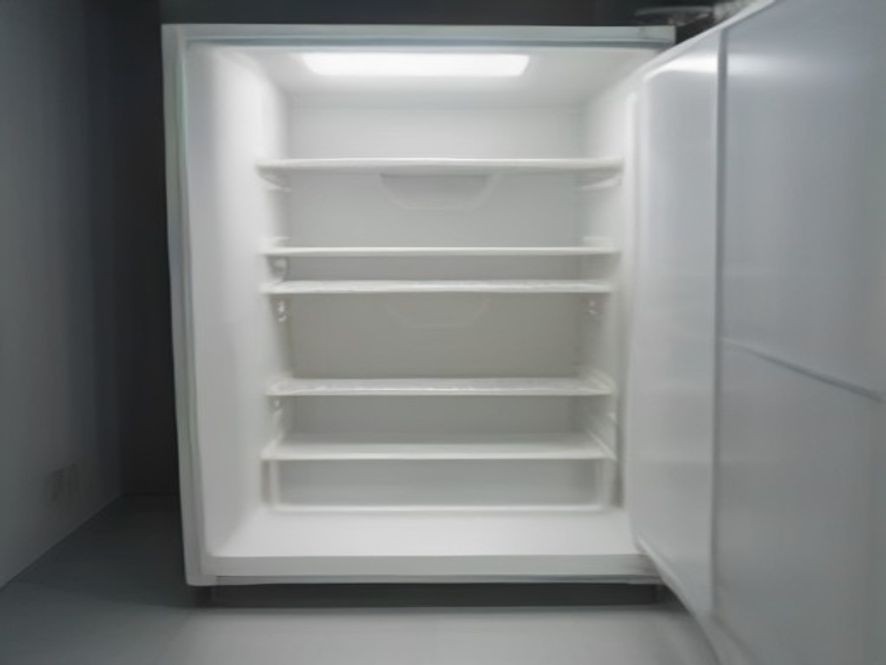
Why Does My Refrigerator Smell Like Rotten Food When Empty? Causes and Proven Fixes
You’ve tossed everything out, scrubbed every shelf, and yet that sickly sweet, rotten smell still lingers inside your empty refrigerator.
TL;DR
A rotten food smell in an empty refrigerator usually means food particles or liquids have seeped into hidden, unreachable areas like drain holes, drip pans, door seals, or even the insulation behind the walls . Bacteria and mold continue to decompose these trapped residues, releasing odors long after the visible food is gone. The fix involves a deep clean of hidden components, flushing the drain line, cleaning the drip pan, and neutralizing odors with baking soda or activated charcoal.
Key Takeaways
- Hidden spills are the real cause: Liquids seep into cracks, drain holes, and under drawers where you can’t see them, continuing to decompose .
- The drain pan is a prime suspect: Defrost water carries food particles into the drip pan, where they rot and create persistent odors .
- Door seals trap residue: Rubber gaskets can absorb spills and odors, releasing them over time .
- Insulation can absorb smells: In severe cases, odors penetrate the foam insulation behind the refrigerator walls, requiring professional intervention .
The Real Causes Behind That Rotten Smell in an Empty Fridge
When your fridge is empty but still smells like something died inside, the problem is hiding where you can’t see it.
Why Odors Linger After Removal
Even when all visible food is gone, here’s why the smell stays:
- Seepage into hidden areas: Spills, especially liquids like milk, juice, or meat juices, seep into cracks, drain holes, and under removable parts .
- Absorption into plastic: The plastic interior lining absorbs odor molecules. These can only be removed with deep cleaning .
- Bacteria colonies: Even without food, bacteria can survive and continue producing odor compounds .
- Improper defrosting: Frost-free refrigerators cycle through defrost and refreeze, which can cause trapped residue to release more odors .
The Most Common Hidden Sources
Let’s locate the spots where rotten smells hide in an empty fridge:
| Hidden Source | Location | Why It Smells Rotten |
|---|---|---|
| Drain pan (drip pan) | At the back or bottom of the fridge | Defrost water mixed with food particles decomposes |
| Drain hole & tube | At the back of the fridge interior (under crisper drawers) | Food liquids and mold clog and decompose in the tube |
| Door seals (gaskets) | Around the entire door edge | Spills, mold, and food debris get trapped in the folds |
| Under crisper drawers | Bottom of the fridge interior | Liquids pool and decompose, often unnoticed |
| Freezer compartment | Through the air circulation system | Rotting freezer spills spread odor into the fridge |
| Insulation foam | Inside the refrigerator walls | Severe spills seep through cracks into the insulation |
Can An Empty Fridge Still Smell?
Yes, and sometimes it smells even stronger after emptying. Here’s why:
- Air circulation: When the fridge is full of food, odors are partially absorbed by the food itself . When empty, those odors dominate the enclosed space.
- Revealing hidden spills: Removing everything uncovers old spills that were hidden behind containers.
- Temperature changes: If you’ve unplugged the fridge to clean it, warming up allows bacteria to multiply faster .
A Step-by-Step Guide to Eliminating the Rotten Smell
This is the most thorough cleaning your refrigerator will ever need.
Step 1: Prepare for a Deep Clean
- Unplug the refrigerator and remove all shelves, drawers, and removable parts .
- Wash removable parts in warm, soapy water and set them aside to dry .
- Gather supplies: White vinegar, baking soda, a toothbrush, a small funnel, a pipe cleaner or flexible wire, and towels.
Step 2: Clean the Drain Hole and Drain Tube
The drain hole is located at the back wall of the refrigerator compartment, usually just below the crisper drawers . A clogged drain hole lets water and organic matter back up and decompose.
- Locate the drain hole: Look for a small hole or slit at the back of the fridge interior .
- Flush with hot water: Use a bulb syringe or small funnel to pour hot water into the hole to flush the drain tube .
- Unclog if necessary: If water doesn’t flow freely, use a pipe cleaner, flexible wire, or a piece of string trimmer line to gently unclog the tube .
- Use baking soda and vinegar: Pour baking soda into the hole, followed by white vinegar. Let it fizz for 10-15 minutes, then flush with hot water .
- Catch the water: Place a bowl or towel at the back or underneath to catch water that flows through.
Step 3: Clean the Drip Pan
Most refrigerators have a drip pan at the back or bottom that catches defrost water . This is a major odor source .
- Locate the drip pan: Check the user manual, but it’s usually behind the lower front grill or at the back of the fridge .
- Remove and clean: Slide out or unscrew the pan. Wash it with hot, soapy water and a splash of white vinegar .
- Dry thoroughly: Wipe the pan dry before replacing it.
- Check for cracks: If the pan is cracked, replace it, as cracks will leak water and odors .
Step 4: Deep Clean Door Seals (Gaskets)
Door seals trap spills, crumbs, and moisture, creating a perfect spot for mold and bacteria .
- Wipe with vinegar solution: Mix equal parts white vinegar and water. Wipe the rubber seal thoroughly, getting into all the folds .
- Use a toothbrush: For stubborn grime, use a toothbrush dipped in the vinegar solution .
- Check for damage: If the seal is cracked or warped, it needs replacement to prevent air leaks and odors .
- Dry completely: Wipe the seal dry to prevent further mold growth .
Step 5: Deep Clean All Interior Surfaces
With everything removed, scrub every interior surface:
- Make a vinegar solution: Mix equal parts white vinegar and water in a spray bottle .
- Spray and scrub: Spray all walls, ceiling, floor, and corners. Let it sit for 10-15 minutes to kill mold and loosen grime .
- Reach the back: Pay special attention to the back wall, including around the drain hole and vents .
- Rinse and dry: Wipe clean with a damp cloth and dry thoroughly with towels.
Step 6: Absorb Lingering Odors
After cleaning, leave these odor absorbers inside:
| Item/Method | Purpose | Effectiveness | How to Use |
|---|---|---|---|
| Baking Soda | Absorbs and neutralizes odors | High | Leave an open box on each shelf |
| Activated Charcoal | Physically traps odor molecules | Very High | Place bags of charcoal on shelves |
| Coffee Grounds | Captures odor compounds | High | Leave a bowl of fresh grounds inside |
| Vinegar Bowl | Neutralizes airborne odors | Medium | Place a bowl of vinegar on a shelf |
| Cat Litter | Absorbs moisture and odors | Medium | Place a small container of clean litter |
Step 7: Air It Out
- Leave the door open for 24-48 hours to allow any remaining odors to dissipate .
- Use a fan: Place a box fan blowing into the fridge to circulate fresh air .
- Consider an ozone generator: For extremely stubborn odors, consider renting or borrowing an ozone generator, but follow safety instructions carefully .
Step 8: Reassemble and Restock
- Replace shelves and drawers once they are completely dry .
- Check that the drain hole is clear and water flows freely into the drip pan .
- Plug the fridge back in and allow it to cool before restocking .
- Monitor temperature: Ensure the fridge reaches 40°F (4°C) or below .
When to Call a Professional
If you’ve tried all these steps and the smell remains, it’s time to call a professional:
- Severe smell inside the walls: If you suspect leakage into the insulation, technicians can inject odor-neutralizing compounds or replace the door .
- Persistent, unexplained odors: A professional can check for issues with the evaporator drain or internal components .
- Cooling problems: If the fridge isn’t cooling properly, the problem may be more serious .
“Most kitchen problems come from small maintenance habits that are often ignored.” Regular cleaning of hidden refrigerator parts prevents the need for drastic measures.
Comparison of Odor Absorption Methods for Empty Fridges
| Method | Best For | Duration | Cost | Effectiveness |
|---|---|---|---|---|
| Baking Soda Box | Everyday maintenance | 1-3 months | Low | High |
| Activated Charcoal | Stubborn, persistent odors | 1-2 months | Low-Medium | Very High |
| Coffee Grounds | Temporary freshening | 1-2 weeks | Low | High |
| Vinegar Bowl | Active neutralization | 24 hours | Low | Medium |
| Ozone Generator | Severe, trapped odors | Single treatment | Rental | Very High |
How to Prevent Future Rotten Smells
Prevention is easier than deep cleaning. Here’s how to avoid this problem entirely:
Practice Smart Storage
- Wipe spills immediately: Don’t let liquids sit and seep into cracks .
- Cover all food: Use airtight containers to prevent spills and contain odors .
- Check expiration dates weekly: Remove anything that’s going bad before it rots .
- Keep a box of baking soda: Replace it every three months .
Regular Maintenance
- Clean the drip pan monthly: This prevents buildup from becoming a major odor source .
- Flush the drain hole: Use hot water monthly to keep the drain tube clear .
- Wipe the door seals: Clean the rubber gaskets with vinegar monthly .
- Deep clean quarterly: Give your fridge a thorough cleaning every three months .
When the Fridge Is Empty
- If you unplug it: Leave the door open to prevent mold growth in a warm, dark environment .
- If keeping it empty: Leave a box of baking soda inside and keep the door slightly ajar .
- Don’t leave it off too long: Warmth promotes bacterial growth if there’s any remaining moisture .
Frequently Asked Questions
Why does my empty refrigerator smell like rotten food?
Residual food particles and liquids have seeped into hidden areas like drain holes, drain pans, door seals, and behind drawers, where they continue to decompose .
How do I clean a refrigerator drain hole?
Locate the hole at the back of the interior, flush it with hot water using a small funnel or syringe, and use a pipe cleaner or flexible wire to gently unclog it .
Can a refrigerator drip pan cause a rotten smell?
Yes, the drip pan catches defrost water that mixes with food particles, creating a breeding ground for bacteria and mold that produce rotten odors .
What is the best odor absorber for an empty refrigerator?
Activated charcoal is the most effective for stubborn odors, followed by baking soda for everyday maintenance .
How long does it take to get rid of a rotten smell in an empty fridge?
With proper cleaning and odor absorbers, the smell should improve within 24-48 hours. Severe cases may require several days of airing out .
Should I call a professional for a smelly empty refrigerator?
If the smell persists after deep cleaning and flushing the drain, or if you suspect the odor is trapped in the insulation, call a professional for assessment .
Sources and references for refrigerator cleaning and maintenance:
- Better Homes & Gardens – Kitchen Odor Solutions
- EPA – Mold and Health
- USDA – Food Safety Cleaning Guidelines
- Real Simple – How to Clean Your Refrigerator
Which kitchen problem do you want solved next? Share your thoughts in the comments.