How to Fix Kitchen Oil Smell Not Going Away: Complete Kitchen Odor Removal Guide
You’ve aired out the kitchen, lit a candle, and even sprayed air freshener — but that heavy, greasy oil smell is still hanging around hours after cooking.
TL;DR: Cooking oil smell sticks because grease particles settle on every surface: walls, cabinets, range hood filters, and even fabric. To fix it, you must clean the greasy film, not just mask the air. Wash range hood filters, wipe down all hard surfaces with degreasing solution, simmer a pot of citrus-vinegar water, and use activated charcoal for ongoing absorption. Deep cleaning once a month prevents buildup.
🔵 Key Takeaways
- Oil particles become airborne during frying or searing and settle as a sticky film on surfaces.
- The range hood filter and exhaust fan are the most common hidden sources of lingering oil smells.
- Hot vinegar water breaks down grease faster than cold soapy water.
- Baking soda paste removes oil residue from painted walls and cabinet fronts without damage.
- Activated charcoal absorbs oil molecules from the air much better than regular air fresheners.
The Real Causes of Lingering Oil Smells and How to Fix Them Permanently
Oil smells are different from food odors like fish or onion. When you heat cooking oil past its smoke point, tiny droplets float up and coat your kitchen’s surfaces. These droplets don’t disappear on their own. They sit on your kitchen cabinets, oven hood, tile backsplash, and even your refrigerator door. Every time you cook something warm, those old grease particles warm up too and release that stale, oily smell again.
Think of it like this: if you touch your cabinet above the stove and feel a slight stickiness, that’s old cooking oil. That stickiness has a smell. And that smell is what you’re breathing in every time you walk into your cooking space.
Why Your Kitchen Sink and Garbage Disposal Trap Oil Smells
Oil is lighter than water. When you pour hot greasy liquid down your kitchen sink, it floats and coats the inside of your pipes and the rubber flaps in your garbage disposal. Over time, that coating turns rancid. Never pour cooking oil down the drain, but if you already have, you’ll need to degrease your disposal and pipes to stop the smell.
Step-by-Step Guide: Remove Stubborn Oil Smell from Your Kitchen
Follow these steps in order. Most take less than 5 minutes each.
Step 1: Clean Your Range Hood and Exhaust Fan Filter
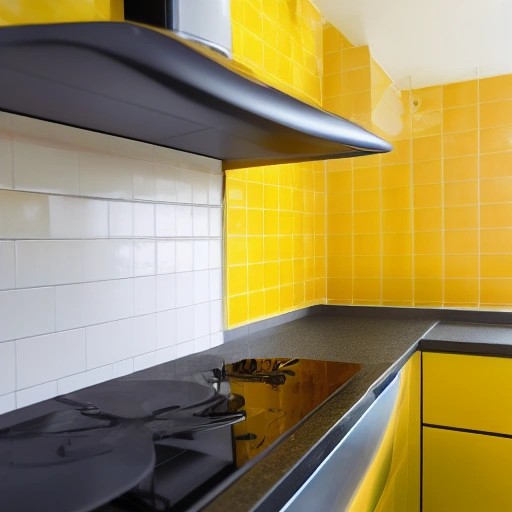
This is the number one cause of lingering oil smells. Take down your range hood filter. If it’s metal, spray it with a degreaser or hot soapy water, then scrub with an old toothbrush. Run it through the dishwasher on the top rack if your model allows. While the filter is off, wipe inside the hood itself — that’s where thick grease builds up unnoticed.
Safety reminder: Always turn off the range hood power switch before removing filters or touching internal parts.
Step 2: Simmer Vinegar Water on the Stove
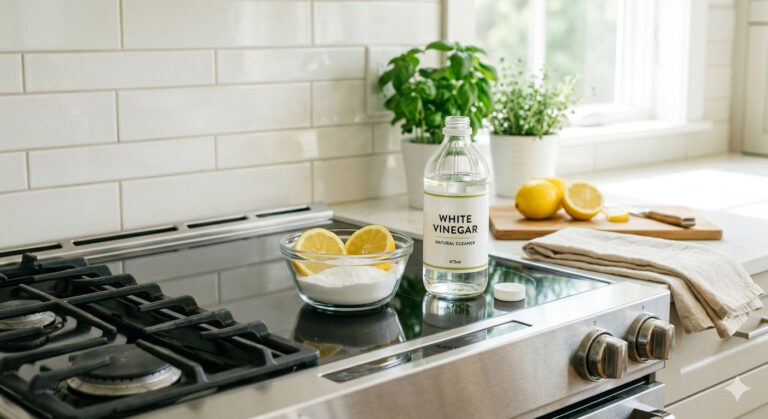
Fill a large pot with water and add one cup of white vinegar. Bring to a boil, then reduce to a low simmer for 15 to 20 minutes. The steam breaks down airborne grease particles and softens oil film on nearby surfaces. Add lemon slices, rosemary sprigs, or a few drops of vanilla extract to leave a fresh scent behind.
Step 3: Wipe Down Every Hard Surface with Degreaser
Mix one part white vinegar, one part water, and two tablespoons of dish soap in a spray bottle. Spray onto:
- Kitchen cabinets (especially above and beside the stove)
- Tile backsplash
- Countertops
- Microwave exterior and handle
- Refrigerator door and top
- Light fixtures and switch plates
- Window sills
Let the solution sit for 2 minutes, then wipe with a damp microfiber cloth. You will see yellow-brown residue on the cloth. That is the trapped oil smell leaving your home.
“Most kitchen odors don’t come from the air — they come from greasy surfaces you forgot to clean. A monthly wipe-down of upper cabinets prevents 80 percent of recurring oil smells.”
Step 4: Deep Clean Your Oven and Stovetop
Oil smells often bake into your oven walls. If you haven’t cleaned your oven in months, old grease burns slightly every time you preheat, releasing a stale oily odor.
For the stovetop: Remove grates and burner caps. Soak them in hot soapy water for 15 minutes. Scrub with a non-abrasive pad.
For the oven: Sprinkle baking soda over the bottom. Spray with vinegar until it forms a paste. Let sit overnight. Wipe clean the next morning. Run a short oven cycle at 200°F with a bowl of water inside to steam-clean remaining residue.
Step 5: Wash All Kitchen Textiles
Your dish towels, oven mitts, pot holders, and even your kitchen curtains have absorbed oil particles. Wash them separately in hot water with one cup of white vinegar added to the rinse cycle. Do not use fabric softener — it seals in grease smells.
Step 6: Set Up Ongoing Odor Absorption
Place these around your kitchen for 24/7 odor control:
- A bowl of activated charcoal (near the stove)
- An open container of baking soda (under the kitchen sink)
- Coffee grounds in a small dish (on top of the refrigerator)
Replace charcoal every two months. Replace baking soda monthly.
Comparison Table: Best Degreasers for Kitchen Oil Smells
| Method | Purpose | Effectiveness | Difficulty Level | Cost |
|---|---|---|---|---|
| White vinegar + dish soap | All-purpose surface degreasing | High (85%) | Easy | Low |
| Baking soda paste | Oven and stovetop grease removal | Very High (95%) | Medium | Low |
| Commercial degreaser spray | Range hood and metal filters | High (90%) | Easy | Medium |
| Simmering vinegar water | Airborne grease neutralization | Medium-High (80%) | Very Easy | Low |
| Activated charcoal | Continuous air absorption | Medium (70%) | Very Easy | Medium |
| Dishwasher (filters only) | Metal filter deep cleaning | High (90%) | Easy | Low (if already running) |
Oil Smell Persistence by Surface Type
How to Prevent Oil Smells Before They Set In
Stopping oil smells is easier than removing them after they harden. These habits take seconds but save hours of cleaning.
Use a splatter guard. This mesh screen over your frying pan catches 90 percent of oil droplets before they fly onto your cabinets and walls.
Turn on your exhaust fan before heating oil. Wait until the fan is running at medium speed before adding oil to your pan. Running it for five minutes after cooking clears remaining particles.
Wipe as you cook. Keep a damp paper towel next to the stove. Wipe the backsplash and counter immediately after cooking while oil is still warm and easy to remove.
Change your range hood filter regularly. Metal filters should be cleaned monthly. If you have a charcoal filter (non-washable), replace it every six months.
Cook oil at the right temperature. When oil smokes, it releases more airborne grease. Use a thermometer. Most vegetable oils should stay between 350°F and 375°F for frying.
Natural Odor Absorbers for Long-Term Kitchen Freshness
If you cook fried foods weekly, keep these in your kitchen permanently.
- Activated bamboo charcoal bags: Hang one near the stove. Recharge monthly by placing in direct sunlight for two hours.
- Baking soda canisters: Poke holes in the lid. Place one on top of your refrigerator and one under the kitchen sink.
- Coffee ground bowls: Ask your local coffee shop for used grounds. Dry them completely, then place in an open bowl behind the stove. Replace weekly.
Rotate these every two to four weeks for best performance.
FAQ: Quick Answers to Stubborn Oil Smell Questions
Why does my kitchen smell like old grease even when I haven’t cooked?
Old oil residue on your range hood filter, oven walls, or upper cabinets warms slightly from your refrigerator’s heat or sunlight and releases stale odors.
How do I remove oil smell from kitchen towels?
Wash them separately with hot water, one cup of vinegar, and half a cup of baking soda. Do not use fabric softener.
Can I use bleach to remove grease smells?
No. Bleach does not break down oil. Vinegar and dish soap are much more effective and safer to breathe.
How do I fix an oily smell from my garbage disposal?
Grind half a cup of ice cubes with half a cup of salt, then pour one cup of white vinegar down the drain while running cold water for 30 seconds.
What is the fastest way to remove oil smell from air?
Simmer a pot of water with one cup of vinegar and lemon peels for 10 minutes. The steam neutralizes airborne particles almost instantly.
How often should I deep clean my oven to prevent oil smells?
Every three months for light use. Every six to eight weeks if you roast or bake with oil weekly.
Does opening windows remove oil smell completely?
No. Ventilation helps but does not remove grease film from surfaces. You must clean surfaces AND ventilate.
When to Call a Professional or Check Your Appliances
Sometimes oil smell isn’t from cooking. A failing refrigerator compressor can give off a greasy, hot oil smell. So can a leaking oven gas valve or a burned-out exhaust fan motor.
If you have cleaned all surfaces, washed your filters, and simmered vinegar water twice but the smell remains for more than three days, check these three things.
- Behind and under your refrigerator. Pull it out. If you smell hot oil near the compressor (back bottom panel), call an appliance repair technician.
- Your oven gas connection. If you smell something like hot grease but no gas odor, still have a professional check the gas line and ignition system.
- Your exhaust fan motor. Turn it on and listen for grinding or rattling. A burned motor can smell like overheated oil.
Safety reminder: Always unplug appliances before cleaning or inspecting them. If you smell natural gas, leave your home immediately and call your gas company from outside.
Which kitchen problem do you want solved next? Share your thoughts in the comments.
References: