Best Cooking Utensils That Won’t Scratch Nonstick Pans: A Guide to Protecting Your Cookware
That sinking feeling when you see a scratch on your favorite nonstick pan can ruin your day, but it’s also a warning sign that your utensil choice needs an upgrade.
Nonstick pans are a kitchen workhorse, but their delicate coating requires care. The wrong tool can scratch, scuff, or even ruin the surface . Once scratched, the coating loses its nonstick properties, and food will start sticking, not to mention it can release harmful particles . The good news is that the right utensils can keep your pans in perfect condition for years. Here’s what you need to know.
TL;DR
This guide covers the best materials for nonstick-safe utensils and why metal is a strict no-go. You’ll learn the pros and cons of silicone, wood, and nylon, and what to look for when buying new tools to protect your investment and keep your cooking surface smooth.
Key Takeaways
- Metal utensils are the enemy of nonstick pans—they scratch and ruin the coating. Stick to silicone, wood, or nylon .
- Premium silicone is flexible, heat-resistant (often up to 600°F), and dishwasher-safe. Look for a one-piece, seamless design to prevent food from getting trapped .
- Wooden utensils are classic and sturdy, perfect for scraping and stirring. They require hand-washing and occasional oiling to prevent cracking .
- Nylon is affordable but can scuff surfaces over time and may melt under high heat .
- When buying, check for heat resistance ratings, food-grade materials, and seamless construction for hygiene .
The Golden Rule: No Metal
The one hard-and-fast rule for nonstick cookware is to never use metal utensils. Metal spatulas, spoons, forks, and whisks are “absolute murder” on nonstick surfaces because they create scratches . Even a small scratch can ruin the coating, causing food to stick and potentially releasing plastic nanoparticles into your food . Some manufacturers even void the warranty if you use metal . So, keep metal tools in the drawer and reach for these safe alternatives.
The Best Materials for Nonstick-Safe Utensils
Silicone: The Modern Favorite
Silicone is the top choice for many home cooks. It’s flexible, gentle on surfaces, and often dishwasher-safe . High-quality silicone tools are also heat-resistant, with many premium options rated up to 600°F .
What to Look For:
- Heat Resistance: Look for heat resistance above 500°F to avoid melting. The DI ORO Silicone Spatula, for example, is rated to an exceptional 600°F .
- Solid Core: Utensils with a stainless steel core offer better rigidity and durability, preventing them from being too flimsy. The HOTEC and USECANO sets use this design .
- Seamless Design: Opt for one-piece construction to prevent food and bacteria from getting trapped in crevices. This is a key feature of the award-winning DI ORO spatula .
Pros:
- Flexible, perfect for scraping and folding.
- Gentle on all pan surfaces.
- Usually dishwasher-safe.
Cons:
- Some can be too flexible for heavy foods like ground beef .
- Can stain from ingredients like tomato sauce .
Wooden: The Classic Choice
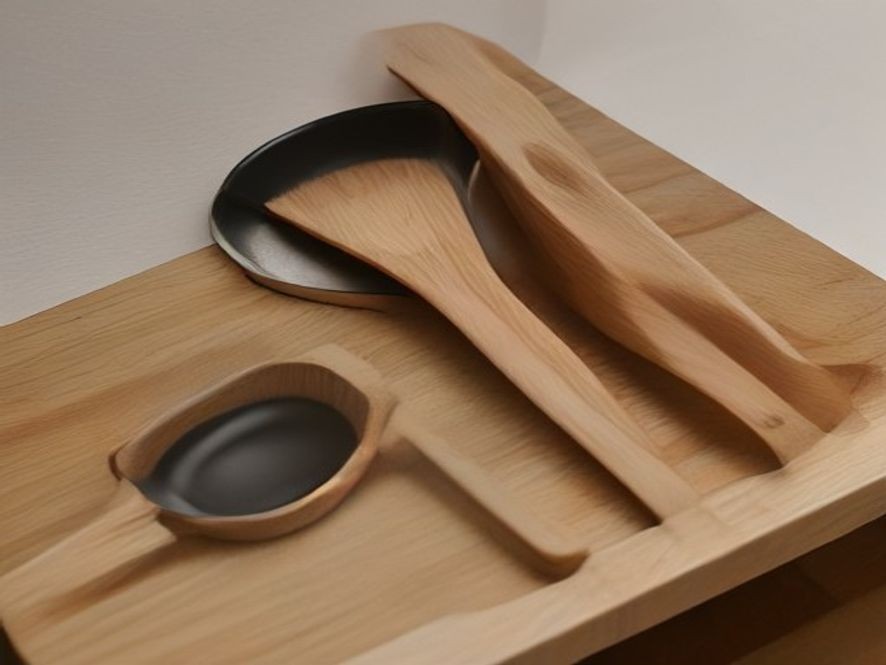
Wooden utensils have been used for centuries and remain a reliable workhorse. They are naturally scratch-free and won’t gouge your nonstick coating. They are also non-conductive, so they stay cool in your hand .
What to Look For:
- Dense Hardwoods: Choose tools made of teak or acacia wood, which are more water-resistant and durable .
- Smooth Finish: Look for utensils with smooth, rounded edges to protect the coating .
Pros:
- Sturdy and reliable.
- Won’t scratch any pan surface.
- Natural material.
Cons:
- Hand-wash only—dishwashers will cause warping and cracking .
- Requires occasional oiling with mineral oil to maintain the wood.
Nylon: The Budget Option
Nylon utensils are a common, affordable option. They are flexible enough to be safe for nonstick pans and require little maintenance. However, they have some drawbacks.
What to Watch For:
- Lower Heat Resistance: Nylon can melt if exposed to high heat for too long .
- Potential for Scuffs: While it won’t chip the coating, nylon can leave noticeable scuffs and superficial scratches over time .
Pros:
- Affordable.
- Lightweight and flexible.
- Dishwasher-safe.
Cons:
- Can melt at high temperatures.
- May scratch over time.
- Can become brittle and crack with age .
Quick Comparison Table
| Material | Best For | Heat Resistance | Dishwasher Safe | Care Notes |
|---|---|---|---|---|
| Premium Silicone | Flipping, scraping, baking | Up to 600°F | Yes | Easy to clean |
| Wood | Stirring, heavy mixing | High | No | Hand-wash, oil occasionally |
| Nylon | Everyday stirring | Low (can melt) | Yes | May scuff and need replacing |
FAQ
Can I use metal utensils on my nonstick pan?
No. Metal utensils will scratch and damage the nonstick coating, ruining the pan and potentially releasing harmful particles .
What is the best type of spatula for nonstick pans?
A high-quality silicone spatula with a stainless steel core is ideal. It’s flexible, heat-resistant, and won’t scratch the surface .
Are wooden spoons safe for nonstick pans?
Yes, wooden spoons are completely safe and won’t scratch nonstick pans. They are a classic and durable choice .
What should I do if I scratched my nonstick pan?
Unfortunately, a scratched nonstick pan is usually done for. It’s best to replace it, as the coating may start to flake into your food .
Which type of utensil do you find most reliable for your nonstick pans? Share your experience in the comments.
Trusted Resources for Cookware Care and Kitchen Tools: