Why Does My Stove Keep Clicking but Not Light: Common Causes and Easy Fixes
You turn the knob on your gas stove, hear that familiar clicking sound, but instead of a nice blue flame, you just get more clicking – and clicking – and a growing smell of gas that makes you nervous.
🟡 TL;DR
A gas stove that clicks but will not light usually has a dirty or wet igniter, a clogged burner cap, a misaligned burner head, or moisture from a recent cleaning. The clicking means the igniter is sparking, but the gas is not igniting because the spark is not reaching the gas. Most fixes take under 5 minutes and cost nothing. Clean the burner cap and the igniter with a toothbrush, dry everything thoroughly, and make sure the burner head is seated correctly.
🔵 Key Takeaways
- Clicking is good – It means the igniter is working. The problem is that the spark is not reaching the gas.
- Clean the igniter first – Food grease or water blocks the spark.
- Check the burner cap – A wet or misaligned cap prevents ignition.
- Dry everything – Moisture from cleaning is the most common cause.
- Stop clicking after 5 seconds – If the burner does not light, turn off the gas and wait before trying again.
The Real Reasons Your Gas Burner Clicks but Won’t Light
You are ready to cook dinner. You turn the knob, hear the rapid clicking sound, and wait for the whoosh of the flame. But the flame never comes. The clicking continues. And now you smell a little bit of gas in the air. You turn the knob off, wait, and try again. Same result. Click, click, click – no fire.
This problem is incredibly common. It happens to almost every gas stove owner at some point. The good news is that it is almost never a serious mechanical failure. The bad news is that it can be dangerous if you keep trying without understanding what is wrong.
“A clicking gas burner that will not light is almost always a cleaning issue, not a repair issue. Ninety percent of service calls for this problem are solved by wiping off the igniter with a dry toothbrush.”
How a Gas Burner Should Work vs. What Goes Wrong
Your gas stove has three main parts that work together to create a flame:
- The gas valve – Releases gas when you turn the knob.
- The igniter – Creates a spark that looks like a tiny lightning bolt.
- The burner head and cap – Mixes gas with air and directs the flame.
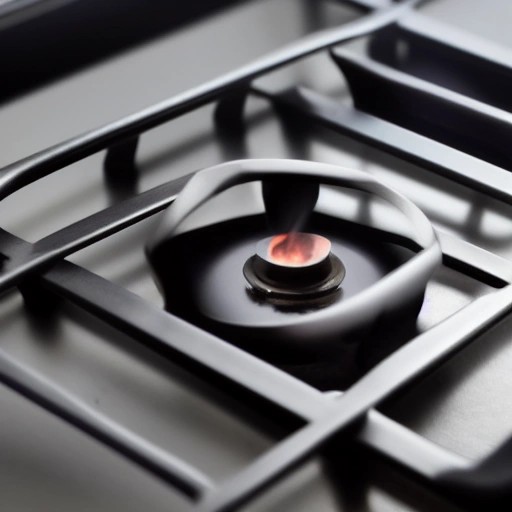
When you turn the knob, two things happen at the same time: gas flows out of the burner, and the igniter starts clicking (sparking). The spark should jump from the igniter to the burner cap, lighting the gas as it flows.
When the burner clicks but does not light, one of three things is wrong:
- Gas is not flowing (stuck valve or gas supply issue)
- The spark is not strong enough or not reaching the gas
- The gas and air are not mixing properly
The most common cause by far is number two – the spark is blocked or misdirected.
A safety reminder: If you smell gas while the burner is clicking, turn the knob to OFF immediately. Do not let the burner click for more than 5 seconds without lighting. Gas is flammable and can accumulate. Open a window to ventilate. If you smell gas strongly and the stove is off, leave your home and call your gas company from outside.
The First Test: Is Gas Actually Flowing?
Before you assume the igniter is the problem, confirm that gas is reaching the burner. This test takes 5 seconds.
How to check for gas flow:
- Turn the burner knob to the “light” or “high” position.
- Listen carefully. Do you hear a hissing sound? That is gas flowing.
- If you hear hissing but no flame, gas is flowing. The problem is the spark.
- If you hear no hissing, the gas valve may be stuck or your gas supply may be off.
Check other burners: Try lighting a different burner on your stove. If other burners work, the problem is isolated to that one burner. If no burners work, check that your gas supply is turned on (look for the shut-off valve behind the stove or at your gas meter).
Fix #1: Clean the Igniter (The Most Common Fix)
The igniter is a small ceramic or metal piece near the burner. It looks like a little white nub with a metal tip. Food grease, oil splatters, or even a thin film of soap residue can coat the igniter and block the spark. Water from cleaning is another common culprit.
Step-by-step guide to cleaning the igniter:
- Turn off all burner knobs and make sure the stove is cool.
- Remove the burner cap and burner head (the metal pieces that sit over the igniter).
- Locate the igniter. It is a small, pencil-eraser-sized piece near where the gas comes out.
- Use a dry toothbrush to gently scrub the igniter tip. Do not use anything wet – moisture makes it worse.
- Use a toothpick or paperclip to gently scrape any hardened gunk around the base of the igniter.
- Wipe away any loose debris with a dry paper towel.
- Reassemble the burner and test it.
“Never clean a hot igniter. Let the stove cool completely. Also, never use wet cloths or spray cleaners near the igniter – moisture is one of the main reasons they stop working.”
Fix #2: Dry the Burner (Moisture Is the Enemy)
If you just cleaned your stove, wiped down the cooktop, or spilled water while cooking, moisture may be the problem. Water around the igniter or on the burner cap prevents the spark from jumping. The spark travels through the water instead of through the air, and it never reaches the gas.
How to dry a wet burner:
- Turn off all knobs.
- Remove the burner cap and burner head.
- Use a dry paper towel to wipe every surface – the igniter, the burner head, the cap, and the area around them.
- Use a hair dryer on low heat for 30 seconds to evaporate hidden moisture.
- Let everything air dry for 10 minutes.
- Reassemble and try again.
Prevention: After cleaning your stovetop, always dry the burner areas thoroughly. Better yet, remove the burner caps and heads before using spray cleaners. Clean them separately in the sink, dry them completely, and only put them back when they are bone dry.
Fix #3: Align the Burner Cap and Head
The burner cap (the flat disc that sits on top) and the burner head (the ring with small holes underneath) must be seated correctly. If the cap is crooked, upside down, or off-center, the gas will not flow properly, and the spark will not ignite it.
How to check alignment:
- Remove the burner cap. Look at it. Is it warped or damaged?
- Place the cap back on. It should sit flat and level. Spin it gently – it should not wobble.
- The burner head (the part under the cap) should fit snugly over the gas tube.
- Look at the small holes around the edge of the burner head. Are they clogged? (See Fix #4)
- Make sure the cap is the right size for that burner. Some stoves have different sized caps for different burners.
The jiggle test: With the cap and head in place, gently wiggle them. They should not move much. If they feel loose, you may have a missing or damaged part.
Fix #4: Clean Clogged Burner Holes
The burner head has small holes around its circumference where gas comes out. If these holes are clogged with food, grease, or rust, gas cannot flow freely. The little gas that escapes may not be enough to ignite, or it may come out in the wrong direction.
How to clean burner holes:
- Remove the burner head (the ring-shaped piece under the cap).
- Look at the small holes. Are any of them blocked?
- Use a paperclip, a sewing needle, or a small wire to poke through each hole.
- Do not use a toothpick – wood can break off inside the hole.
- After poking, shake out any debris.
- Rinse the burner head with warm water (if removable), then dry completely.
- Reinstall and test.
For stubborn clogs: Soak the burner head in a bowl of warm water with a few drops of dish soap for 15 minutes. Then scrub with an old toothbrush and poke the holes clean.
Comparison Table: Clicking Burner Problems and Solutions
| Sound or Symptom | What Is Happening | Most Likely Cause | Fix Time | Difficulty |
|---|---|---|---|---|
| Clicking, no flame, smells gas | Spark is present but gas not igniting | Dirty or wet igniter | 2 minutes | Easy |
| Clicking, no flame, no gas smell | Gas is not flowing | Stuck valve or gas supply off | 5 minutes (check valve) | Easy |
| Weak or intermittent clicking | Spark is weak or inconsistent | Corroded or damaged igniter | 30 minutes (replacement) | Medium |
| Clicking continues after flame lights | Moisture or debris on igniter | Water or grease on igniter | 2 minutes | Easy |
| Clicking stops but no flame | Igniter works but gas not reaching | Clogged burner holes | 10 minutes | Easy |
| Burner lights but flame is yellow or uneven | Poor air-gas mixture | Clogged air intake or burner holes | 10 minutes | Easy |
| All burners click but none light | Gas supply problem | Main gas valve off or gas outage | 2 minutes | Easy |
Fix #5: The Wet Knob Problem (For Sealed Burners)
Some modern gas stoves have sealed burners with no removable caps. On these models, moisture can get trapped inside the burner assembly. You may hear clicking but see no flame, even after cleaning the surface.
How to dry a sealed burner:
- Turn off all knobs.
- Use a hair dryer on low heat. Aim it directly at the burner for 2-3 minutes.
- Move the hair dryer around the entire burner area.
- Wait 10 minutes.
- Try lighting the burner again.
If this works, the problem was moisture. In the future, avoid spraying cleaner directly onto sealed burners. Spray cleaner onto a cloth first, then wipe.
Fix #6: The Spark Module (When All Else Fails)
If you have tried everything – cleaning the igniter, drying the burner, checking alignment, cleaning the holes – and the burner still clicks but will not light, the problem may be the spark module. This is the electronic component that sends voltage to the igniters.
Signs of a failing spark module:
- All burners click weakly or intermittently
- The clicking sound is slower or uneven than normal
- Some burners work but others do not, even after cleaning
- You see no spark at all (look in a dark room – you should see a tiny blue spark)
What to do: Replacing a spark module is a moderate DIY job. You need your stove’s model number and a replacement module ($30-60 online). If you are not comfortable working with electrical parts, call an appliance repair technician. Cost is typically $100-150 including labor.
When to Call a Professional
Some problems should not be DIY fixes. Call a technician if:
- You smell gas strongly and the stove is off – leave your home and call your gas company immediately.
- You have tried all the fixes above and the problem persists.
- The igniter is physically cracked or broken.
- You see sparks jumping to places other than the igniter (like the metal stove body).
- Your stove is less than a year old (still under warranty – do not void it).
Never do this: Do not try to light a gas burner with a match or lighter while the igniter is clicking. The gas could ignite explosively. If the igniter is clicking, turn off the gas, wait 5 minutes for the gas to clear, then try lighting with a long match if absolutely necessary.
Chart: Clicking Burner Problems by Frequency
This chart shows how often each cause appears in real-world service calls.
The chart shows that dirty or wet igniters account for nearly half of all clicking burner problems. Moisture and clogged holes make up most of the rest. These are all simple cleaning fixes that take minutes.
Preventing Future Clicking Problems
Once you have fixed the problem, keep it from coming back with these simple habits.
Dry after cleaning: Every time you clean your stovetop, remove the burner caps and dry them separately. Use a dry cloth on the igniters. Do not reassemble until everything is completely dry.
Cover pots when cooking: Boiling water splatters onto burners and igniters. Use lids on pots to reduce splatter.
Clean spills immediately: When something boils over, turn off the burner. Once cool, wipe up the spill. Dried sugar or sauce is much harder to remove later.
Monthly burner check: Once a month, remove all burner caps and heads. Wipe everything down. Poke the burner holes with a paperclip. This takes 10 minutes and prevents 90 percent of ignition problems.
Use the right cleaner: Do not spray cleaner directly onto the stovetop near the igniters. Spray cleaner onto a cloth first, then wipe.
Frequently Asked Questions About Clicking Stove Burners
Q: Is it safe to let my gas stove keep clicking?
A: No. If the burner does not light within 5 seconds, turn the knob off. Gas is building up while it clicks. Let the gas dissipate for 1-2 minutes before trying again.
Q: Why does my stove click even when the knob is off?
A: Moisture or debris on the igniter can cause it to spark continuously. Unplug the stove or flip the circuit breaker to stop it. Then clean and dry the igniters thoroughly.
Q: Can I use a lighter to light a gas burner that is clicking?
A: Not recommended. Turn the gas off first, wait for the gas to clear, then try lighting with a long match or lighter. Better to fix the igniter.
Q: Why does my burner click but only light after several seconds?
A: The igniter may be partially dirty or the gas flow may be slow. Clean the igniter and check for clogged burner holes. If the problem persists, the gas valve may be slow to open.
Q: How do I clean the igniter without breaking it?
A: Use a dry toothbrush or a soft-bristled brush. Do not use steel wool, abrasive pads, or metal scrapers – they can crack the ceramic. Do not get the igniter wet if you can avoid it.
Q: One of my burners stopped clicking entirely. What happened?
A: The igniter may be broken, or the wire connecting it to the spark module may be loose or damaged. This usually requires professional repair.
Q: Can a power outage affect my gas stove igniter?
A: Yes. Many gas stoves use electricity to create the spark. In a power outage, you can light the burner manually with a long match or lighter. Turn the knob to low, hold a long match near the burner, and light it carefully.
Final Thoughts: Clicking Means Trying – Help It Succeed
A gas burner that clicks but will not light is frustrating, but it is rarely a serious problem. The clicking sound means your stove is trying to work. It just needs a little help. Start with the simplest fix – clean and dry the igniter with a toothbrush. Check that the burner cap is seated correctly. Poke out any clogged holes. In almost every case, your burner will light on the first try. And if it does not, you now know exactly when to call a professional. Stay safe, keep it clean, and happy cooking.
Have you ever had a gas burner that refused to light no matter what you tried? What finally fixed it? Share your story in the comments – your tip might help someone else.
References: