Freezer Not Freezing Food Properly Solutions: A Complete Guide to Saving Your Food
You reach into your freezer to grab a bag of frozen veggies for dinner, and instead of rock-hard individual pieces, you find a sad, mushy clump that bends instead of breaks.
🟡 TL;DR
A freezer that runs but does not freeze properly usually has one of five problems: dirty condenser coils, a bad door gasket, overpacking that blocks airflow, a failing start relay, or low refrigerant. Clean the coils first – this solves nearly half of all freezing problems. Check that the door seals tightly by closing it on a dollar bill; if the bill slips out easily, replace the gasket. Do not wait – partially frozen food can make you sick.
🔵 Key Takeaways
- Clean the condenser coils – Dusty coils make the compressor work too hard and lose freezing power.
- Check the door seal – A loose gasket lets warm air in and cold air out.
- Do not overpack – Air needs to circulate around food to keep it frozen.
- Listen for the compressor – If it runs constantly but food is soft, you may have low refrigerant.
- Act fast – Food above 40°F for more than 2 hours should be thrown out.
The Real Reasons Your Freezer Is Not Freezing and How to Fix Them
You notice it slowly. Ice cream that used to be scoopable is now soupy. Frozen meat feels flexible instead of solid. Frost builds up on the walls, but the food in the middle is soft. Your freezer is running – you can hear the hum – but it is not doing its only job: keeping things frozen.
This problem is frustrating and potentially dangerous. A freezer that cannot maintain 0°F (-18°C) allows bacteria to grow on food that should be preserved. The good news is that most freezing problems have simple fixes. You do not need to be an appliance repair expert. You just need to know what to look for.
“The number one cause of poor freezing is simply dirty condenser coils. Most homeowners have never cleaned them. A layer of dust acts like a blanket, trapping heat and making the compressor struggle.”
How a Freezer Should Work vs. What Goes Wrong
Your freezer works by removing heat from the inside and releasing it outside. The compressor pumps refrigerant through coils. Inside the freezer, the refrigerant expands and gets very cold, absorbing heat. Outside (under or behind the unit), the refrigerant compresses and releases that heat into your kitchen.
When something blocks this heat exchange – dust on the coils, a bad fan, low refrigerant – the freezer cannot remove heat fast enough. The temperature rises. Food thaws. And you end up with mushy vegetables and refrozen meat crystals.
The First Test: Is Your Freezer Actually Struggling?
Before you start taking things apart, confirm the problem with a simple test. Do not trust the built-in thermometer – they are often wrong.
Step-by-step guide to testing your freezer temperature:
- Place a standalone appliance thermometer in the center of your freezer.
- Leave the door closed for at least 4 hours (overnight is better).
- Check the temperature. It should be 0°F (-18°C) or lower.
- If the temperature is above 10°F (-12°C), your freezer is failing.
The ice cube test: Place a cup of water in the freezer. Once frozen solid, place a coin on top of the ice. Check it the next day. If the coin has sunk into the ice, your freezer thawed and refroze. This means food inside may have partially thawed and is no longer safe.
A safety reminder: Refreezing thawed food is risky. If meat, poultry, or seafood has been above 40°F for more than 2 hours, throw it away. When in doubt, throw it out. Food poisoning is not worth saving twenty dollars of chicken.
Fix #1: Clean the Condenser Coils (The Most Overlooked Fix)
Dirty condenser coils are the single most common cause of poor freezing. These coils are usually located on the back of the freezer (on older models) or underneath behind a kick plate (on newer models). They look like a radiator with thin metal fins.
Over months and years, dust, pet hair, and grease collect on these coils. This layer of dirt acts like insulation. The heat from the compressor cannot escape. The compressor runs longer and harder, but the inside never gets cold enough.
How to clean condenser coils:
- Unplug the freezer. Safety first – working around electrical components requires the unit to be off.
- Locate the coils. Check your manual or look on the back or bottom front.
- If coils are on the back, pull the freezer away from the wall. Use a vacuum with a brush attachment to remove dust.
- If coils are underneath, remove the front kick plate (usually held by a few screws). Vacuum thoroughly.
- Use a coil cleaning brush (long, skinny bristles) to get between the fins.
- Vacuum the floor underneath the freezer as well.
- Plug the freezer back in and wait 4 hours. Check the temperature again.
“Cleaning condenser coils once a year can improve freezing efficiency by 30 percent and extend the life of your freezer by years. Most people never do it.”
Fix #2: Check the Door Gasket (Seal)
The door gasket is the rubber seal that runs around the inside of the freezer door. When this seal gets hard, cracked, or dirty, cold air escapes and warm air enters. Your freezer runs constantly trying to catch up, but it never gets there.
How to test your door gasket:
- Close the freezer door on a dollar bill (or a piece of paper).
- Try to pull the bill out. You should feel resistance.
- Repeat this test in 4-5 spots around the door (corners and middle of each side).
- If the bill slides out easily anywhere, the gasket is not sealing.
How to clean or replace a gasket:
- Clean it first: Mix warm water and mild dish soap. Wipe the gasket thoroughly. Also wipe the mating surface on the freezer body where the gasket touches. Dried food and grease can prevent a seal.
- Warm it up: If the gasket is stiff but not cracked, use a hair dryer on low heat to soften it. Gently stretch it back into shape.
- Replace it: If the gasket is cracked, torn, or still leaks after cleaning, order a replacement. Search for your freezer model number + “door gasket.” Cost is usually $50-100. Replacement takes about 30 minutes.
A temporary fix: If you need a seal right now, apply a thin layer of petroleum jelly to the gasket. This helps it stick temporarily. But plan to replace the gasket soon.
Fix #3: Stop Overpacking Your Freezer
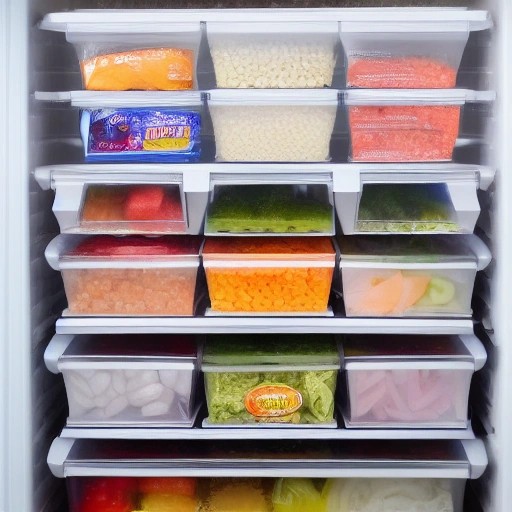
A freezer needs air to circulate. When you cram it completely full, cold air cannot move around the food. The food in the center or against the back wall may stay cold, but food near the door or on top stays warmer.
The 80 percent rule: Fill your freezer no more than 80 percent full. Leave space between items for air to flow. Do not stack things against the back wall – that is where cold air enters, and blocking it reduces airflow to the whole unit.
What to do right now:
- Take everything out. Yes, everything.
- Group items by type (meat, vegetables, prepared meals, ice cream).
- Put older items in the front and sides. Newer items go in the back and center.
- Leave at least 1-2 inches between every item.
- If you have too much food, consider buying a second small freezer or using a cooler with ice for overflow.
Comparison Table: Freezer Problems and Solutions
| Problem | Signs | Most Likely Cause | Fix Difficulty | Cost |
|---|---|---|---|---|
| Food soft but freezer runs constantly | Compressor never shuts off, high electric bill | Dirty condenser coils | Easy | $0 (cleaning) |
| Frost buildup on walls but food soft | Thick frost, especially near door | Bad door gasket or door left open | Easy to medium | $50-100 for gasket |
| Freezer runs but not cold enough | Food partially frozen, ice cream soupy | Low refrigerant or failing compressor | Hard (call pro) | $200-600 |
| Freezer cycles on and off rapidly | Clicking sound every few minutes | Bad start relay or overload | Medium (DIY possible) | $15-40 for part |
| One section is cold, another is warm | Food near top is soft, bottom is frozen | Blocked air vents (overpacking) | Easy | $0 (rearrange) |
| Freezer is cold but fridge is warm (if combo unit) | Freezer works, fridge section is warm | Failed damper or evaporator fan | Medium | $50-150 |
Fix #4: Listen for the Compressor and Fans
Your freezer makes different sounds when it is working correctly. Learning these sounds helps you diagnose problems before food spoils.
Normal sounds:
- A low hum (the compressor running)
- A gentle whooshing (the evaporator fan moving cold air)
- A click every few hours (the compressor cycling off)
Bad sounds:
- Clicking every 2-3 minutes – The compressor tries to start, fails, and tries again. This is often a bad start relay.
- Loud buzzing or grinding – The evaporator fan may be hitting ice or failing.
- Silence when it should be running – The compressor may be dead or the thermostat failed.
How to check the evaporator fan: Open the freezer door. There should be a panel on the back wall or ceiling. Put your ear against it. You should hear a fan running. If you hear nothing, the fan may be frozen or dead.
How to check the start relay: This small part plugs into the side of the compressor (the black dome at the bottom back). Unplug the freezer. Remove the relay. Shake it. If you hear rattling inside, it is bad. Replacement relays cost $15-40 and are easy to install.
Fix #5: Low Refrigerant (Call a Professional)
Refrigerant is the chemical inside your freezer that actually gets cold. In a sealed system, refrigerant never needs to be refilled. If your freezer has low refrigerant, it has a leak. This is not a DIY fix.
Signs of low refrigerant:
- The compressor runs constantly but the freezer never gets cold
- The evaporator coils (inside the freezer) have frost only on the first few inches
- You hear a hissing sound (the leak)
- Your freezer is more than 10 years old
What to do: Call an appliance repair technician. They will locate the leak, repair it, and recharge the system. Cost is typically $200-600. For freezers over 10 years old, replacement is usually cheaper than repair.
Chart: Freezer Temperature Over Time After Common Fixes
This chart shows how freezer temperature recovers after applying different solutions.
The chart shows that cleaning the condenser coils or replacing a faulty start relay can restore proper freezing within 12-24 hours. Without intervention, the freezer continues to warm, and food eventually spoils.
Freezer-Specific Problems for Combo Units (Refrigerator-Freezer)
If you have a refrigerator with a top or bottom freezer, the two sections share components. Problems in one section affect the other.
The Freezer Is Cold, But the Fridge Is Warm
This is a common problem. The freezer works fine, but the refrigerator section is too warm. The cause is usually a failed damper (a door that lets cold air from the freezer into the fridge) or a frozen evaporator fan.
Quick fix: Unplug the unit for 30 minutes. This can melt ice blocking the damper or fan. Plug it back in. Wait 4 hours. If the fridge is still warm, call a repair technician.
The Freezer Is Frosty but Food Is Soft
Thick frost on the walls but soft food inside means your automatic defrost system has failed. Ice builds up on the evaporator coils, blocking airflow. The fan cannot push cold air through the ice.
Signs of defrost failure:
- Thick frost on the back wall of the freezer
- The compressor runs constantly
- Food near the door is soft, but food against the back is frozen solid
The fix: This requires replacing the defrost heater, defrost thermostat, or defrost timer. It is a medium-difficulty DIY job. Search YouTube for your model number + “defrost repair.” Or call a professional (cost $150-300).
How to Save Food When Your Freezer Is Failing
If your freezer is not freezing properly, you need to act fast. Here is what to do immediately:
Step 1 – Check temperatures: Use an appliance thermometer. If the temperature is above 40°F, the food has been in the danger zone.
Step 2 – Know what to keep and what to throw:
| Food Type | Temperature Above 40°F for 2+ Hours | Temperature Above 40°F for 4+ Hours |
|---|---|---|
| Meat, poultry, seafood | Borderline – cook immediately | Throw away |
| Ice cream, frozen desserts | Throw away (texture ruined) | Throw away |
| Vegetables | Refreeze only if still icy | Throw away |
| Fruits | Safe to refreeze (texture may suffer) | Safe to refreeze |
| Prepared meals | Cook immediately | Throw away |
Step 3 – Move food to a working freezer: Ask a neighbor or friend for space. Buy bags of ice and put food in a cooler. Use dry ice if available (handle with thick gloves).
Step 4 – Do not taste test: If you are unsure whether food is safe, do not taste it to check. Harmful bacteria does not always change the taste or smell of food.
Frequently Asked Questions About Freezer Problems
Q: Why is my freezer running but not freezing?
A: Most likely dirty condenser coils or a bad door gasket. Clean the coils first. If that does not work, check the door seal with a dollar bill test.
Q: How long does it take a freezer to get cold after cleaning coils?
A: About 4-6 hours to reach freezing temperatures. Give it 24 hours to fully stabilize. Check the temperature with a standalone thermometer.
Q: Can a freezer be too full to freeze properly?
A: Yes. Overpacking blocks airflow. Leave at least 20 percent empty space and 1-2 inches between items. Do not block the vents on the back wall.
Q: Is it worth repairing a freezer that is not freezing?
A: Use the 7-year rule. If your freezer is under 7 years old, repair is usually worth it. Over 7 years, replacement is often cheaper. Over 10 years, definitely replace.
Q: Why does my freezer freeze food on the bottom but not the top?
A: The evaporator fan may be failing, or the air vents are blocked by food. Unplug the freezer, remove everything, check for ice blocking the vents, and clean the fan area.
Q: How often should I defrost a manual-defrost freezer?
A: When frost builds up to 1/4 inch thick. Thicker frost acts as insulation and makes the freezer work harder. Defrosting every 3-6 months is typical.
Q: Can a power surge cause freezing problems?
A: Yes. Surges can damage the control board, compressor relay, or thermostat. Use a surge protector on your freezer. Unplug it during severe thunderstorms.
Final Thoughts: Act Quickly, Fix Simply, Stay Safe
Your freezer is one of the hardest-working appliances in your kitchen. It runs 24 hours a day, 365 days a year. When it starts to fail, you notice immediately because your food suffers. The good news is that most freezing problems are simple to diagnose and cheap to fix. Start with the condenser coils – that alone solves nearly half of all cases. Check the door seal. Give your freezer room to breathe. And when the problem is beyond your skills, call a professional quickly. Your frozen food – and your wallet – will thank you.
Have you ever lost a whole freezer full of food? What was the cause? Share your story in the comments – and tell us what you wish you had known before it happened.
References: