Essential Kitchen Safety Items Every Home Needs: A Practical Guide
You are flipping pancakes on a Sunday morning, the smoke alarm starts blaring because of a little steam, and you realize — between the beeping and the reaching for a hot pan — that you have no idea where your fire extinguisher is or if it even works.
TL;DR: Kitchen safety is not complicated, but it requires the right tools in the right places. Every home needs working smoke and carbon monoxide detectors, a fire extinguisher rated for kitchen fires, a fire blanket for grease fires, a well-stocked first aid kit, non-slip mats to prevent falls, oven mitts that actually protect, childproofing items if little ones are around, and a food thermometer to prevent foodborne illness. Test your detectors monthly, keep extinguishers accessible (not buried under the sink), and replace anything expired. These items cost less than 150 dollars total but can save your home, your health, or your life.
The Real Truth About Kitchen Safety
The kitchen is the heart of the home — and also the most accident-prone room in the house. Between hot surfaces, sharp knives, slippery floors, and open flames, things can go wrong fast. According to safety experts, the kitchen fire is the most common household fire in the United States, with grease fires at the top of the list.
But here is the good news: most kitchen accidents are preventable. You just need the right safety items on hand — and the knowledge to use them.
Think of kitchen safety gear like insurance. You hope you never need it. But if you do, nothing else will do.
The Essential Kitchen Safety Items
1. Smoke Detector (Placed Correctly)
A smoke detector is your first line of defense against fire. But placement matters — especially in the kitchen.
What you need: A working smoke detector within 10 to 20 feet of cooking appliances — but not so close that normal cooking steam or smoke sets it off constantly. Install one on every floor of your home, including near sleeping areas.
Maintenance checklist:
- Test the alarm monthly using the test button
- Replace batteries twice a year (pick a holiday — New Year’s and Fourth of July work well)
- Replace the entire unit every 10 years
Safety reminder: If your smoke detector goes off while cooking, do not disable it. Open a window, turn on a fan, or wave a towel near the detector — not a broom (that can damage it).
2. Carbon Monoxide Detector
Carbon monoxide is invisible, odorless, and deadly. It can come from gas stoves, ovens, or furnaces that are not venting properly.
What you need: A carbon monoxide detector on every floor of your home, especially near sleeping areas. Combination smoke/CO detectors are available and save space.
Why this matters: CO poisoning symptoms — headache, dizziness, nausea — mimic the flu. Without a detector, you might not realize anything is wrong until it is too late.
Maintenance: Same as smoke detectors — test monthly, replace batteries twice a year.
3. Fire Extinguisher (ABC Rated)
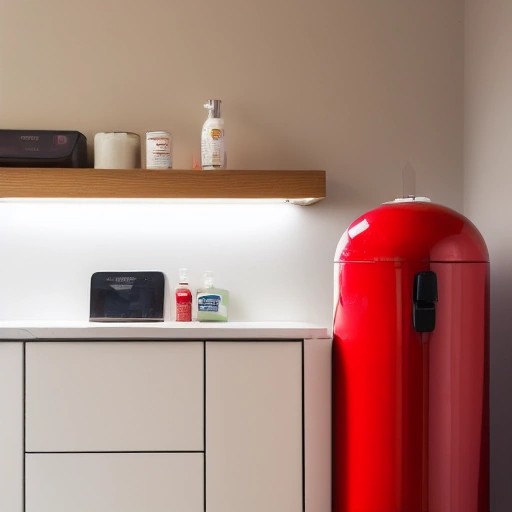
A fire extinguisher is not optional. According to safety experts, you should keep one in your kitchen and another along the route to each exit of your home.
What you need: An extinguisher rated for Class A, B, and C fires:
- Class A — ordinary combustibles (wood, paper, cloth)
- Class B — flammable liquids (grease, oil, gasoline)
- Class C — electrical fires (appliances, cords)
Where to place it: This is critical. Do not store your extinguisher under the sink or right next to the stove. If a fire starts on your stovetop, that location becomes inaccessible. Mount it near the kitchen entrance or on a wall that is easy to reach but not in the direct line of a potential fire.
The PASS method: Every adult in your home should know how to use an extinguisher:
- Pull the pin
- Aim at the base of the fire (not the flames)
- Squeeze the handle
- Sweep side to side
Safety reminder: Extinguishers are for small, contained fires only. If the fire is spreading or larger than a small trash can, get everyone out and call 911.
4. Fire Blanket
A fire blanket is an underrated but essential kitchen safety item — especially for grease fires, which water makes worse.
What you need: A fire blanket made of fire-resistant material (fiberglass or wool) that you can throw over a small pan fire to smother the flames.
Why a blanket beats an extinguisher for grease fires: Grease fires cannot be put out with water — it causes the grease to splatter and spread. An extinguisher can work, but the force of the spray can also splash burning oil. A blanket smothers the fire gently and effectively.
Where to store it: Hang it on a hook near the kitchen entrance or on a wall away from the stove. Not under the sink.
5. First Aid Kit (Burns and Cuts Edition)
Kitchen injuries are usually minor — cuts from knives, burns from hot pans, or scrapes from falling items. But minor injuries need treatment too.
What your kitchen first aid kit should include:
- Assorted bandages (fabric, not plastic — they stick better)
- Sterile gauze pads and medical tape
- Antiseptic wipes
- Burn cream or gel (aloe-based is good)
- Antibiotic ointment (like Neosporin)
- Scissors and tweezers
- Instant cold packs
- Pain relievers (ibuprofen, acetaminophen)
- Emergency blanket (for shock)
Where to keep it: In a cabinet that is easy to reach but away from heat and moisture. Not right next to the stove.
Pro tip: Check your first aid kit twice a year. Replace used or expired items immediately.
6. Oven Mitts and Pot Holders (Quality Matters)
Burns are the most common kitchen injury. Cheap, thin oven mitts are almost useless. You need real protection.
What you need: Heat-resistant oven mitts that cover your entire hand and forearm (not just wrist-length). Look for:
- Silicone or heavy quilted cotton
- Temperature rating (at least 450°F)
- Good grip texture
- One pair for each adult who cooks
Why cheap mitts fail: Thin mitts transmit heat quickly. When you grab a 400°F cast iron skillet, you will feel it within seconds. Quality mitts give you time.
Safety reminder: Keep oven mitts and pot holders at least 3 feet away from the stove when not in use. They are flammable.
7. Non-Slip Kitchen Mats
Slips and falls are surprisingly common in kitchens — water on the floor, a bit of spilled oil, or a dropped ice cube can send you down fast.
What you need: Non-slip mats placed in front of:
- The sink (wet floors are slippery)
- The stove (splatters happen)
- The refrigerator (condensation drips)
What to look for: Rubber or vinyl mats with drainage holes (so water does not pool) and a beveled edge (so you do not trip on the mat itself).
8. Knife Safety Tools
Sharp knives are safer than dull knives because they require less force and slip less. But even sharp knives need safe storage.
What you need:
- Knife block or magnetic strip — keeps knives organized and prevents accidental cuts from reaching into a drawer
- Knife sharpener — a pull-through sharpener or honing steel keeps blades in good condition
- Cutting board with non-slip surface — prevents the board from sliding while you chop
Why this matters: Reaching into a drawer full of loose knives is a trip to the emergency room waiting to happen. And a dull knife is more dangerous than a sharp one — it slips off food and onto your fingers.
9. Food Thermometer
Foodborne illness is a safety issue that is often overlooked. Undercooked chicken, pork, or fish can make you seriously sick.
What you need: An instant-read digital thermometer. Not the old dial kind — those are slow and inaccurate.
Safe internal temperatures:
- Chicken, turkey, other poultry: 165°F
- Ground meat (beef, pork, lamb): 160°F
- Beef, pork, lamb (steaks, chops, roasts): 145°F (then rest 3 minutes)
- Fish: 145°F
Safety reminder: Always wash your thermometer probe with hot soapy water between uses — especially after checking raw meat.
10. Childproofing Items (If Kids Are in Your Home)
If children live in or visit your home, your kitchen needs extra safety measures.
What you need:
- Cabinet locks — for under-sink cabinets (cleaning supplies) and any cabinet with sharp objects
- Stove knob covers — prevents kids from turning on burners
- Outlet covers — for any electrical outlet within reach
- Appliance latches — keeps refrigerator, oven, and dishwasher doors from being opened by small children
Where to focus: The under-sink cabinet is the most dangerous — that is where cleaning chemicals are usually stored.
11. Step Stool with Handrail
Falls are a leading cause of home injury. Reaching for high shelves without proper support is risky.
What you need: A sturdy step stool with a handrail, not just a folding step stool. The handrail gives you something to hold while reaching.
Why this matters: A standard folding step stool helps you reach higher, but it does nothing to stabilize you. When you stretch to grab something, you can tip. A handrail prevents that.
12. Grease Splatter Guard
Hot oil splatters cause painful burns. A splatter guard sits on top of your pan and contains the oil.
What you need: A fine-mesh metal splatter guard that fits your skillet sizes (usually 10 to 12 inches).
Bonus: Splatter guards also keep your stovetop cleaner. Less grease on the stove means less fire risk.
13. Emergency Contact List (Physical Copy)
We all rely on our phones for contacts. But if your phone is dead, lost, or locked in a burning building, you need a backup.
What you need: A physical list posted on the refrigerator or inside a cabinet door with:
- 911 (obvious, but write it anyway)
- Poison Control: 1-800-222-1222
- Your local fire department non-emergency number
- Your doctor’s office number
- A nearby relative or neighbor
Pro tip: Laminate the list so it does not get ruined by kitchen moisture.
14. Flashlight with Extra Batteries
Power outages happen. Storms, grid issues, or a tripped breaker can leave you in the dark. And using candles in a kitchen is asking for a fire.
What you need: A reliable LED flashlight stored in a kitchen drawer or on a high shelf. Keep extra batteries with it — or buy a hand-crank or rechargeable model.
Why not your phone? Your phone flashlight drains the battery. If the power is out for hours, you need that battery for communication.
15. Emergency Preparedness Kit (To-Go Bag)
In a serious emergency — fire, earthquake, flood — you may need to leave quickly. Having a grab-and-go bag with essentials saves critical minutes.
What your kitchen-area emergency kit should include:
- Bottled water (at least 1 gallon per person per day, 3-day supply)
- Non-perishable food (granola bars, nuts, dried fruit)
- Manual can opener
- First aid kit (see above)
- Flashlight and extra batteries
- Battery-powered weather radio
- Copies of important documents (ID, insurance, medical info)
- Prescription medications (a few days’ supply)
- Phone power bank
Where to store it: In a closet near your kitchen or front door. Everyone in the household should know where it is.
Comparison Table: Kitchen Safety Essentials
| Item | Primary Purpose | Where to Keep | Cost Range | Check/Replace Frequency |
|---|---|---|---|---|
| Smoke detector | Fire detection | Within 10-20 ft of cooking area | 15-30 dollars | Test monthly; replace batteries 2x/year; unit every 10 years |
| CO detector | Gas leak detection | Near sleeping areas, each floor | 20-50 dollars | Same as smoke detector |
| Fire extinguisher (ABC) | Put out small fires | Kitchen entrance, near exits | 25-50 dollars | Check pressure monthly; replace after use |
| Fire blanket | Smother grease fires | Wall near kitchen entrance | 15-30 dollars | Inspect annually; replace after use |
| First aid kit | Treat minor injuries | Dry cabinet, accessible | 15-30 dollars | Check supplies 2x/year |
| Oven mitts | Burn protection | Drawer near stove | 10-25 dollars | Replace when worn or torn |
| Non-slip mats | Fall prevention | In front of sink, stove | 20-40 dollars | Inspect for wear yearly |
| Knife block | Safe knife storage | Counter or drawer | 15-40 dollars | N/A |
| Food thermometer | Food safety | Utensil drawer | 15-30 dollars | Test accuracy yearly |
| Childproofing | Child safety | On cabinets, stove, outlets | 10-30 dollars | Check locks monthly |
| Step stool | Fall prevention | Closet or pantry | 20-40 dollars | Inspect for stability yearly |
| Splatter guard | Burn prevention | Utensil drawer | 10-15 dollars | N/A |
| Emergency kit | Disaster preparedness | Closet near exit | 50-100 dollars | Check food/water 2x/year |
Chart: Kitchen Injury Causes and Prevention
Quick Safety Checklist (Print This)
Monthly:
- Test smoke and CO detectors (press the test button)
- Check fire extinguisher pressure gauge (needle should be in green)
- Inspect fire blanket for damage
- Check childproof locks for wear
Every 6 Months:
- Replace detector batteries (or when clocks change)
- Check first aid kit supplies and expiration dates
- Inspect oven mitts for holes or wear
- Rotate emergency food and water
Yearly:
- Replace smoke detectors older than 10 years
- Service or replace fire extinguisher if used or damaged
- Check step stool stability
- Deep clean stove hood vents (prevents grease buildup)
FAQ: Quick Answers About Kitchen Safety
What is the most common kitchen fire?
Grease fires are the most common kitchen fire. Never use water on a grease fire — it splashes and spreads the flames. Use a fire blanket or a Class B extinguisher.
Where should I NOT store my fire extinguisher?
Do not store it under the sink or right next to the stove. If a fire starts in those areas, you cannot reach the extinguisher. Mount it near the kitchen entrance.
How often should I replace my smoke detector batteries?
Twice a year. Pick two holidays — many people use New Year’s Day and Independence Day — and replace them then. Also replace the entire smoke detector every 10 years.
What is a fire blanket, and do I really need one?
A fire blanket is a sheet of fire-resistant material that smothers small fires. Yes, you need one — especially for grease fires. It sits flat on top of a burning pan, cutting off oxygen without splashing burning oil.
How do I treat a minor kitchen burn?
Run cool (not cold) water over the burn for 10-15 minutes. Do not use ice — it damages tissue. Apply burn cream or aloe, then cover with a sterile gauze. Seek medical help for large burns or burns on the face, hands, or feet.
What temperature should I cook chicken to?
Chicken should reach an internal temperature of 165°F measured with a food thermometer inserted into the thickest part of the meat.
How can I childproof my kitchen?
Install cabinet locks (especially under the sink), stove knob covers, and outlet covers. Keep sharp objects and hazardous items on high shelves out of reach. Never leave a child unattended near a hot stove.
What should I do if a fire starts in my oven?
Keep the oven door closed. Turn off the oven. The lack of oxygen will often suffocate the fire. If it does not go out, leave the house and call 911. Never open a hot oven door — the rush of air can fuel the flames.
The Bottom Line
Kitchen safety is not expensive or complicated. A smoke detector costs 20 dollars. A fire extinguisher is 30 dollars. A fire blanket is 20 dollars. A first aid kit is 20 dollars. For under 100 dollars, you can have the core essentials that protect your home and your family.
But buying the items is only half the job. Test your detectors monthly. Check extinguisher pressure regularly. Make sure everyone in your home knows where the safety items are and how to use them.
The best safety item is not a gadget — it is knowledge. Know where your shut-offs are. Know your emergency exits. Know the PASS method for extinguishers. And never leave cooking unattended. That single habit prevents more fires than any tool ever could.
Which kitchen safety item has saved you in a pinch? Share your thoughts in the comments.
References:
- AltaMed: Essential Safety Items for Your Home and Car
- Healthline: Home Safety Checklists (Kitchen Section)
- Lowe’s: Kitchen Safety Tips and Fire Prevention
- Conflingo: Fire Extinguisher and Fire Blanket Placement Guide
- HomeSpec: 7 Home Safety Essentials Everyone Should Have
- Hana Water Blog: 113 Essential Items Every Home Should Have
- St. John’s Sudanese: Top 10 Essential Kitchen Safety Items
- Leagan Realty: Essential Safety Devices Every Home Should Have