Why Does My Kitchen Always Feel Cluttered: Root Causes and Simple Solutions
You just spent an hour cleaning your kitchen, but somehow it already looks messy again – dishes on the counter, mail on the table, and that pile of stuff by the coffee maker that never seems to shrink.
🟡 TL;DR
A kitchen that always feels cluttered is not a sign that you are messy. It is a sign that your kitchen has too many items, too little storage, or the wrong systems for how you actually live. The root causes are almost always the same: counters used as dumping grounds, no designated “homes” for everyday items, too many gadgets, and not enough quick-reset habits. The solution is not more cleaning – it is reducing what you own and creating simple landing zones for daily clutter.
🔵 Key Takeaways
- Counters attract clutter – Flat surfaces are magnets for mail, keys, phones, and random items.
- Every item needs a home – If something does not have a dedicated spot, it will live on the counter.
- You own too much – The average kitchen has twice as many tools as are actually used.
- Clutter is visual noise – Even clean items look messy if they are visible.
- Small daily resets beat big weekly cleans – Five minutes each night prevents the mountain from forming.
The Real Reasons Your Kitchen Never Stays Clean and How to Fix Them
You clean the counters. You load the dishwasher. You sweep the floor. You feel proud. Then someone makes toast, and suddenly crumbs are everywhere. A package arrives and the box sits on the table. The mail comes in and spreads across the counter. By dinner time, your kitchen looks like you never touched it at all.
This is not a cleaning problem. It is a systems problem. Your kitchen is not designed to handle the way your family actually lives. The good news is that you do not need a renovation. You need to understand why clutter happens and build simple systems to stop it before it starts.
“Clutter is not an accident. It is the physical evidence of unmade decisions. Every item on your counter is something you decided not to put away – either because you did not have time or because you did not know where it belongs.”
How Clutter Takes Over a Kitchen
Think of your kitchen like a sink. Water comes in from many faucets – mail, groceries, kids’ backpacks, work papers, phone chargers, random items from other rooms. If the drain is blocked (no designated homes for these items), the sink fills up. The counters fill up. The table fills up. And no amount of wiping down will fix the problem until you unblock the drain.
Most people try to solve kitchen clutter by cleaning harder. They wipe and organize and shuffle piles from one spot to another. But the clutter always returns because the inflow of stuff never stops. The real solution is to create a clear path for every type of item that enters your kitchen.
A mindset shift: A clean kitchen is not one where nothing is out. A clean kitchen is one where everything that is out has a reason to be out – and you can put it away in under 60 seconds.
The Hidden Culprits of Kitchen Clutter
Before you can fix the problem, you need to see it clearly. Walk into your kitchen right now and look with fresh eyes. What do you see that is not about cooking or eating?
The five biggest clutter magnets in any kitchen:
- The catch-all counter – Usually the counter nearest the door. Keys, mail, sunglasses, loose change, and random receipts all land here.
- The coffee station – Mugs, spoons, coffee bags, sweeteners, and creamers spread out over time.
- The appliance graveyard – Toaster, air fryer, stand mixer, blender, food processor – all fighting for counter space even when used once a week.
- The paper pile – School forms, takeout menus, coupons, magazines, and junk mail stacked near the phone or tablet.
- The mystery zone – The area where things go that have no other home. Batteries, tape, scissors, a hammer, a lost sock.
“Walk through any kitchen and you will find at least three items that belong in another room. Keys belong by the door. Mail belongs at a desk. Phones belong on a charger. The kitchen is not a storage unit.”
Fix #1: Stop Using Your Counters as Storage
Your counters are workspaces, not shelves. Every item that lives on your counter makes the whole kitchen feel smaller and messier. The goal is to have only three types of items on your counters:
- Daily-use appliances (coffee maker, maybe a toaster)
- Daily-use cooking tools (knife block, salt and pepper)
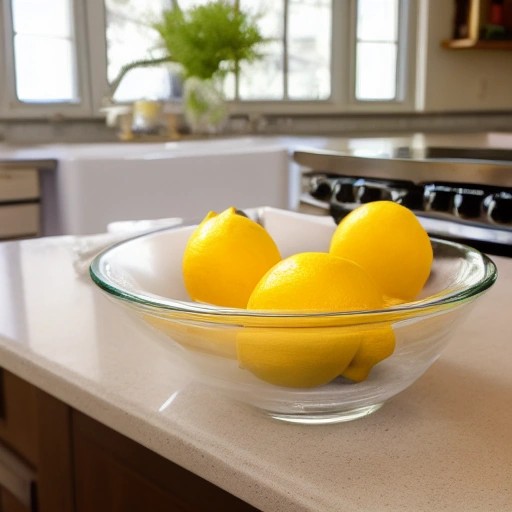
- Decor (one small plant or bowl of fruit – not ten things)
Everything else needs a home inside a cabinet, drawer, or pantry.
The 30-day counter test: Put every countertop appliance and decorative item into a box. For the next 30 days, only take out what you actually use. After 30 days, anything still in the box either gets donated or finds a permanent home inside a cabinet. You will be shocked how little you actually need on your counters.
Fix #2: Create Landing Zones for Daily Clutter
You cannot stop the inflow of stuff. Mail will come. Kids will drop backpacks. You will walk in with keys and sunglasses. The key is to create designated landing zones for these items so they do not spread across the kitchen.
Where to put landing zones:
- Near the kitchen entrance: A small bowl or tray for keys, wallet, and sunglasses.
- Near the phone charging station: A small bin for mail that needs action (bills, school forms). Another bin for recycling (junk mail).
- Near the coffee maker: A tray that contains everything for coffee – mugs, pods or grounds, spoons, sweeteners. This keeps the mess contained to one tray.
- Near the trash can: A small recycling bin for paper. Open mail over this bin so junk mail goes straight into recycling.
“A $5 tray from a discount store can eliminate 80 percent of counter clutter. The tray creates a visual boundary. Items inside the tray look intentional. Items outside the tray look messy.”
Fix #3: Declutter Your Kitchen Tools
The average kitchen contains twice as many tools as are actually used. You have three spatulas but only use one. You have a garlic press that has not been touched in years. You have a waffle iron, a panini press, and a yogurt maker that seemed like good ideas at the time.
Each unused tool takes up space. Each unused tool makes it harder to find the tools you actually need. And when cabinets are full of unused items, things start piling up on the counters.
The one-year rule for kitchen tools:
Go through every cabinet and drawer. Pull out any tool you have not used in the past year. Put it in a box. Seal the box. Write the date on it. If you have not opened the box to retrieve something after six months, donate the entire box without looking inside.
What to keep – the 80/20 rule: You use 20 percent of your kitchen tools for 80 percent of your cooking. That 20 percent includes:
- One good chef’s knife
- One cutting board
- One spatula
- One wooden spoon
- One set of measuring cups and spoons
- One mixing bowl
- One frying pan
- One saucepan
- One baking sheet
Everything else is nice to have – but not essential. If your kitchen feels cluttered, start with this core set and add back only what you truly miss.
Comparison Table: Clutter Sources and Solutions
| Clutter Source | Why It Happens | The Fix | Time to Implement |
|---|---|---|---|
| Catch-all counter | No designated spot for incoming items | Add a small tray or bowl by the entrance | 5 minutes |
| Coffee station spread | Items drift across the counter | Use a single tray to contain all coffee items | 10 minutes |
| Appliance overload | Too many appliances left out | 30-day counter test – store or donate extras | 15 minutes |
| Paper pile | No mail system in the kitchen | Two bins – “action” and “recycle” | 10 minutes |
| Full cabinets | Too many unused tools | One-year rule – box and donate | 1-2 hours |
| Open shelving clutter | Visible items look messy | Replace 50% of open shelves with closed cabinets | Cost varies |
| Fridge front mess | Magnets, papers, artwork piled up | Limit to 3 magnets; use a bulletin board elsewhere | 10 minutes |
Fix #4: The Five-Minute Nightly Reset
The single most effective habit for keeping a kitchen uncluttered is the five-minute nightly reset. Every evening, after dinner, set a timer for five minutes. Do only these tasks:
- Clear and wipe the counters (2 minutes)
- Load the dishwasher or wash the dishes in the sink (2 minutes)
- Take out any trash or recycling that is full (1 minute)
That is it. Do not reorganize cabinets. Do not scrub the oven. Do not alphabetize your spices. Just the three tasks above. This reset takes almost no time, but it prevents the slow accumulation of clutter that builds up over days and weeks.
“A five-minute nightly reset saves you from a two-hour Saturday cleaning session. Small habits repeated daily beat heroic cleaning efforts every time.”
Fix #5: Hide Half of What You See
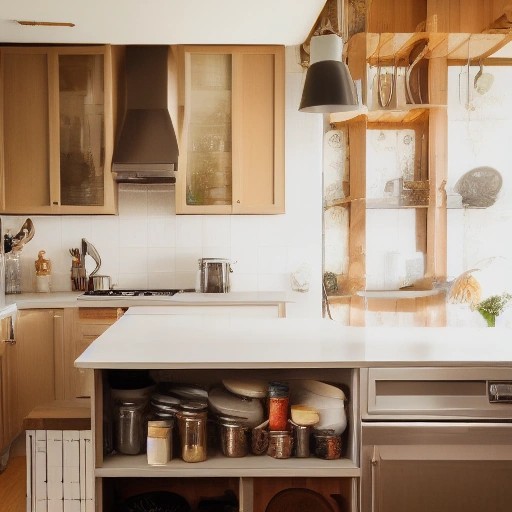
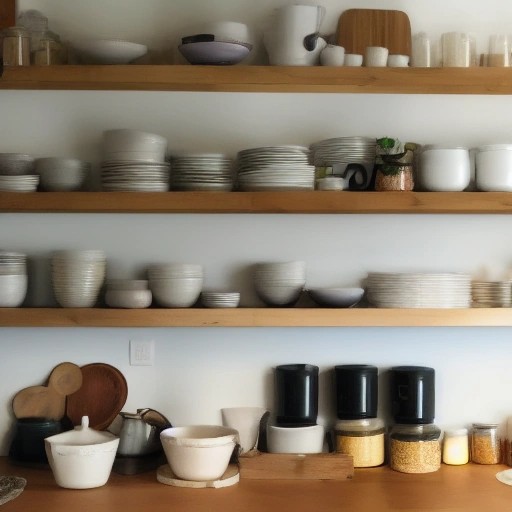
Clutter is not just about mess. It is about visual noise. Even clean, organized items look cluttered if there are too many of them. Open shelving is the biggest offender – all your dishes, glasses, and bowls on display create visual chaos.
The hiding rule: For every visible item on your counters or open shelves, hide one item inside a cabinet or drawer. The goal is a 1:1 ratio of visible to hidden. If you have ten items on your counters, put ten items away permanently.
Quick wins for reducing visual clutter:
- Store small appliances inside cabinets (use them less often? move them further away)
- Transfer dry goods from packages to uniform containers (matching jars look calmer than mixed boxes)
- Use a knife block instead of a magnetic strip (knives look less chaotic standing up)
- Keep only one small decorative item per counter section
Chart: How Clutter Builds Over Time Without Daily Resets
This chart shows how counter clutter accumulates over one week with and without a nightly reset habit.
The chart shows that without a daily reset, clutter grows exponentially. One forgotten item attracts another. Within a week, your counters are overwhelmed. With just five minutes of reset each day, clutter stays consistently low.
The Psychology of Clutter: Why It Bothers You
Clutter is not just an aesthetic problem. It affects your mood, your stress levels, and even your cooking. Studies have shown that people in cluttered kitchens are more likely to snack on unhealthy foods and less likely to enjoy cooking.
Why clutter feels bad:
- Visual noise – Your brain has to process every visible item, even subconsciously. More items = more mental effort.
- Decision fatigue – Every time you cannot find something, you make a mini decision. Over a day, these small frustrations add up.
- Guilt – Clutter reminds you of tasks you have not done. The stack of mail reminds you of unpaid bills. The appliance on the counter reminds you of the healthy eating plan you abandoned.
- Lost time – The average person spends 2-3 minutes per day looking for lost items in the kitchen. That is 12-18 hours per year.
A psychological insight: Your brain treats clutter as unfinished business. Every visible item that is out of place sends a tiny signal that something needs attention. A counter full of clutter feels exhausting because your brain is constantly trying to “complete” all those open loops.
Specific Clutter Problems and Fast Fixes
The Junk Drawer
Every kitchen has one. It collects batteries, rubber bands, old menus, birthday candles, and mystery screws. Open it and feel the chaos.
The 10-minute fix: Dump the entire drawer onto the counter. Throw away anything that is trash. Put batteries, light bulbs, and tools in a small container (this container goes to a utility drawer, not the kitchen). Keep only items used in the kitchen – scissors, wine opener, notepad. Use small boxes or dividers inside the drawer.
The Refrigerator Front
Magnets, kids’ artwork, takeout menus, appointment cards, and grocery lists cover the door. It looks chaotic and makes the whole kitchen feel messy.
The 5-minute fix: Take everything off the fridge. Throw away expired coupons and old artwork. Keep only three magnets maximum. Put the remaining important papers in a single folder inside a cabinet. A clean fridge door instantly calms the room.
The Sink Area
Sponges, scrub brushes, dish soap, and hand soap crowd the sink rim. Bottles drip. Sponges get slimy.
The 5-minute fix: Buy a small caddy or tray that lives next to the sink. All cleaning items go in the caddy. Sponges and brushes go in a small draining holder (not directly on the counter). Limit yourself to one soap bottle at a time.
The Counter Corners
Corners collect random items that have no other home. A bag of potatoes. A basket of fruit. A stack of cookbooks. A candle.
The 2-minute fix: Clear every corner completely. Put one intentional item in each corner – a plant, a bowl of fruit, or nothing at all. Empty corners look clean. Cluttered corners look messy even if the rest of the kitchen is spotless.
Frequently Asked Questions About Kitchen Clutter
Q: Why does my kitchen get cluttered so fast?
A: You have too many items for your space and no designated homes for daily incoming items like mail, keys, and bags. Reduce what you own and add landing zones near the entrance.
Q: How do I declutter my kitchen in one day?
A: Use the four-box method – keep, donate, trash, and relocate (items that belong in other rooms). Empty every cabinet and drawer. Clean everything. Put back only the keep items. Donate the rest the same day.
Q: Should I use open shelving in my kitchen?
A: Only if you are willing to keep those shelves perfectly styled at all times. Open shelves show every crumb and every crooked stack. For most people, closed cabinets are better for clutter control.
Q: How many small appliances should I keep on my counter?
A: Three maximum. Coffee maker, toaster, and one other daily-use appliance. Everything else goes in a cabinet and comes out only when needed.
Q: What is the fastest way to make my kitchen look less cluttered?
A: Clear your counters completely. Put everything into a box for 24 hours. Then add back only what you used that day. You will realize you need far less than you thought.
Q: How do I keep my kitchen clutter-free with kids?
A: Give each child a small basket or bin for their items (backpack, lunchbox, art projects). The bin lives in a low cabinet or on a low shelf. Kids learn to put their things in their bin. The bin gets emptied once a day to other rooms.
Q: Can a cluttered kitchen affect my cooking?
A: Yes. Clutter increases stress and reduces your enjoyment of cooking. A clean, organized kitchen makes you more likely to cook at home and try new recipes.
Final Thoughts: Clutter Is a Choice You Can Unmake
Your kitchen feels cluttered not because you are lazy or messy, but because your environment is not set up for the way you live. The solution is not more cleaning. It is better systems. Reduce what you own. Create landing zones for incoming items. Clear your counters of everything except daily-use tools. And commit to a five-minute nightly reset. These changes take a weekend to implement but pay off every single day. A clean kitchen is not a fantasy. It is just a set of habits and a little bit of honesty about what you actually need.
What is the one area of your kitchen that always gets cluttered no matter what you do? Tell me in the comments – I will suggest a specific fix for that exact spot.
References: