Kitchen Oil Smell Not Going Away Fix: Complete Kitchen Cleaning Guide
You cooked fried chicken three days ago, and despite opening windows, lighting candles, and spraying air freshener, your kitchen still smells like a diner — and you are starting to think the smell is permanently stuck in your walls.
TL;DR: Lingering oil smell means grease particles have settled on surfaces you have not cleaned. Air fresheners only mask the smell. The fix is a systematic grease cleaning system: clean your range hood filter (the number one culprit), simmer vinegar water to neutralize airborne particles, wipe all hard surfaces with a degreasing solution, deep clean your oven and stovetop, wash all kitchen textiles, and set up ongoing odor absorbers. If the smell persists, check hidden spots: behind the refrigerator, inside the dishwasher filter, and your oven’s hidden bottom panel. A monthly grease cleaning system prevents oil smells from building up in the first place.
The Real Reason Oil Smells Linger
Oil smells are different from other kitchen odors. When you heat oil past its smoke point, tiny droplets of grease float up into the air. They do not disappear. They land on every surface in your kitchen — your range hood filter, your cabinets, your walls, your ceiling, your refrigerator top, and even your light fixtures.
At first, these droplets are just sticky. But over days and weeks, that grease goes rancid. Rancid grease releases chemicals that smell like stale fried food mixed with crayons and old cardboard. Every time your kitchen warms up from cooking, sunlight, or even your refrigerator’s heat, that old grease releases its smell again.
Air fresheners and candles do not remove grease. They just cover the smell for a few hours. The only real fix is to remove the grease itself.
The Number One Culprit: Your Range Hood Filter
Your range hood filter is designed to trap grease before it spreads through your home. That is good. But when the filter gets full, it stops working and becomes a smell source itself. The trapped grease goes rancid inside the filter. Then every time you turn on the exhaust fan, it blows that stale oil smell right back into your kitchen.
Most home cooks have never cleaned their range hood filter. If you cannot remember the last time you cleaned it — or you have never cleaned it — that is almost certainly where the smell is coming from.
Step-by-Step Guide: Remove Lingering Oil Smell
Follow these steps in order. Most take less than 10 minutes. The whole system takes about 45 minutes to an hour.
Step 1: Clean Your Range Hood Filter
This is the most important step. If you only do one thing from this guide, do this.
Remove the metal filter. Check your manual for how to remove it — most slide out or have a small latch. Spray the filter with a degreaser or hot soapy water. Let it sit for 5 to 10 minutes. Scrub with a dish brush. Rinse with hot water.
For very dirty filters, run them through the dishwasher on the top rack. The high heat and detergent break down thick grease. If your filter is extremely greasy, you may need to repeat this process.
While the filter is out, wipe inside the hood with a paper towel and degreaser. You will see thick, yellow-brown grease come off. That grease has been smelling up your kitchen every time you cook.
How often to clean: Every month for homes that cook with oil daily. Every two months for lighter cooking. If you deep fry often, clean it every two weeks.
Safety reminder: Turn off the range hood power switch before removing filters or touching any internal parts.
Step 2: Simmer Vinegar Water
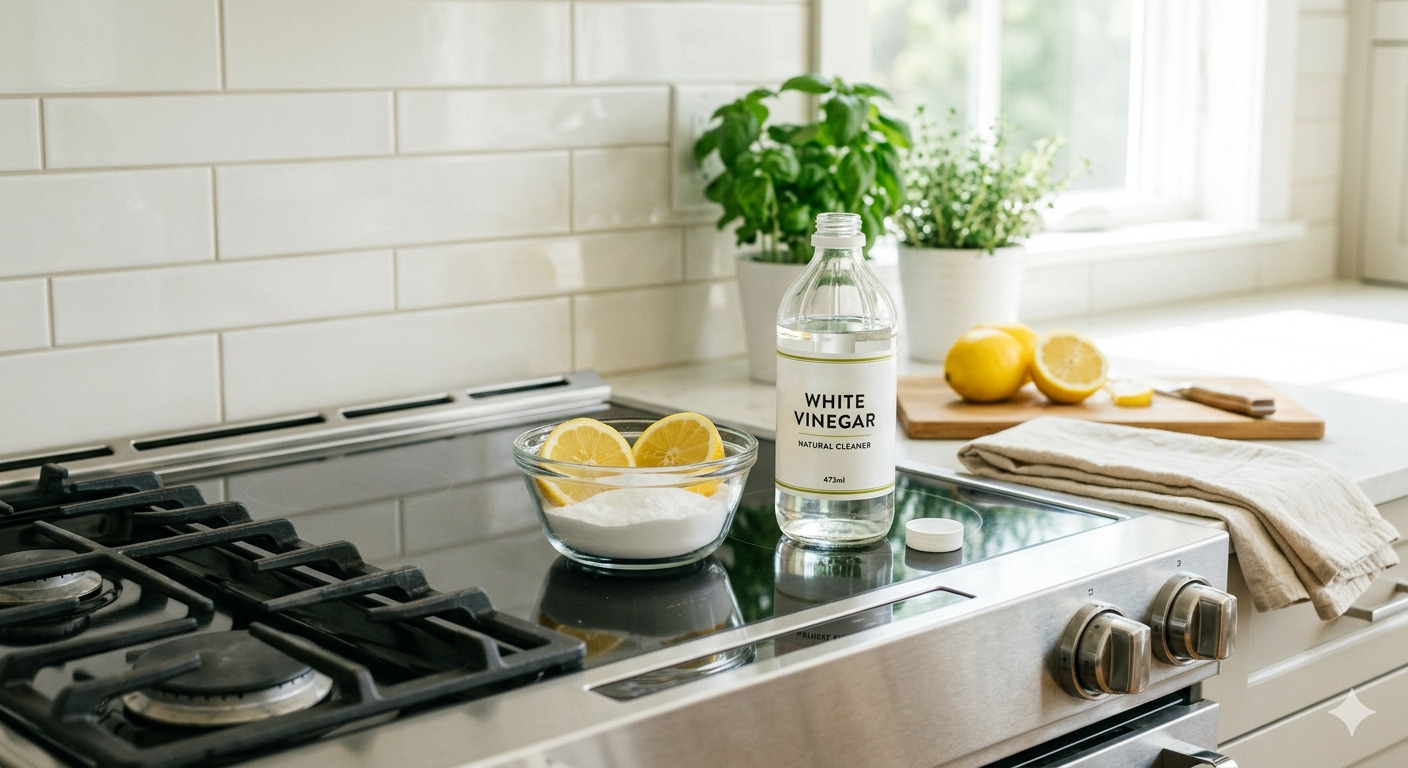
Fill a large pot with water and add one cup of white vinegar. Bring to a boil, then reduce to a low simmer for 15 to 20 minutes. The vinegar steam breaks down airborne grease particles and softens oil film on nearby surfaces.
Add lemon slices, rosemary sprigs, or a few drops of vanilla extract to leave a fresh scent behind. The vinegar smell fades within an hour.
This step alone removes about 80 percent of the oil smell from your air. But you still need to clean the surfaces where grease has landed.
Step 3: Deep Clean Your Oven
Old grease inside your oven burns every time you preheat. That burning grease releases a stale, oily smell that fills your whole kitchen.
Make a paste with one cup of baking soda and half a cup of water. Spread it all over the inside of your oven, avoiding the heating element. Let it sit for at least 4 hours or overnight. The baking soda draws grease out of the oven walls.
Spray white vinegar over the paste. It will foam up. Wipe everything clean with a damp cloth. For stubborn spots, scrub with a non-abrasive sponge.
For the oven glass door, scrub with a paste of baking soda and dish soap. Use a razor scraper for burned-on grease, but be careful not to scratch the glass.
Step 4: Degrease Your Stovetop and Burners
Your stovetop catches grease and oil from every cooking session. Over time, that grease hardens and smells.
Remove grates and burner caps. Soak them in hot water with two tablespoons of dish soap for 20 minutes. Scrub with a non-abrasive sponge. Rinse and dry.
For gas stoves, wipe around each burner opening with a toothbrush dipped in vinegar. Food and grease collect in these small spaces and burn every time you light the burner.
For electric or induction stoves, use a razor scraper to remove burned-on grease, then wipe with a degreaser spray. Ceramic cooktops need special cleaners — check your manual.
Step 5: Wipe Down Every Hard Surface with Degreaser
Mix in a spray bottle: 2 cups warm water, 1 cup white vinegar, and 1 tablespoon dish soap. Shake gently. This is your all-purpose kitchen degreaser. It is cheap, natural, and works better than most store-bought sprays.
Spray and wipe:
- All cabinet fronts and handles (especially above and beside the stove)
- Tile backsplash
- Countertops
- Microwave exterior and interior
- Refrigerator door, handle, and top
- Light switches and outlet covers near the stove
- Window sills near the cooking area
- Trash can lid and exterior
- The wall behind your stove (grease travels up the wall)
Use a microfiber cloth. Rinse it frequently in hot water. You will see brown or yellow residue on the cloth. That is rancid grease leaving your kitchen. Wipe until the cloth comes away clean.
Step 6: Wash All Kitchen Textiles
Your dish towels, oven mitts, pot holders, cloth napkins, and even your kitchen curtains have absorbed grease particles. Washing them with regular laundry detergent is not enough.
Wash them separately in hot water. Add one cup of white vinegar to the rinse cycle. Do not use fabric softener — it seals grease into fabric fibers. Dry on high heat.
Replace old dish towels that feel greasy even after washing. Once grease bonds with cotton fibers, you cannot fully remove it.
Step 7: Set Up Ongoing Odor Protection
After running the full grease cleaning system, set up these passive absorbers to keep your kitchen fresh between deep cleans.
- An open jar of baking soda under the kitchen sink
- A bowl of activated charcoal behind the stove
- Coffee grounds in a small dish on top of the refrigerator
- A bamboo charcoal bag near the trash can
Replace baking soda monthly. Replace activated charcoal every two months (recharge in sunlight). Replace coffee grounds weekly.
If the Smell Persists: Hidden Spots to Check
You have cleaned everything on the list above, but the smell is still there. Check these hidden spots.
Behind and Under Your Refrigerator
Pull your refrigerator away from the wall. Clean the floor, the condenser coils (use a coil brush), and the drip pan. Old food and grease fall behind fridges and rot. The coils can also burn dust and smell like hot oil.
How to clean coils: Unplug the refrigerator. Use a coil cleaning brush or a vacuum with a crevice tool to remove all dust. For back coils, gently vacuum or brush them clean. For bottom coils, remove the front grille and vacuum underneath.
Safety reminder: Always unplug appliances before cleaning behind or under them. Do not pinch the power cord when pushing the fridge back.
Inside Your Dishwasher Filter
Remove the bottom rack. Twist and pull out the filter cylinder. Scrub it with a toothbrush and hot soapy water. Dishwasher filters trap grease and grow mold that smells like old fried food.
How often to clean: Once a month. Many people do not know their dishwasher has a filter — it does. Check your manual.
Your Oven’s Hidden Bottom Panel
Some ovens have a lower panel that lifts out. Look for spilled grease and food that burned onto the oven floor insulation. Clean carefully with baking soda paste.
Note: Not all ovens have this. Check your manual before attempting to remove any panels.
The Crevices Around Your Stove
Use an old toothbrush dipped in degreaser to clean the small gaps between the stovetop and the counter, around the burner knobs, and along the edge of the stove. Grease collects in these tiny spaces and smells.
Your Exhaust Fan Duct
If you have cleaned the filter but the smell remains, grease may have built up inside the duct. This requires professional cleaning. Call an appliance repair technician or HVAC specialist.
How to Prevent Oil Smells from Coming Back
The best grease cleaning system is one you barely need to use. These daily and weekly habits stop oil smells from forming in the first place.
Daily habits:
- Turn on your exhaust fan before heating oil. Run it for 20 minutes after cooking.
- Wipe your stovetop and backsplash immediately after cooking while surfaces are still warm.
- Use a splatter guard when frying. It catches 90 percent of oil droplets before they fly onto your cabinets.
- Take out kitchen trash every night, especially if you cooked with oil.
Weekly habits:
- Wipe down your range hood exterior and the wall behind your stove.
- Soak your stovetop grates in hot soapy water for 15 minutes.
- Wipe your kitchen cabinet handles and refrigerator door handle.
- Check your range hood filter. If it looks greasy, clean it immediately — do not wait for monthly deep clean.
Monthly habits:
- Run the full grease cleaning system (steps 1-7 above).
- Replace or recharge your activated charcoal bags.
- Wash all kitchen textiles in hot water with vinegar.
These small actions take less than two minutes per day but prevent 90 percent of common oil smells.
Natural Degreasers That Work Better Than Chemicals
You do not need harsh chemical degreasers. These natural options are safer, cheaper, and often more effective.
White vinegar. Breaks down grease and neutralizes odors. Use full strength on tough spots or diluted 1:1 with water for daily cleaning. The vinegar smell fades within minutes.
Baking soda. Absorbs grease and scrubs without scratching. Make a paste for ovens, stovetops, and baked-on grease. Let it sit for hours or overnight.
Lemon juice. Cuts through fresh grease and leaves a clean citrus scent. Mix with vinegar for extra power. Use lemon peels in your garbage disposal.
Castile soap (liquid). A plant-based soap that breaks down oil better than most dish detergents. Mix one tablespoon with two cups of warm water.
Essential oils (tea tree, lemon, orange). Add 10 drops to your vinegar spray. Tea tree oil also has natural antifungal properties.
Do not mix vinegar with castile soap — they neutralize each other. Use one or the other.
Comparison Table: Oil Smell Removal Methods
| Method | Purpose | Effectiveness | Time Required | Cost |
|---|---|---|---|---|
| Clean range hood filter | Remove trapped grease | Very High (95%) | 10 minutes | Low |
| Simmer vinegar water | Neutralize airborne particles | High (85%) | 15-20 minutes | Low |
| Baking soda paste (oven) | Remove baked-on grease | Very High (95%) | 4+ hours (mostly passive) | Low |
| Vinegar + dish soap spray | Surface degreasing | High (90%) | 15-20 minutes | Low |
| Wash textiles | Remove absorbed grease | High (90%) | Machine wash | Low |
| Activated charcoal | Ongoing air absorption | Medium (70%) | 1 minute setup | Medium |
| Clean refrigerator coils | Remove burning dust smell | High (85%) | 15 minutes | Free |
Chart: Oil Smell Sources by Percentage
FAQ: Quick Answers About Lingering Oil Smells
Why does my kitchen smell like old grease even when I haven’t cooked?
Old oil residue on your range hood filter, oven walls, or upper cabinets warms slightly from your refrigerator’s heat or sunlight and releases stale odors.
How often should I clean my range hood filter?
Every month for homes that cook with oil daily. Every two months for lighter cooking. If you deep fry often, clean it every two weeks.
Can I use bleach to remove grease smells?
No. Bleach does not break down grease. It only whitens surfaces. Vinegar and dish soap are much more effective for grease removal.
What is the fastest way to remove oil smell from my kitchen right now?
Simmer a pot of water with one cup of vinegar and lemon peels for 10 minutes. Then wipe your range hood filter with hot soapy water.
How do I remove oil smell from kitchen towels?
Wash them separately with hot water, one cup of vinegar, and half a cup of baking soda. Do not use fabric softener. Dry on high heat.
My kitchen still smells after cleaning everything. What now?
Check behind and under your refrigerator, clean your dishwasher filter, and inspect your oven’s hidden bottom panel. If the smell persists, call a technician to check your exhaust fan duct.
What temperature should I cook oil at to prevent smells?
Most vegetable oils should stay between 350°F and 375°F. When oil smokes, it releases more airborne grease. Use a kitchen thermometer.
The Bottom Line
Lingering oil smell is not a mystery — it is grease that you have not cleaned. The range hood filter is the number one culprit. If you have never cleaned yours, start there. Then simmer vinegar water, wipe down every surface, deep clean your oven, wash your textiles, and check hidden spots like behind the fridge.
Do not just spray air freshener. That is like putting perfume on a dirty shirt. Remove the grease, and the smell goes away with it.
Once you have done a full grease cleaning system, maintain it with daily habits: run your exhaust fan, wipe surfaces while they are warm, use a splatter guard, and clean your range hood filter monthly.
Your kitchen should smell like food, not like old grease. With the right system, it will.
Which oil smell problem drives you craziest? Share your thoughts in the comments.
References: