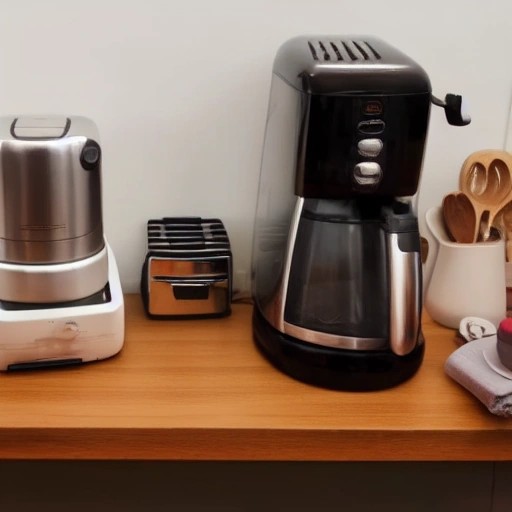
Why Do Kitchen Appliances Stop Working Suddenly: Common Causes and Smart Fixes
You wake up, stumble to the coffee maker, press the button, and nothing happens – no lights, no sound, no coffee – even though it worked perfectly yesterday morning.
🟡 TL;DR
Kitchen appliances usually do not die overnight for no reason. The most common sudden failures are tripped circuit breakers, blown internal fuses, faulty power cords, failed door switches, or thermal overload protection kicking in. Before you throw an appliance away, check the outlet with a phone charger, test the power cord, and look for a reset button. Many “dead” appliances are actually fine – they just need a 30-second fix.
🔵 Key Takeaways
- Check the outlet first – Plug in a phone charger or lamp to confirm power is flowing.
- Look for a reset button – Many appliances have hidden reset switches on the bottom or back.
- Test the door switch – Microwaves, dishwashers, and coffee makers stop working if a door or lid is not fully closed.
- Feel the power cord – A warm or melted cord means internal damage.
- Know when to give up – If the repair costs more than half the price of a new unit, replace it.
The Real Reasons Your Kitchen Appliances Die Without Warning
You used your toaster this morning. Now it is dead. Your blender worked fine yesterday. Today, nothing. Your microwave shows the time but won’t start. These sudden deaths feel personal, like your appliances are betraying you. But the truth is less dramatic. Most sudden failures have simple explanations that you can diagnose in minutes.
Kitchen appliances live hard lives. They deal with heat, moisture, grease, power surges, and daily use. Most failures are not the motor dying or the electronics frying. They are small, simple parts failing – a fuse, a switch, a connection. And many of these fixes cost nothing but a few minutes of your time.
“According to appliance repair technicians, nearly 40 percent of service calls are for problems that could have been fixed by the homeowner in under 10 minutes. The most common ‘repair’ is simply plugging the appliance back in all the way.”
The Most Common Sudden Failure: Tripped Circuit Breaker
Before you blame the appliance, blame the electrical system. Your kitchen should have dedicated circuits for major appliances like the refrigerator, dishwasher, and microwave. But many homes have shared circuits. When you run the toaster, coffee maker, and kettle at the same time, you can trip the breaker.
How to check and reset a tripped breaker:
- Go to your electrical panel (usually in a basement, garage, or hallway).
- Look for a breaker that is in the “off” position or halfway between on and off.
- Flip it fully to “off,” then back to “on.” You should feel a firm click.
- Go back to your appliance. Try it again.
What if the breaker trips again immediately? You have a short circuit or an overloaded circuit. Unplug everything on that circuit. Reset the breaker. Plug appliances back in one at a time. If the breaker trips when you plug in a specific appliance, that appliance has an internal short. Stop using it and replace or repair it.
A safety reminder: Do not keep resetting a breaker that trips repeatedly. This can cause electrical fires. If a breaker trips three times in a row, call an electrician.
The Sneaky Culprit: GFCI Outlet Tripped
Kitchen outlets near sinks are required to be GFCI outlets (Ground Fault Circuit Interrupter). These have small “test” and “reset” buttons on the face. A GFCI outlet can trip without the main breaker tripping. When this happens, everything plugged into that outlet and any outlets “downstream” from it will seem dead.
How to spot a tripped GFCI:
- Look at all outlets near your kitchen sink and countertops.
- Press the “reset” button on any outlet that has one. You should feel a click.
- If the button pops back out, the GFCI has failed and needs replacement.
“A single GFCI outlet often protects 3-4 regular outlets in the same kitchen. If your coffee maker is dead but the light on the microwave works, check every GFCI outlet in the kitchen. One of them is probably tripped.”
Fix #1: The Power Cord and Plug Check
Loose connections kill appliances slowly and suddenly. The power cord can become frayed near the plug or where it enters the appliance. The prongs on the plug can bend or corrode. Even a slightly loose plug in an old outlet can break the connection.
Step-by-step guide to inspecting a power cord:
- Unplug the appliance.
- Look closely at the entire length of the power cord. Bend it gently to see any cracks.
- Examine the plug prongs. They should be straight, clean, and not discolored.
- Feel the cord near the plug and near the appliance. Any warm spots mean internal damage.
- Plug the appliance into a different outlet that you know works (test with a phone charger first).
- Wiggle the plug gently while the appliance is on. If the appliance flickers, the cord or plug is bad.
Can you replace a power cord? For small appliances like toasters, blenders, and coffee makers, replacing the cord is usually not worth it. For large appliances like refrigerators and dishwashers, call a professional. A damaged cord is a fire hazard.
Fix #2: The Door Switch (Microwaves, Dishwashers, Blenders)
Many kitchen appliances have safety switches that detect when a door or lid is closed. If this switch fails or gets stuck, the appliance will not start. This is incredibly common in microwaves and dishwashers.
How to test a door switch:
- For a microwave: Open the door. Look for small plastic buttons or levers around the door frame. Press them with your finger while the door is open. You should hear a click. If a button is stuck or missing, the microwave will not run.
- For a dishwasher: Open the door. Look for a latch mechanism. Clean the latch area with a damp cloth. Close the door firmly – you should hear two distinct clicks.
- For a blender: Make sure the pitcher is seated completely on the base. Many blenders have a safety interlock that requires the pitcher to be twisted into place.
“A single grain of rice stuck in a microwave door switch can kill the whole machine. Clean these switches gently with a toothpick and a dry cloth.”
Fix #3: The Thermal Fuse or Overload Protector
Some appliances have a thermal fuse that blows if the appliance gets too hot. This is a safety feature that prevents fires. Your toaster, hair dryer (if you keep it in the kitchen), and some coffee makers have these. When the thermal fuse blows, the appliance becomes completely dead.
How to reset thermal protection:
- Toasters and toaster ovens: Let them cool completely for 30 minutes. Unplug them. Look for a small “reset” button on the bottom or back. Press it with a paperclip or pen tip.
- Refrigerators: If your fridge stops cooling but the light works, the compressor may have tripped its thermal overload. Unplug the fridge for 1 hour. Plug it back in. Listen for the compressor to start.
- Garbage disposals: If your disposal hums but does not spin, it has tripped. Look for a red reset button on the bottom of the unit (under the sink). Press it firmly.
A safety reminder: If an appliance trips its thermal fuse repeatedly, something is wrong. The appliance may be failing, or you may be overloading it. Do not keep resetting it without finding the root cause.
Comparison Table: Sudden Appliance Death by Symptom
| Symptom | Most Likely Cause | Quick Fix | When to Replace |
|---|---|---|---|
| Completely dead – no lights, no sound | Tripped breaker, bad outlet, or dead power cord | Check breaker, test outlet, inspect cord | Cord is melted or prongs are burned |
| Has lights or display but won’t start | Door switch, lid switch, or safety interlock | Clean door switches, close lid firmly | Switch is broken and part is unavailable |
| Runs but does not heat (microwave, toaster) | Blown thermal fuse or failed heating element | Look for reset button | Repair costs over $75 |
| Makes noise but does not spin (disposal, blender) | Jammed blade or tripped overload | Use reset button, clear jam | Motor smells burned |
| Works sometimes, fails other times | Loose internal connection or failing control board | Check cord, wiggle plug | Appliance is over 5 years old |
| Dead after power outage | Power surge blew internal fuse | Unplug for 10 minutes, plug back in | Surge protector failed |
Fix #4: The Outlet Itself Is Bad
Sometimes the appliance is fine. The outlet is the problem. Outlets in kitchens get a lot of use. Plugs get yanked out. Moisture gets inside. The internal spring contacts loosen over time.
How to test an outlet:
- Plug a lamp or phone charger into the same outlet. If it works, the outlet is fine.
- If nothing works, check your breaker panel and GFCI outlets first.
- If the breaker is on and GFCI is reset but the outlet still has no power, call an electrician. Bad outlets are a fire hazard.
Never do this: Do not use an outlet that feels warm to the touch. Do not use an outlet that makes crackling sounds. Do not use an outlet where the plug falls out easily. These are signs of dangerous internal damage.
The Power Surge Problem
A sudden power surge – from a lightning strike, a grid fluctuation, or even your refrigerator’s compressor kicking on – can fry sensitive electronics inside modern appliances. Appliances with digital displays, timers, or touch panels are most vulnerable.
Signs of power surge damage:
- The display shows strange symbols or gibberish
- Buttons do nothing or trigger the wrong functions
- The appliance turns on by itself or will not turn off
- You smell burnt electronics (acrid, sharp smell)
Prevention: Use a surge protector power strip for small kitchen appliances. For large appliances like refrigerators and dishwashers, consider a whole-house surge protector installed by an electrician ($150-300 installed). This protects every appliance in your home.
Chart: Appliance Lifespan vs. Sudden Failure Probability
This chart shows the average lifespan of common kitchen appliances and the likelihood of sudden failure at different ages.
The chart shows that small appliances become increasingly unreliable after 5 years. Large appliances last longer but are not immune. If your small appliance is over 7 years old and dies suddenly, replacement is usually the smart choice.
Appliance-Specific Sudden Death Problems
Refrigerator Stops Cooling (But Lights Work)
This is a refrigerator-specific problem. The lights work because they run on 12 volts from a small transformer. The compressor runs on 120 volts. When the compressor fails or its relay dies, the fridge seems alive but does not cool.
Quick fixes to try:
- Unplug the fridge for 10 minutes. Plug it back in. Sometimes the control board just needs a reset.
- Listen for a clicking sound. A single click every few minutes means the compressor relay is trying but failing.
- Clean the condenser coils underneath or behind the fridge. Dirty coils cause overheating and compressor failure.
If none of these work, call a repair person. Refrigerator compressors are not a DIY fix.
Dishwasher Stops Mid-Cycle
Your dishwasher fills with water, then stops. Or it runs for 10 minutes and goes silent. This is often a flood sensor tripping because of a small leak, or a door latch that has come loose.
The quick fix: Open the dishwasher door. Look for standing water in the bottom. Soak it up with towels. Check the door latch – clean it with a toothbrush. Close the door firmly. Start a new cycle. If it stops again, call for service.
Garbage Disposal Hums But Does Not Spin
This is almost always a jammed flywheel. Something hard – a bone, a piece of glass, a utensil – is stuck between the spinning plate and the housing wall.
How to fix a jammed disposal:
- Turn off the disposal. Unplug it or flip the circuit breaker. Safety first – never put your hand in a disposal that is connected to power.
- Look inside the disposal with a flashlight. Remove any visible objects with pliers or tongs.
- Find the hex wrench hole on the bottom of the disposal (under the sink).
- Insert the included hex wrench (or a 1/4-inch Allen wrench) into the hole.
- Turn the wrench back and forth to manually free the flywheel.
- Once it moves freely, press the red reset button on the bottom.
- Run water and test the disposal.
Frequently Asked Questions About Sudden Appliance Failure
Q: Why did my appliance die after a power outage?
A: Power surges often happen when electricity comes back on. The sudden spike can blow internal fuses or damage circuit boards. Unplug sensitive appliances during storms.
Q: Can a dirty appliance cause sudden failure?
A: Yes. Grease buildup can trap heat and cause thermal fuses to blow. Dust on refrigerator coils makes the compressor work harder and fail sooner. Clean your appliances regularly.
Q: Should I repair a 10-year-old microwave that suddenly died?
A: No. Microwave repair typically costs $150-250. A new countertop microwave costs $80-150. Replacement is almost always cheaper.
Q: How do I know if an appliance is worth repairing?
A: Use the 50 percent rule – if the repair costs more than half the price of a new appliance, replace it. Also consider age. Appliances over 7-8 years old are usually not worth fixing.
Q: Can I prevent sudden appliance death?
A: Yes. Use surge protectors. Clean appliances regularly. Do not overload circuits. Replace power cords that show wear. These habits add years to appliance life.
Q: Why does my appliance work again after I unplug it and plug it back in?
A: Many appliances have a control board that can freeze or get confused. Unplugging resets the board. This is called a “hard reset.” It fixes many weird problems.
Q: Is it safe to open a dead microwave to look for a blown fuse?
A: No. Microwaves contain capacitors that hold a lethal charge even when unplugged. Never open a microwave unless you are a trained technician.
Final Thoughts: Most Sudden Deaths Are Not Real Deaths
Your kitchen appliances want to work. They are simple machines that respond to power, switches, and basic maintenance. Before you panic and buy a new coffee maker or toaster, run through the checklist: check the breaker, test the outlet, inspect the cord, look for a reset button, clean the door switches. Most sudden failures take 5 minutes to diagnose and 30 seconds to fix. And the ones that are truly dead? They served you well. Thank them and recycle them properly.
What is the strangest reason one of your kitchen appliances stopped working? A bread clip in the disposal? A mouse in the toaster? Share your story in the comments.
References: